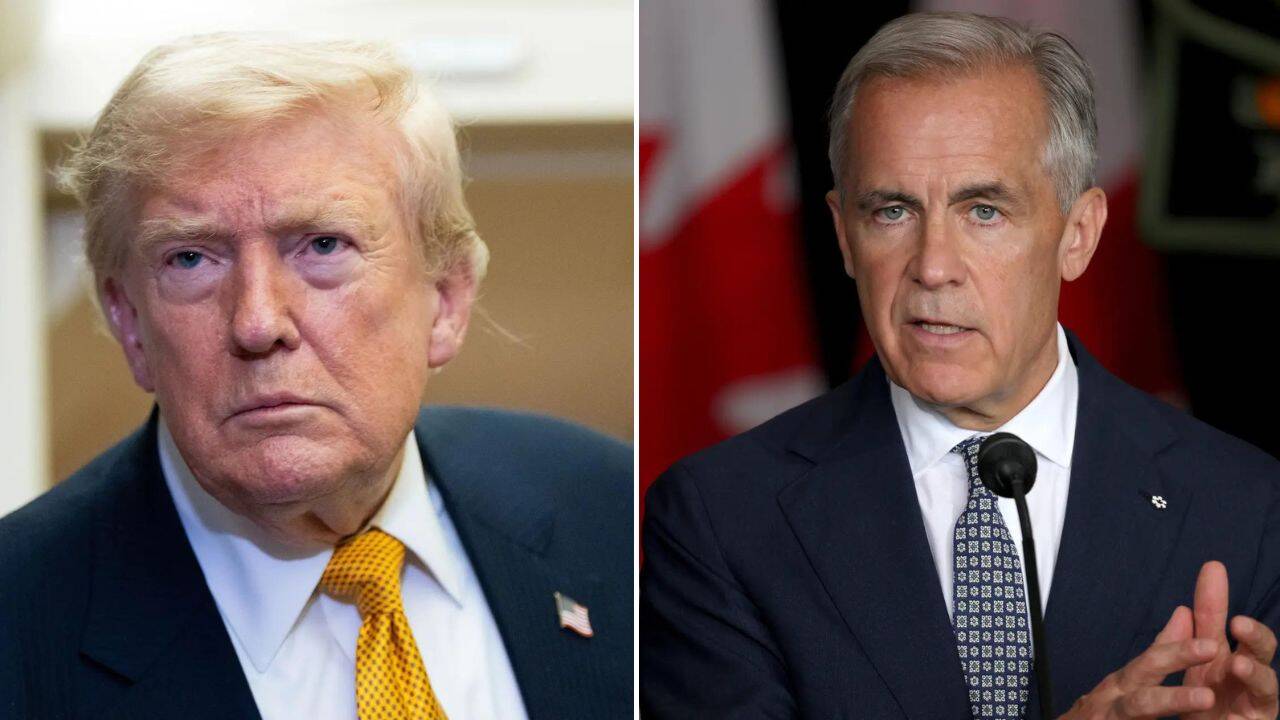
Trump Imposes 50% Tariffs on Canadian Goods
US-Canada trade tensions escalate, tariffs applied to most goods. Economic uncertainty rises.
'%3E%3Crect%20width%3D'96'%20height%3D'96'%20fill%3D'%234A235A'%2F%3E%3Ccircle%20cx%3D'30'%20cy%3D'24'%20r%3D'44'%20fill%3D'%23fff'%20opacity%3D'.12'%2F%3E%3Ccircle%20cx%3D'60'%20cy%3D'74'%20r%3D'40'%20fill%3D'%23000'%20opacity%3D'.10'%2F%3E%3C%2Fg%3E%3Cg%20fill%3D'none'%20stroke%3D'%23fff'%20stroke-width%3D'3'%3E%3Ccircle%20cx%3D'48'%20cy%3D'48'%20r%3D'16'%2F%3E%3Cellipse%20cx%3D'48'%20cy%3D'48'%20rx%3D'6.5'%20ry%3D'16'%2F%3E%3Cline%20x1%3D'32'%20y1%3D'42'%20x2%3D'64'%20y2%3D'42'%2F%3E%3Cline%20x1%3D'32'%20y1%3D'54'%20x2%3D'64'%20y2%3D'54'%2F%3E%3C%2Fg%3E%3C%2Fsvg%3E)
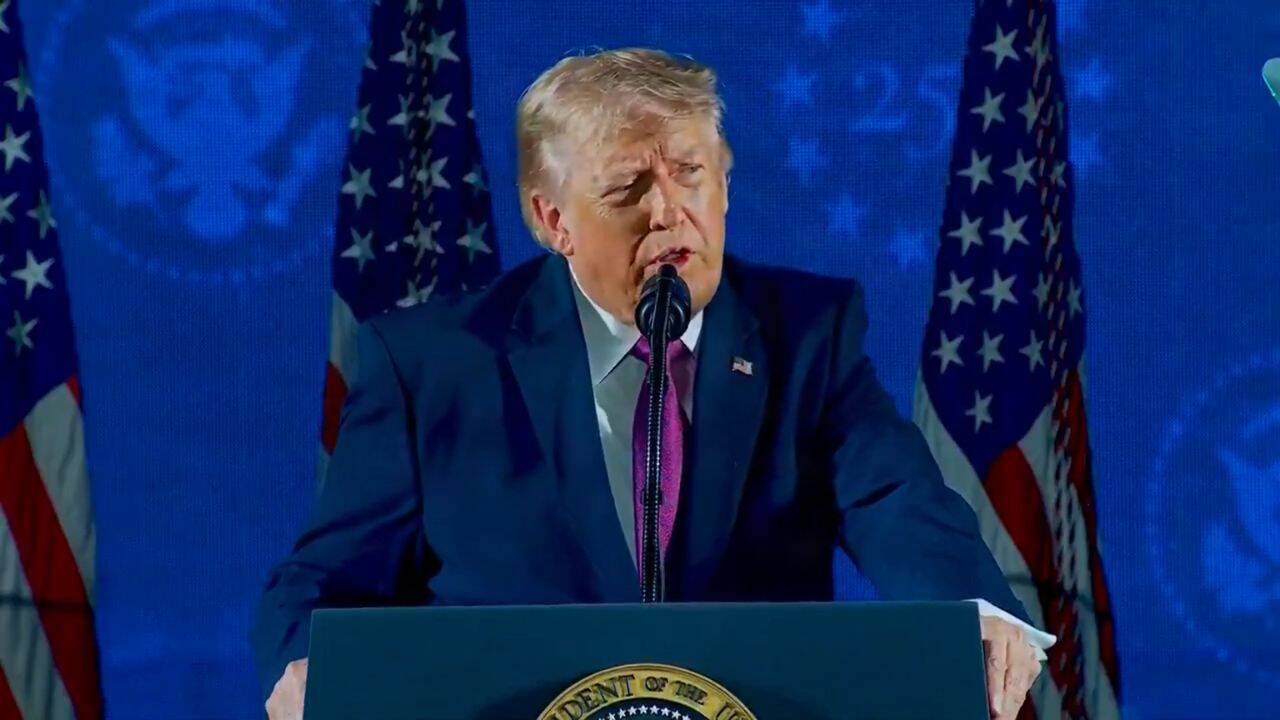
President Trump has imposed a 50% tariff on most Canadian goods, significantly escalating trade tensions between the two nations. This move applies to many goods that were previously protected under the USMCA agreement, marking a substantial shift in the trade relationship between the US and Canada.
The decision to impose these tariffs is a response to ongoing trade disputes between the two countries. The USMCA agreement, which was intended to facilitate trade between the US, Canada, and Mexico, has not been able to resolve these disputes. As a result, the US has taken unilateral action to protect its interests.
The tariffs will have a significant impact on the Canadian economy, as many of its goods are exported to the US. The move is also expected to heighten economic uncertainty and strain bilateral ties between the two nations. The US and Canada have a long-standing trade relationship, and this move is likely to have far-reaching consequences.
Aides to President Trump are examining the possibility of imposing additional tariffs on Canada, which could further escalate the trade tensions. The US is seeking to renegotiate the terms of its trade agreements with Canada and other countries, and is using tariffs as a tool to achieve its goals.
The trade disputes between the US and Canada are complex and multifaceted. They involve issues such as dairy trade, lumber exports, and intellectual property protection. The US has been seeking to reduce its trade deficit with Canada, and has imposed tariffs on a range of goods in an effort to achieve this goal.
The impact of the tariffs on the US economy is also likely to be significant. Many US businesses rely on imports from Canada, and the tariffs will increase their costs and reduce their competitiveness. The move is also likely to lead to retaliatory measures from Canada, which could further escalate the trade tensions.
In recent years, the US has taken a more aggressive approach to trade policy, seeking to protect its interests and reduce its trade deficit. The imposition of tariffs on Canadian goods is the latest example of this approach, and is likely to have significant consequences for the trade relationship between the two nations.
The escalation of trade tensions between the US and Canada is a significant development, with far-reaching implications for the global economy. As the two nations continue to negotiate and impose tariffs, the impact on businesses and consumers is likely to be substantial. The situation is being closely watched by economists and trade experts, who are seeking to understand the implications of the tariffs and the potential consequences for the global economy.
In conclusion, the imposition of 50% tariffs on most Canadian goods by President Trump is a significant escalation of trade tensions between the US and Canada. The move is likely to have far-reaching consequences for the trade relationship between the two nations, and could lead to significant economic uncertainty and strain on bilateral ties.
Frequently asked questions
What is the reason behind the US imposing tariffs on Canadian goods?
The US has imposed tariffs on Canadian goods due to ongoing trade disputes between the two nations.
How will the tariffs affect the Canadian economy?
The tariffs will have a significant impact on the Canadian economy, as many of its goods are exported to the US, and are likely to heighten economic uncertainty and strain bilateral ties.