46% of MPs Attend Over 90% of Budget Session
New study reveals MP attendance trends. Smaller parties lead the way.
'%3E%3Crect%20width%3D'96'%20height%3D'96'%20fill%3D'%231A5276'%2F%3E%3Ccircle%20cx%3D'30'%20cy%3D'24'%20r%3D'44'%20fill%3D'%23fff'%20opacity%3D'.12'%2F%3E%3Ccircle%20cx%3D'60'%20cy%3D'74'%20r%3D'40'%20fill%3D'%23000'%20opacity%3D'.10'%2F%3E%3C%2Fg%3E%3Cg%20fill%3D'%23fff'%3E%3Cpath%20d%3D'M31%2041%20L48%2031%20L65%2041%20Z'%2F%3E%3Crect%20x%3D'33'%20y%3D'43'%20width%3D'4'%20height%3D'17'%2F%3E%3Crect%20x%3D'41'%20y%3D'43'%20width%3D'4'%20height%3D'17'%2F%3E%3Crect%20x%3D'51'%20y%3D'43'%20width%3D'4'%20height%3D'17'%2F%3E%3Crect%20x%3D'59'%20y%3D'43'%20width%3D'4'%20height%3D'17'%2F%3E%3Crect%20x%3D'30'%20y%3D'62'%20width%3D'36'%20height%3D'4'%20rx%3D'1'%2F%3E%3C%2Fg%3E%3C%2Fsvg%3E)
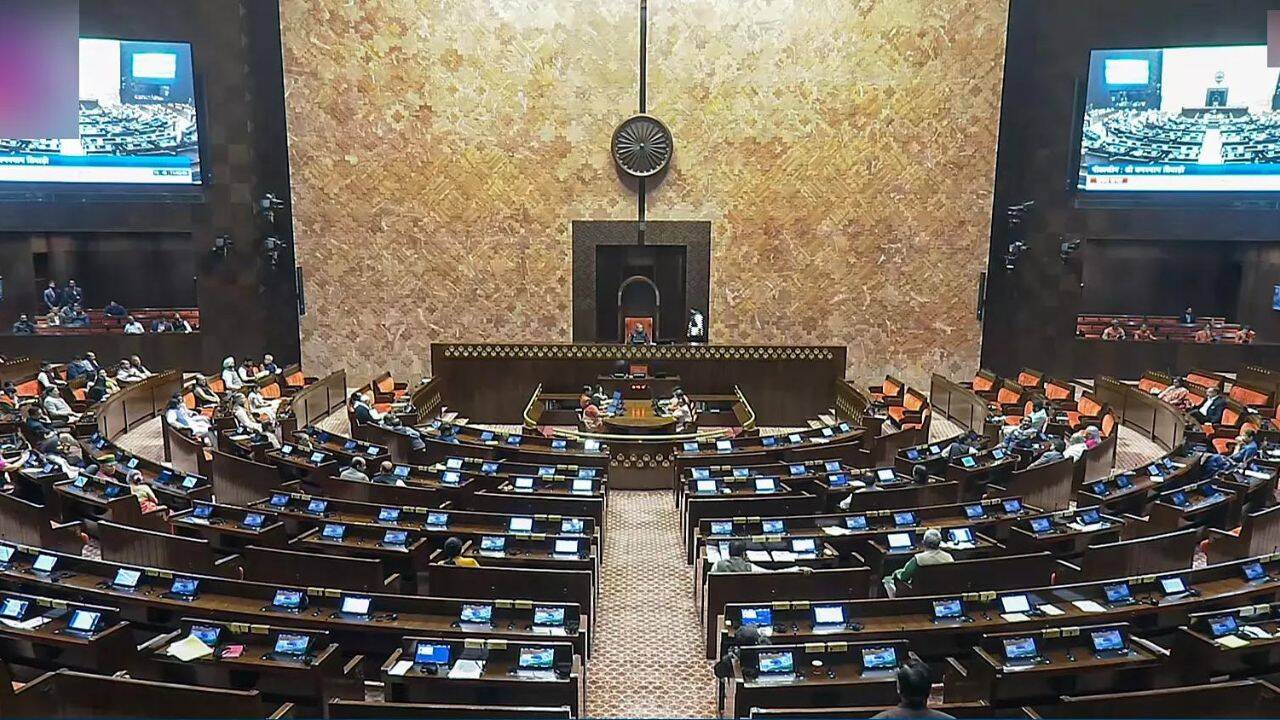
A recent study has found that 46% of Lok Sabha MPs attended over 90% of the budget session.
The study analyzed attendance data from the recent budget session and found that smaller parties had the highest average attendance. The Rashtriya Loktantrik Party (RLP) and the Rashtriya Lok Dal (RLD) achieved perfect attendance, with all their MPs attending all 31 sittings.
In contrast, the larger parties, such as the BJP and Congress, had lower average attendance figures. This trend was also observed in the Rajya Sabha, where regional parties led the way in terms of attendance percentages.
The RLP and RLD's perfect attendance record is notable, given the importance of the budget session in shaping the country's financial policies. The study's findings suggest that smaller parties may be more diligent in attending parliamentary sessions.
The BJP and Congress, as the largest parties in the Lok Sabha, had significant attendance, but their average attendance figures were lower than those of the smaller parties. This may be due to various factors, including the size of their parliamentary contingents and the demands of other political responsibilities.
In the Rajya Sabha, regional parties such as the Telangana Rashtra Samithi (TRS) and the All India Anna Dravida Munnetra Kazhagam (AIADMK) also had high attendance percentages. This trend suggests that regional parties may be more focused on attending parliamentary sessions and representing their constituents' interests.
The study's findings have implications for the functioning of India's parliamentary democracy. Attendance in parliamentary sessions is crucial for ensuring that MPs are able to represent their constituents' interests and participate in the lawmaking process.
The data also highlights the importance of smaller parties in India's parliamentary system. Despite their smaller size, these parties are able to make a significant impact on the country's political landscape.
Overall, the study provides valuable insights into attendance trends among MPs in both Houses of Parliament. It suggests that smaller parties may be more diligent in attending parliamentary sessions and that regional parties are playing an increasingly important role in India's parliamentary democracy.
The findings of the study are significant for Mumbai residents, as they highlight the importance of parliamentary attendance in ensuring that the city's interests are represented at the national level. With several MPs from Mumbai attending the budget session, it is crucial that they are able to participate fully in the lawmaking process and advocate for the city's needs.
In conclusion, the study's findings provide a fascinating glimpse into the attendance trends of MPs in both Houses of Parliament. They highlight the importance of smaller parties and regional parties in India's parliamentary democracy and underscore the need for MPs to attend parliamentary sessions regularly.