Pakistan Considers Austerity Amid US-Iran Tensions
Fuel prices rise, Pakistan weighs options. US-Iran war impacts economy.
'%3E%3Crect%20width%3D'96'%20height%3D'96'%20fill%3D'%234A235A'%2F%3E%3Ccircle%20cx%3D'30'%20cy%3D'24'%20r%3D'44'%20fill%3D'%23fff'%20opacity%3D'.12'%2F%3E%3Ccircle%20cx%3D'60'%20cy%3D'74'%20r%3D'40'%20fill%3D'%23000'%20opacity%3D'.10'%2F%3E%3C%2Fg%3E%3Cg%20fill%3D'none'%20stroke%3D'%23fff'%20stroke-width%3D'3'%3E%3Ccircle%20cx%3D'48'%20cy%3D'48'%20r%3D'16'%2F%3E%3Cellipse%20cx%3D'48'%20cy%3D'48'%20rx%3D'6.5'%20ry%3D'16'%2F%3E%3Cline%20x1%3D'32'%20y1%3D'42'%20x2%3D'64'%20y2%3D'42'%2F%3E%3Cline%20x1%3D'32'%20y1%3D'54'%20x2%3D'64'%20y2%3D'54'%2F%3E%3C%2Fg%3E%3C%2Fsvg%3E)
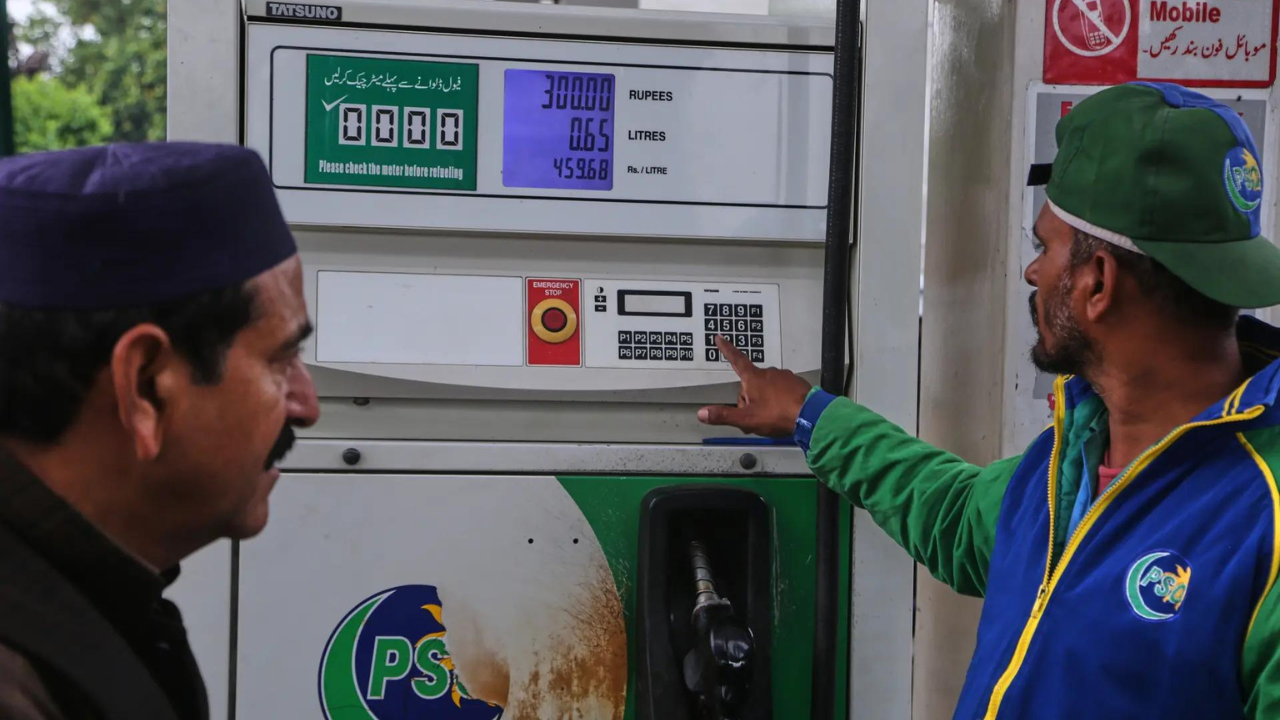
Pakistan is considering implementing austerity measures due to the rising fuel prices caused by the escalating tensions between the US and Iran. The conflict has led to a significant increase in fuel costs, affecting Pakistan's economy.
The Pakistani government is exploring ways to reduce its expenses and manage the economic impact of the rising fuel prices. This includes cutting back on non-essential expenditures and finding alternative sources of energy.
The US-Iran tensions have been escalating over the past few months, resulting in a surge in fuel prices globally. Pakistan, being a major importer of fuel, has been severely affected by this increase. The country's economy is already under strain due to various internal and external factors, and the rising fuel prices have added to its woes.
The Pakistani government has been trying to manage the situation by implementing various measures, including reducing fuel subsidies and increasing taxes on fuel. However, these measures have not been enough to offset the impact of the rising fuel prices.
The situation has been further complicated by the fact that Pakistan is heavily reliant on imported fuel to meet its energy needs. The country's domestic fuel production is not enough to meet its demand, making it vulnerable to fluctuations in global fuel prices.
The US-Iran conflict has also affected Pakistan's trade with other countries, particularly Iran. Pakistan has been importing fuel and other essential goods from Iran, but the US sanctions on Iran have made it difficult for Pakistan to continue this trade.
In the coming days, the Pakistani government will have to make some tough decisions to manage the economic impact of the rising fuel prices. The government will have to balance its need to reduce expenses with the need to protect the interests of its citizens, who are already bearing the brunt of the economic downturn.
The situation is being closely watched by economists and analysts, who are warning of a potential economic crisis in Pakistan if the situation is not managed properly. The Pakistani government will have to take some drastic measures to avoid this crisis and ensure the stability of its economy.
The impact of the US-Iran conflict on Pakistan's economy is a reminder of the interconnectedness of the global economy and the potential risks of geopolitical tensions. As the situation continues to unfold, it remains to be seen how Pakistan will navigate this challenging situation and manage the economic impact of the rising fuel prices.
In conclusion, the rising fuel prices caused by the US-Iran conflict have put Pakistan's economy under strain, and the government is considering austerity measures to manage the situation. The coming days will be crucial in determining the course of Pakistan's economy and its ability to navigate this challenging situation.
Frequently asked questions
How has the US-Iran conflict affected Pakistan's economy?
The conflict has led to a significant increase in fuel prices, affecting Pakistan's economy and leading to considerations of austerity measures.
What measures is the Pakistani government taking to manage the situation?
The government is exploring ways to reduce expenses, including cutting back on non-essential expenditures and finding alternative sources of energy.