Trump Seeks Reimbursement for Securing Hormuz
US President demands payment from nations, cites lack of help
'%3E%3Crect%20width%3D'96'%20height%3D'96'%20fill%3D'%234A235A'%2F%3E%3Ccircle%20cx%3D'30'%20cy%3D'24'%20r%3D'44'%20fill%3D'%23fff'%20opacity%3D'.12'%2F%3E%3Ccircle%20cx%3D'60'%20cy%3D'74'%20r%3D'40'%20fill%3D'%23000'%20opacity%3D'.10'%2F%3E%3C%2Fg%3E%3Cg%20fill%3D'none'%20stroke%3D'%23fff'%20stroke-width%3D'3'%3E%3Ccircle%20cx%3D'48'%20cy%3D'48'%20r%3D'16'%2F%3E%3Cellipse%20cx%3D'48'%20cy%3D'48'%20rx%3D'6.5'%20ry%3D'16'%2F%3E%3Cline%20x1%3D'32'%20y1%3D'42'%20x2%3D'64'%20y2%3D'42'%2F%3E%3Cline%20x1%3D'32'%20y1%3D'54'%20x2%3D'64'%20y2%3D'54'%2F%3E%3C%2Fg%3E%3C%2Fsvg%3E)
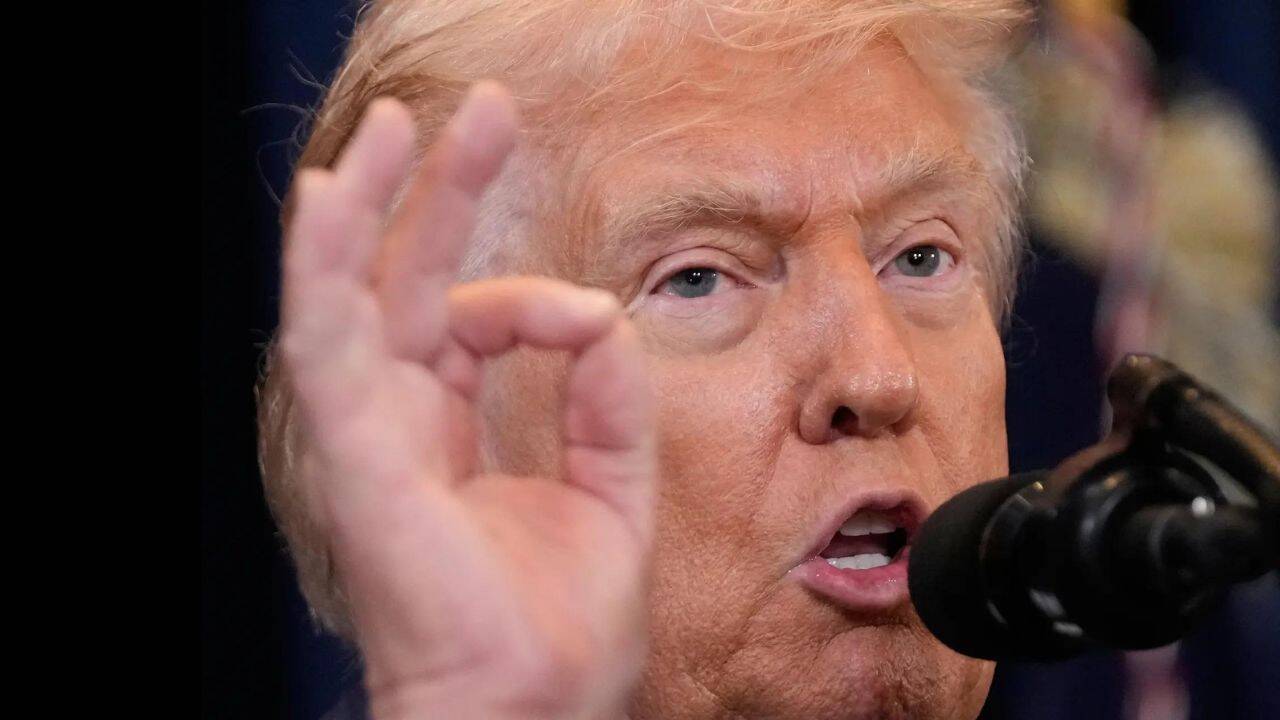
US President Donald Trump has sought reimbursement from nations for securing the Strait of Hormuz, a critical waterway in the Middle East. The President expressed frustration over the lack of assistance from other countries in maintaining the security of the strait.
The Strait of Hormuz is a vital shipping lane that connects the Persian Gulf to the Gulf of Oman, and it is a key route for international oil trade. The US has been providing security for the strait, but Trump believes that other nations should share the burden of costs.
In recent months, tensions have risen in the region, with Iran seizing oil tankers and attacking shipping vessels. The US has responded by increasing its military presence in the area and forming a coalition to protect shipping lanes. However, Trump has complained that other nations are not doing enough to help.
The President's demand for reimbursement is seen as an attempt to shift the burden of costs to other nations and to assert US influence in the region. The move is likely to be met with resistance from other countries, which may view it as an attempt to bully them into paying for US military actions.
The US has a long history of providing security for the Strait of Hormuz, and it has done so at significant cost. The US Navy's Fifth Fleet is based in Bahrain and is responsible for maintaining security in the region. The US has also formed alliances with other nations in the region, including Saudi Arabia and the United Arab Emirates, to counter the threat from Iran.
However, Trump's demand for reimbursement may be seen as a departure from the traditional US role as a provider of global security. The move may also be viewed as an attempt to undermine the international order and to promote a more isolationist US foreign policy.
The implications of Trump's demand are still unclear, but it is likely to have significant consequences for international relations and global security. The US may face resistance from other nations, and the move may also lead to a re-evaluation of the US role in providing security for the Strait of Hormuz.
In conclusion, Trump's demand for reimbursement for securing the Strait of Hormuz reflects a shift in US foreign policy and a desire to assert US influence in the region. The move is likely to be met with resistance from other nations and may have significant consequences for international relations and global security.
Frequently asked questions
Why is the Strait of Hormuz important?
The Strait of Hormuz is a critical waterway that connects the Persian Gulf to the Gulf of Oman and is a key route for international oil trade.
What is Trump's demand for reimbursement about?
Trump is seeking reimbursement from nations for the costs of securing the Strait of Hormuz, citing a lack of assistance from other countries.