Japanese Scientists Test Cosmic Ray Navigation
New tech uses cosmic rays, works underground, guides robots and vehicles
'%3E%3Crect%20width%3D'96'%20height%3D'96'%20fill%3D'%23B3261E'%2F%3E%3Ccircle%20cx%3D'30'%20cy%3D'24'%20r%3D'44'%20fill%3D'%23fff'%20opacity%3D'.12'%2F%3E%3Ccircle%20cx%3D'60'%20cy%3D'74'%20r%3D'40'%20fill%3D'%23000'%20opacity%3D'.10'%2F%3E%3C%2Fg%3E%3Cg%20fill%3D'%23fff'%3E%3Crect%20x%3D'29'%20y%3D'49'%20width%3D'8'%20height%3D'19'%20rx%3D'1'%2F%3E%3Crect%20x%3D'39'%20y%3D'40'%20width%3D'9'%20height%3D'28'%20rx%3D'1'%2F%3E%3Crect%20x%3D'50'%20y%3D'45'%20width%3D'8'%20height%3D'23'%20rx%3D'1'%2F%3E%3Crect%20x%3D'60'%20y%3D'53'%20width%3D'7'%20height%3D'15'%20rx%3D'1'%2F%3E%3Crect%20x%3D'41'%20y%3D'34'%20width%3D'5'%20height%3D'6'%2F%3E%3C%2Fg%3E%3C%2Fsvg%3E)
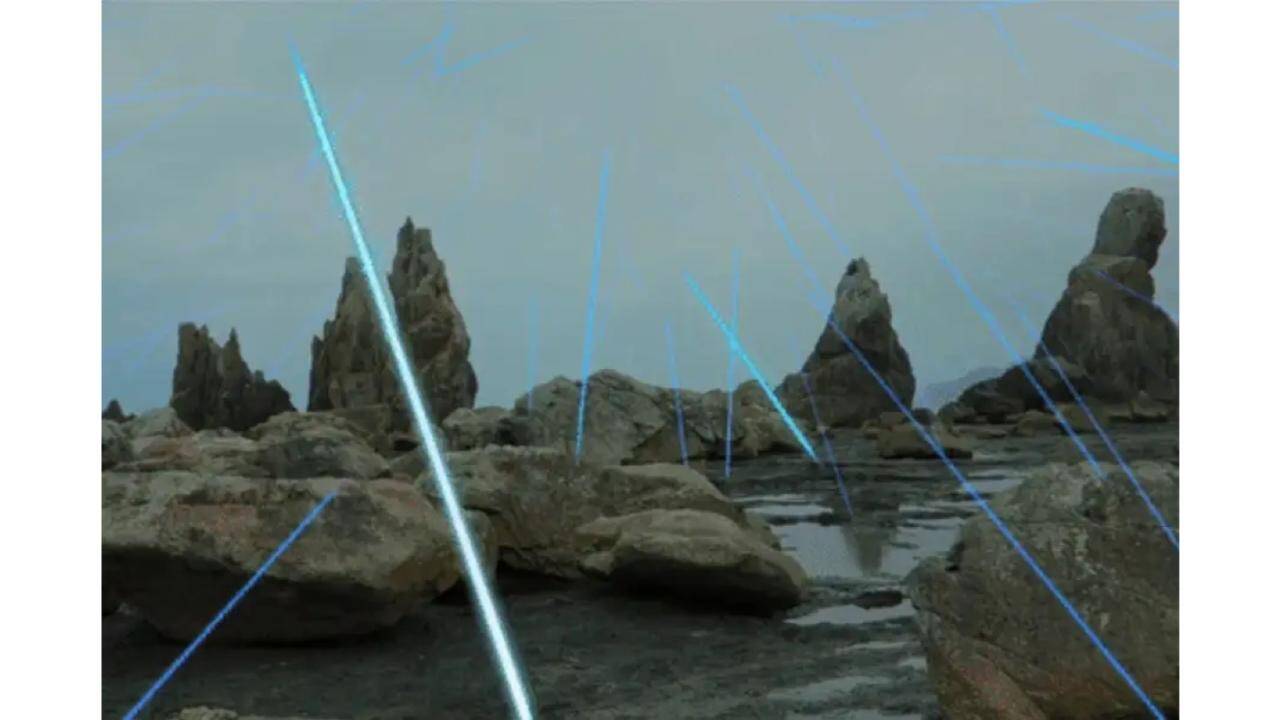
Japanese scientists have made a breakthrough in navigation technology by testing a new system that utilizes cosmic ray muons. This innovative approach can provide navigation in areas where GPS signals are unavailable, such as underground locations. The key advantage of this technology lies in the ability of muons to penetrate dense materials, a feat that GPS signals cannot accomplish effectively.
Researchers have successfully demonstrated the potential of this technology in guiding robots and vehicles, showcasing its promise for future applications. The technology, however, is still in its developmental phase and requires further refinement before it can be widely adopted.
The use of cosmic ray muons for navigation purposes is based on the principle that these particles can pass through solid objects, allowing them to provide location information even in environments where GPS signals are blocked. This characteristic makes the technology particularly useful for underground navigation, where traditional GPS systems often fail.
In recent experiments, Japanese scientists have been able to harness the power of cosmic ray muons to create a navigation system that can accurately determine the location of objects. While the results are promising, the technology is still in its infancy, and significant work is needed to improve its accuracy and reliability.
One of the primary challenges facing the development of this technology is the need for sophisticated detectors that can accurately track the movement of cosmic ray muons. Researchers are currently working on designing and building these detectors, which will be crucial for the widespread adoption of the technology.
As the development of this technology continues, it is likely to have significant implications for a range of industries, from mining and construction to emergency response and search and rescue operations. The ability to navigate accurately in underground environments could revolutionize the way we approach these activities, making them safer and more efficient.
In conclusion, the use of cosmic ray muons for navigation purposes represents an exciting new frontier in technology. While there are still significant challenges to be overcome, the potential benefits of this innovation make it an area of research that is well worth pursuing.
The development of this technology could have a major impact on our daily lives, from improving the safety of underground workers to enhancing the efficiency of emergency response operations. As researchers continue to refine and develop this technology, it will be exciting to see the innovative ways in which it is used to improve our world.
Frequently asked questions
What is the new navigation system being tested by Japanese scientists?
The new navigation system uses cosmic ray muons to provide location information, particularly in areas where GPS signals are unavailable.
What are the potential applications of this technology?
The technology has potential applications in industries such as mining, construction, emergency response, and search and rescue operations, where accurate underground navigation is crucial.