MEA Rejects US Criticism of FCRA Bill
US lawmaker criticizes India's foreign funding law, MEA responds. Bilateral relations may be affected.
'%3E%3Crect%20width%3D'96'%20height%3D'96'%20fill%3D'%231A5276'%2F%3E%3Ccircle%20cx%3D'30'%20cy%3D'24'%20r%3D'44'%20fill%3D'%23fff'%20opacity%3D'.12'%2F%3E%3Ccircle%20cx%3D'60'%20cy%3D'74'%20r%3D'40'%20fill%3D'%23000'%20opacity%3D'.10'%2F%3E%3C%2Fg%3E%3Cg%20fill%3D'%23fff'%3E%3Cpath%20d%3D'M31%2041%20L48%2031%20L65%2041%20Z'%2F%3E%3Crect%20x%3D'33'%20y%3D'43'%20width%3D'4'%20height%3D'17'%2F%3E%3Crect%20x%3D'41'%20y%3D'43'%20width%3D'4'%20height%3D'17'%2F%3E%3Crect%20x%3D'51'%20y%3D'43'%20width%3D'4'%20height%3D'17'%2F%3E%3Crect%20x%3D'59'%20y%3D'43'%20width%3D'4'%20height%3D'17'%2F%3E%3Crect%20x%3D'30'%20y%3D'62'%20width%3D'36'%20height%3D'4'%20rx%3D'1'%2F%3E%3C%2Fg%3E%3C%2Fsvg%3E)
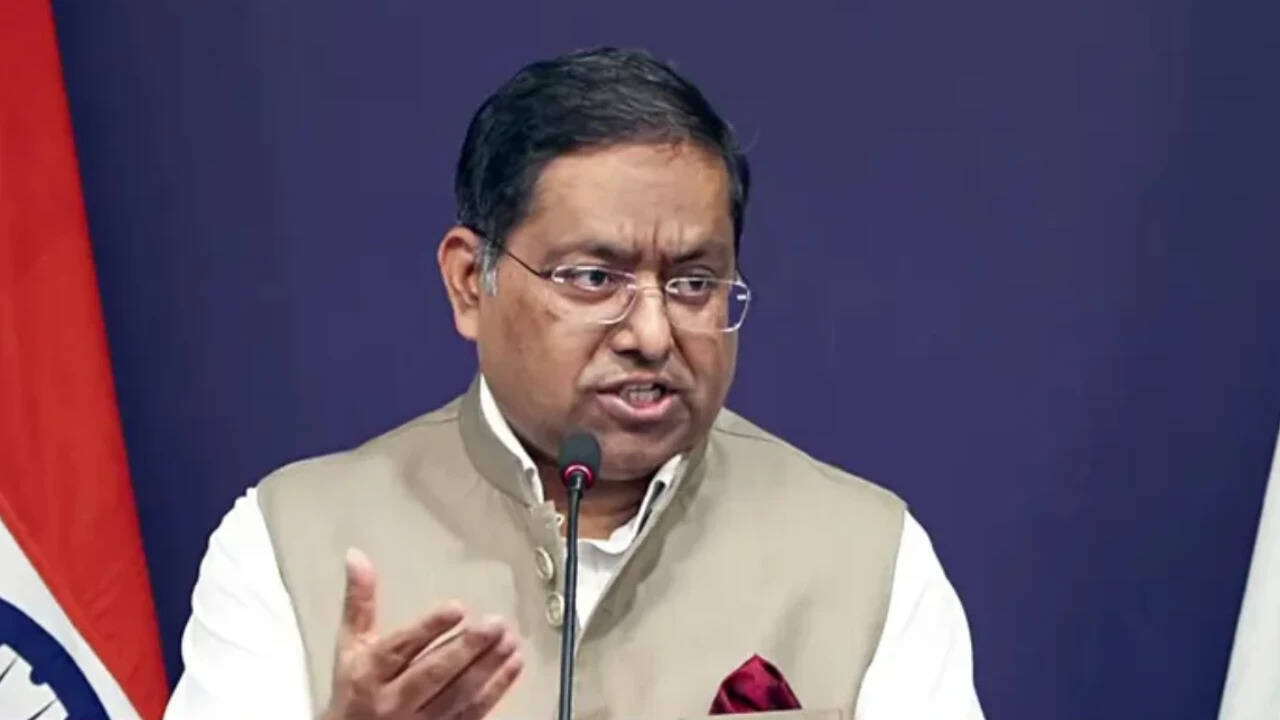
The Ministry of External Affairs (MEA) has dismissed criticism from a US lawmaker regarding the proposed amendments to India's Foreign Contribution Regulation Act (FCRA) Bill.
The MEA stated that legislative matters are internal decisions for the Indian Parliament to make, and therefore, the criticism is not justified. The ministry also pointed out that several countries, including the United States, have their own regulations regarding foreign financing.
A US Congressman had criticized the proposed amendments to the FCRA Bill, warning that these changes could potentially affect India-US bilateral relations. The Congressman's criticism was likely driven by concerns that the amendments could impact the flow of foreign funds into India, particularly from US-based organizations.
The FCRA Bill is aimed at regulating foreign contributions to Indian organizations, including non-governmental organizations (NGOs) and political parties. The proposed amendments to the Bill have been controversial, with some critics arguing that they could be used to stifle dissent and restrict the activities of NGOs.
The MEA's response to the US lawmaker's criticism is significant, as it reflects the Indian government's stance on the issue. The government has maintained that the FCRA Bill is necessary to ensure that foreign funds are not used to interfere in India's internal affairs.
The controversy surrounding the FCRA Bill has sparked a debate about the role of foreign funding in Indian politics and society. While some argue that foreign funds are necessary to support development and social causes, others believe that they can be used to influence Indian politics and undermine the country's sovereignty.
In recent years, the Indian government has taken steps to regulate foreign funding, including the introduction of the FCRA Bill. The government has argued that these regulations are necessary to prevent the misuse of foreign funds and to ensure that they are used for legitimate purposes.
The MEA's rejection of the US lawmaker's criticism is likely to be seen as a assertion of India's sovereignty and its right to make its own laws and regulations. The incident highlights the complexities of India-US bilateral relations, which are influenced by a range of factors, including trade, security, and cultural ties.
The controversy surrounding the FCRA Bill is also significant because it reflects the broader debate about the role of foreign funding in Indian society. As India continues to grow and develop, it is likely that the issue of foreign funding will remain a contentious one, with different stakeholders having different views on the matter.
In conclusion, the MEA's rejection of the US lawmaker's criticism of the FCRA Bill reflects the Indian government's stance on the issue and its commitment to regulating foreign funding. The incident highlights the complexities of India-US bilateral relations and the need for both countries to engage in a constructive dialogue on issues of mutual concern.
Frequently asked questions
What is the FCRA Bill?
The FCRA Bill is a law that regulates foreign contributions to Indian organizations, including NGOs and political parties.
Why did the US lawmaker criticize the FCRA Bill?
The US lawmaker criticized the FCRA Bill because he believed it could affect India-US bilateral relations and restrict the activities of NGOs.