Costa Rica Sees 176% Forest Biomass Rise After Orange Waste Experiment
Orange waste transforms degraded pasture into dense forest. Richer soil and greater tree diversity found.
'%3E%3Crect%20width%3D'96'%20height%3D'96'%20fill%3D'%23B3261E'%2F%3E%3Ccircle%20cx%3D'30'%20cy%3D'24'%20r%3D'44'%20fill%3D'%23fff'%20opacity%3D'.12'%2F%3E%3Ccircle%20cx%3D'60'%20cy%3D'74'%20r%3D'40'%20fill%3D'%23000'%20opacity%3D'.10'%2F%3E%3C%2Fg%3E%3Cg%20fill%3D'%23fff'%3E%3Crect%20x%3D'29'%20y%3D'49'%20width%3D'8'%20height%3D'19'%20rx%3D'1'%2F%3E%3Crect%20x%3D'39'%20y%3D'40'%20width%3D'9'%20height%3D'28'%20rx%3D'1'%2F%3E%3Crect%20x%3D'50'%20y%3D'45'%20width%3D'8'%20height%3D'23'%20rx%3D'1'%2F%3E%3Crect%20x%3D'60'%20y%3D'53'%20width%3D'7'%20height%3D'15'%20rx%3D'1'%2F%3E%3Crect%20x%3D'41'%20y%3D'34'%20width%3D'5'%20height%3D'6'%2F%3E%3C%2Fg%3E%3C%2Fsvg%3E)
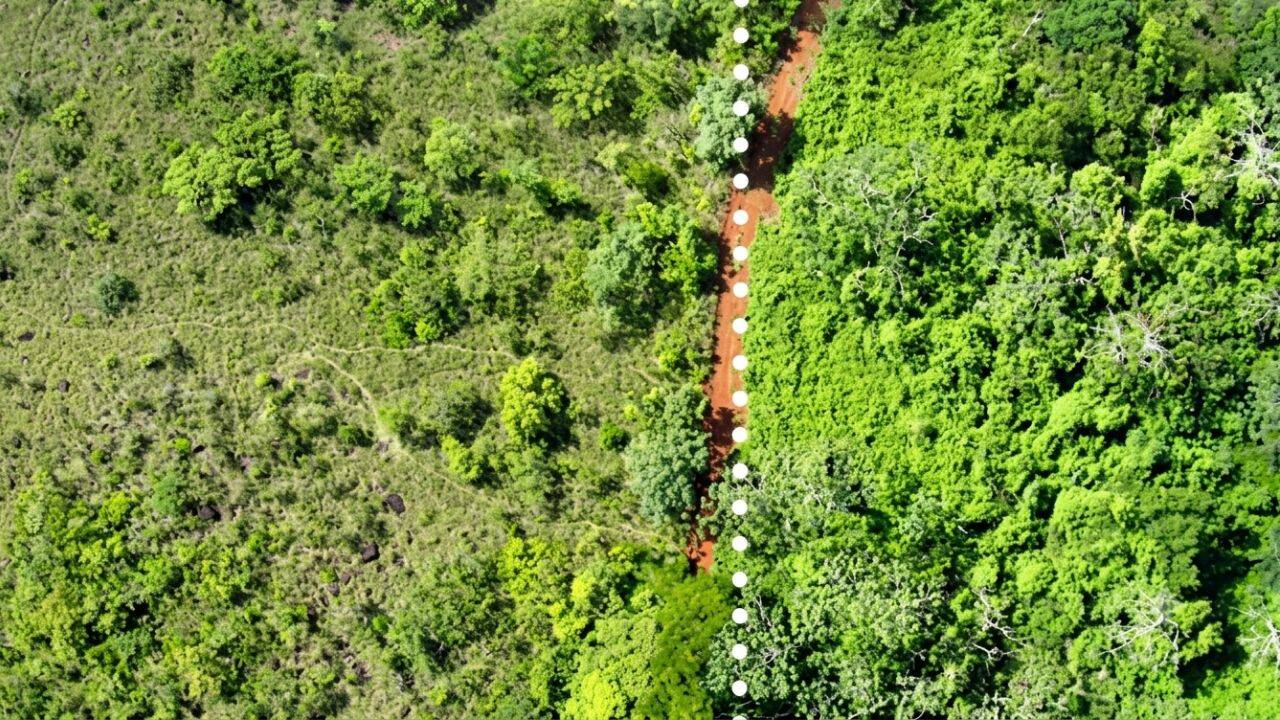
In 1998, a unique forest restoration experiment was conducted in Costa Rica, where approximately 12,000 metric tonnes of orange peels and pulp were spread over a degraded pasture. The goal of this experiment was to determine the impact of this organic waste on the environment and ecosystem.
The site, which was once a barren and degraded area, underwent a significant transformation over the course of 16 years. Researchers returned to the site in 2014 to assess the results of the experiment and were astonished to find that it had developed into a dense and thriving forest.
The study revealed that the introduction of orange waste had a profound impact on the soil quality, with significant improvements in nutrient levels and overall fertility. This, in turn, led to a substantial increase in tree diversity, with a wide range of species thriving in the newly restored forest.
One of the most striking findings of the study was the 176% increase in aboveground biomass, indicating a significant rise in the overall health and productivity of the forest ecosystem. This increase in biomass is a testament to the success of the experiment and highlights the potential for using organic waste as a tool for forest restoration.
The experiment in Costa Rica has important implications for environmental conservation and restoration efforts. It demonstrates the potential for using unconventional methods to restore degraded ecosystems and promote biodiversity. The use of organic waste as a fertilizer and soil amendment can be a cost-effective and sustainable way to improve soil health and promote ecosystem recovery.
The success of this experiment also highlights the importance of long-term thinking and planning in environmental conservation. The transformation of the degraded pasture into a thriving forest took 16 years, demonstrating that patience and persistence are essential for achieving meaningful and lasting results in environmental restoration.
The study's findings have significant implications for forest restoration efforts globally. With many ecosystems facing degradation and deforestation, the use of organic waste as a tool for restoration could be a game-changer. It offers a sustainable and cost-effective solution for promoting ecosystem recovery and biodiversity conservation.
In conclusion, the experiment in Costa Rica demonstrates the potential for using orange waste to restore degraded forests and promote ecosystem recovery. The significant increase in forest biomass and tree diversity is a testament to the success of this unconventional approach, and it highlights the importance of thinking outside the box in environmental conservation.
The implications of this study are far-reaching, and it has the potential to inform and influence forest restoration efforts globally. As the world grapples with the challenges of environmental degradation and deforestation, the use of organic waste as a tool for restoration could be a vital component of a broader strategy for promoting ecosystem recovery and biodiversity conservation.
What this means for the environment is a significant step forward in the quest for sustainable and effective solutions to the global environmental crisis. The use of organic waste as a fertilizer and soil amendment can help to reduce waste, promote ecosystem recovery, and support biodiversity conservation. This approach has the potential to be replicated in other ecosystems, offering a beacon of hope for the restoration of degraded environments and the promotion of ecosystem health.
Frequently asked questions
What was the outcome of the orange waste experiment in Costa Rica?
The experiment resulted in a 176% increase in aboveground biomass and the development of a dense forest with richer soil and greater tree diversity.
How long did it take for the degraded pasture to transform into a forest?
The transformation took 16 years, from 1998 to 2014.