Russia-Ukraine War Escalates in Sea of Azov
Russia labels Ukraine's maritime strikes as terrorism, escalating conflict.
'%3E%3Crect%20width%3D'96'%20height%3D'96'%20fill%3D'%234A235A'%2F%3E%3Ccircle%20cx%3D'30'%20cy%3D'24'%20r%3D'44'%20fill%3D'%23fff'%20opacity%3D'.12'%2F%3E%3Ccircle%20cx%3D'60'%20cy%3D'74'%20r%3D'40'%20fill%3D'%23000'%20opacity%3D'.10'%2F%3E%3C%2Fg%3E%3Cg%20fill%3D'none'%20stroke%3D'%23fff'%20stroke-width%3D'3'%3E%3Ccircle%20cx%3D'48'%20cy%3D'48'%20r%3D'16'%2F%3E%3Cellipse%20cx%3D'48'%20cy%3D'48'%20rx%3D'6.5'%20ry%3D'16'%2F%3E%3Cline%20x1%3D'32'%20y1%3D'42'%20x2%3D'64'%20y2%3D'42'%2F%3E%3Cline%20x1%3D'32'%20y1%3D'54'%20x2%3D'64'%20y2%3D'54'%2F%3E%3C%2Fg%3E%3C%2Fsvg%3E)
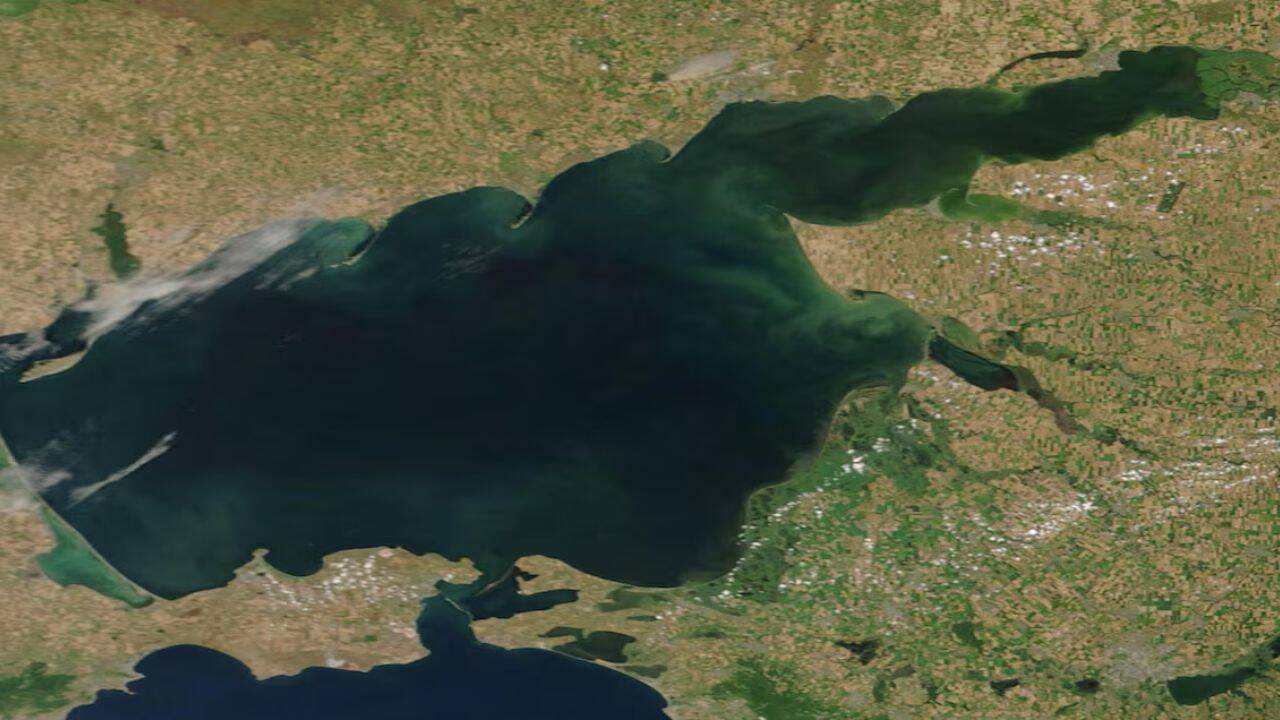
The conflict between Russia and Ukraine has intensified in the Sea of Azov, with Russia condemning Ukraine's recent maritime strikes as acts of terrorism. The strikes, which Ukraine claims are targeted at military vessels, have jeopardized a critical grain export route that is vital to Russia's economy.
The situation in the Sea of Azov has been escalating, with an increase in maritime drone operations targeting Russian vessels. Russia has emphasized the importance of safeguarding its grain harvest and maintaining robust supply lines during the conflict.
The Sea of Azov is a crucial body of water that connects to the Black Sea and is an essential route for grain exports from both Russia and Ukraine. The conflict in this region has significant implications for the global food supply, as both countries are major grain producers.
Ukraine has been carrying out attacks on Russian military targets in the Sea of Azov, using maritime drones to target vessels. Russia, on the other hand, has been trying to maintain its control over the sea and ensure the safe passage of its grain exports.
The escalating conflict in the Sea of Azov has raised concerns about the potential disruption to global food supplies. The region is a critical hub for grain exports, and any disruption to these exports could have far-reaching consequences for food prices and availability around the world.
The international community has been watching the situation in the Sea of Azov with concern, calling for a peaceful resolution to the conflict. However, with both sides dug in and refusing to back down, the situation remains volatile and unpredictable.
The conflict in the Sea of Azov is just one aspect of the broader Russia-Ukraine war, which has been ongoing for several years. The war has had significant humanitarian and economic consequences, with thousands of people displaced and a major impact on the global economy.
In conclusion, the escalation of the conflict in the Sea of Azov has significant implications for the global food supply and the broader Russia-Ukraine war. The situation remains volatile, and the international community is calling for a peaceful resolution to the conflict.
The Sea of Azov conflict is a reminder of the complexities and challenges of modern warfare, where the use of maritime drones and other technologies is becoming increasingly prevalent. As the situation continues to unfold, it is essential to monitor developments closely and work towards a peaceful resolution to the conflict.