Supreme Court Orders Alternative Namaz Site
Supreme Court directs Dhar administration to find alternative space for Friday prayers, prohibits structural changes to Bhojshala complex
'%3E%3Crect%20width%3D'96'%20height%3D'96'%20fill%3D'%231A5276'%2F%3E%3Ccircle%20cx%3D'30'%20cy%3D'24'%20r%3D'44'%20fill%3D'%23fff'%20opacity%3D'.12'%2F%3E%3Ccircle%20cx%3D'60'%20cy%3D'74'%20r%3D'40'%20fill%3D'%23000'%20opacity%3D'.10'%2F%3E%3C%2Fg%3E%3Cg%20fill%3D'%23fff'%3E%3Cpath%20d%3D'M31%2041%20L48%2031%20L65%2041%20Z'%2F%3E%3Crect%20x%3D'33'%20y%3D'43'%20width%3D'4'%20height%3D'17'%2F%3E%3Crect%20x%3D'41'%20y%3D'43'%20width%3D'4'%20height%3D'17'%2F%3E%3Crect%20x%3D'51'%20y%3D'43'%20width%3D'4'%20height%3D'17'%2F%3E%3Crect%20x%3D'59'%20y%3D'43'%20width%3D'4'%20height%3D'17'%2F%3E%3Crect%20x%3D'30'%20y%3D'62'%20width%3D'36'%20height%3D'4'%20rx%3D'1'%2F%3E%3C%2Fg%3E%3C%2Fsvg%3E)
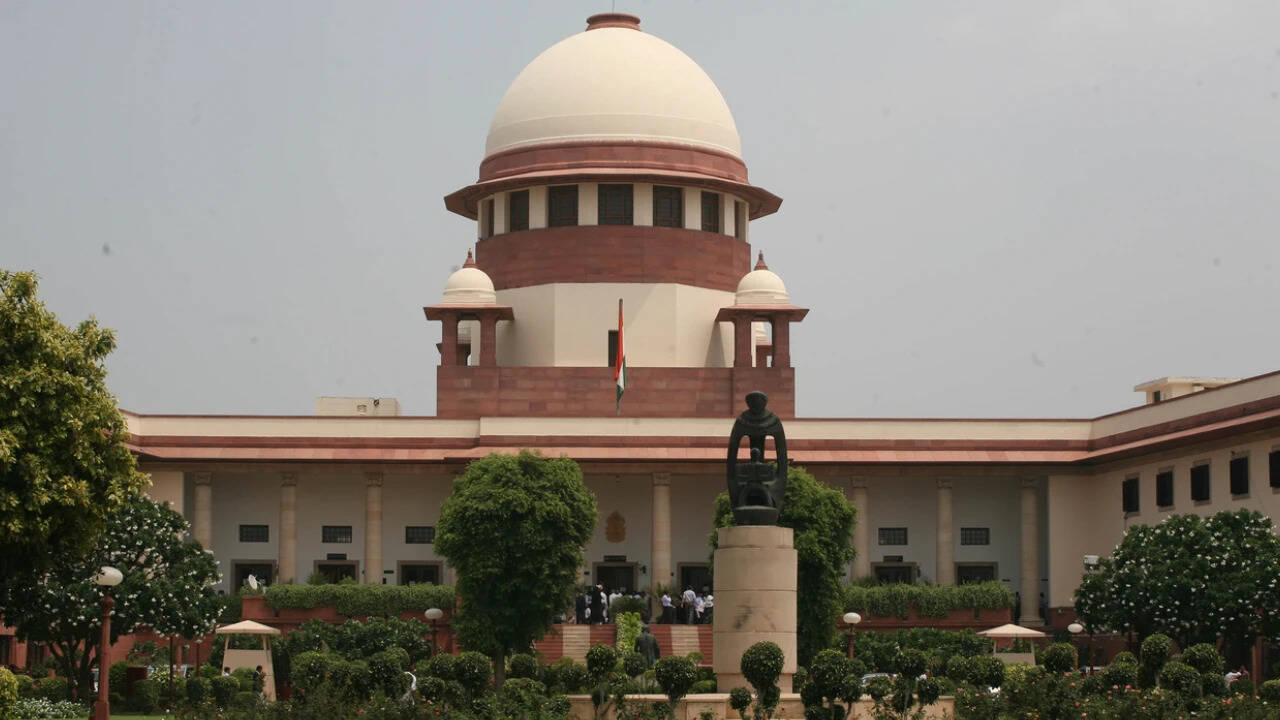
The Supreme Court has directed the Dhar administration to provide an alternative site for Muslims to offer namaz, in a significant development related to the Bhojshala complex. This order comes as the court prepares to hear challenges to a Madhya Pradesh High Court ruling that declared the site a temple.
The Madhya Pradesh High Court had earlier ruled in favor of the site being a temple, a decision that was met with opposition from Muslim petitioners. They argued that the ruling ignored historical evidence and existing arrangements, which had allowed for both Hindu and Muslim worship at the site.
The Supreme Court, while declining to stay the High Court's order, has made it clear that any structural changes to the complex will require its permission. This move is seen as an attempt to balance the interests of both communities and prevent any potential disputes.
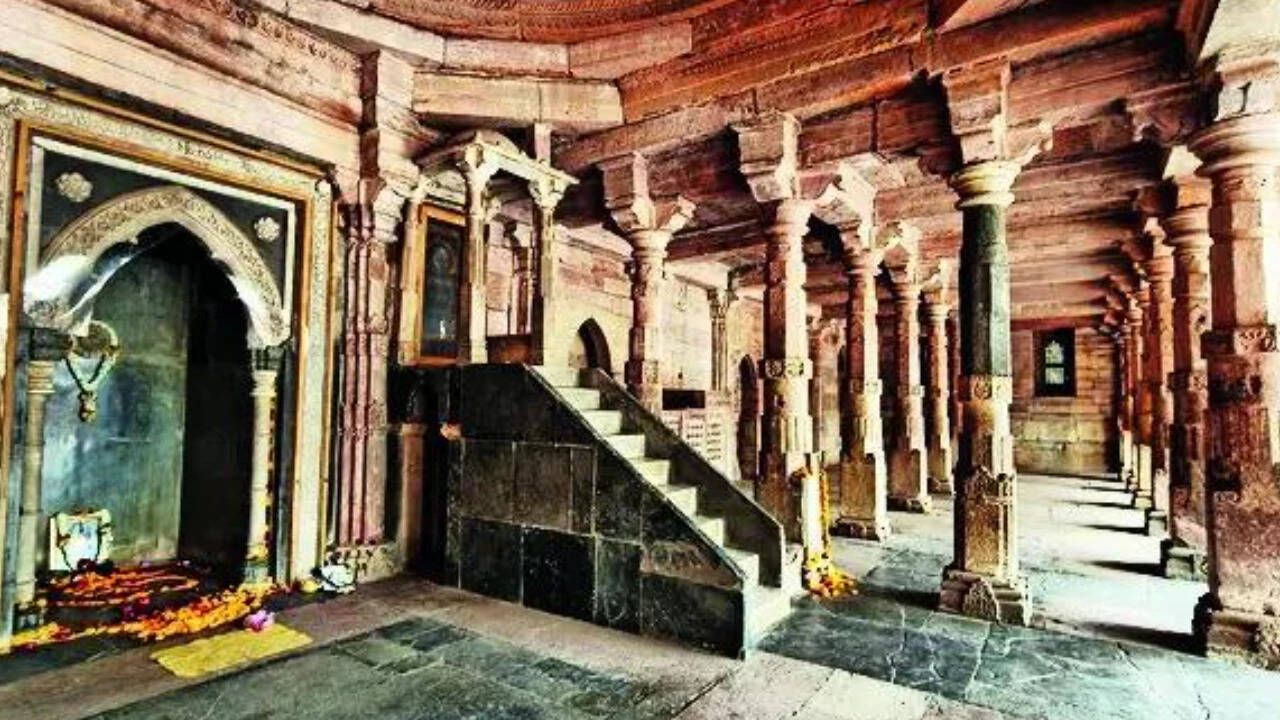
The Bhojshala complex has been a point of contention between Hindus and Muslims for many years, with both communities claiming the site as their own. The complex is believed to have been built in the 11th century and has significant historical and cultural importance.
The Supreme Court's decision to direct the authorities to find an alternative space for Friday prayers is seen as a pragmatic solution to the issue. It allows Muslims to continue their worship while also respecting the High Court's ruling that declared the site a temple.
The court's prohibition on structural changes to the complex without its permission is also significant. It ensures that any alterations to the site will be made with the approval of the court, preventing any potential disputes or conflicts.
The Bhojshala complex is located in Dhar, a town in the Malwa region of Madhya Pradesh. The site has been a point of pilgrimage for both Hindus and Muslims, and its history and cultural significance are deeply rooted in the region.
The Supreme Court's decision is expected to have significant implications for the management and maintenance of the Bhojshala complex. It will require the authorities to balance the interests of both communities and ensure that the site is protected and preserved for future generations.
In the broader context, the Supreme Court's decision highlights the need for sensitivity and understanding in managing sites of historical and cultural significance. It requires a delicate balance between respecting the rights and interests of different communities and ensuring that the site is protected and preserved.
The decision is also significant for Mumbai, as it sets a precedent for the management of similar sites in the city. Mumbai has a long history of cultural and religious diversity, and the Supreme Court's decision provides a framework for managing sites that are significant to multiple communities.
In conclusion, the Supreme Court's decision to direct the Dhar administration to provide an alternative site for Muslims to offer namaz is a significant development in the ongoing dispute over the Bhojshala complex. The decision highlights the need for sensitivity and understanding in managing sites of historical and cultural significance and provides a framework for balancing the interests of different communities.