New Zealand Students Restore Native Habitat
Students transform coastal paddock, plant 12,425 native plants, support wildlife
'%3E%3Crect%20width%3D'96'%20height%3D'96'%20fill%3D'%23B3261E'%2F%3E%3Ccircle%20cx%3D'30'%20cy%3D'24'%20r%3D'44'%20fill%3D'%23fff'%20opacity%3D'.12'%2F%3E%3Ccircle%20cx%3D'60'%20cy%3D'74'%20r%3D'40'%20fill%3D'%23000'%20opacity%3D'.10'%2F%3E%3C%2Fg%3E%3Cg%20fill%3D'%23fff'%3E%3Crect%20x%3D'29'%20y%3D'49'%20width%3D'8'%20height%3D'19'%20rx%3D'1'%2F%3E%3Crect%20x%3D'39'%20y%3D'40'%20width%3D'9'%20height%3D'28'%20rx%3D'1'%2F%3E%3Crect%20x%3D'50'%20y%3D'45'%20width%3D'8'%20height%3D'23'%20rx%3D'1'%2F%3E%3Crect%20x%3D'60'%20y%3D'53'%20width%3D'7'%20height%3D'15'%20rx%3D'1'%2F%3E%3Crect%20x%3D'41'%20y%3D'34'%20width%3D'5'%20height%3D'6'%2F%3E%3C%2Fg%3E%3C%2Fsvg%3E)
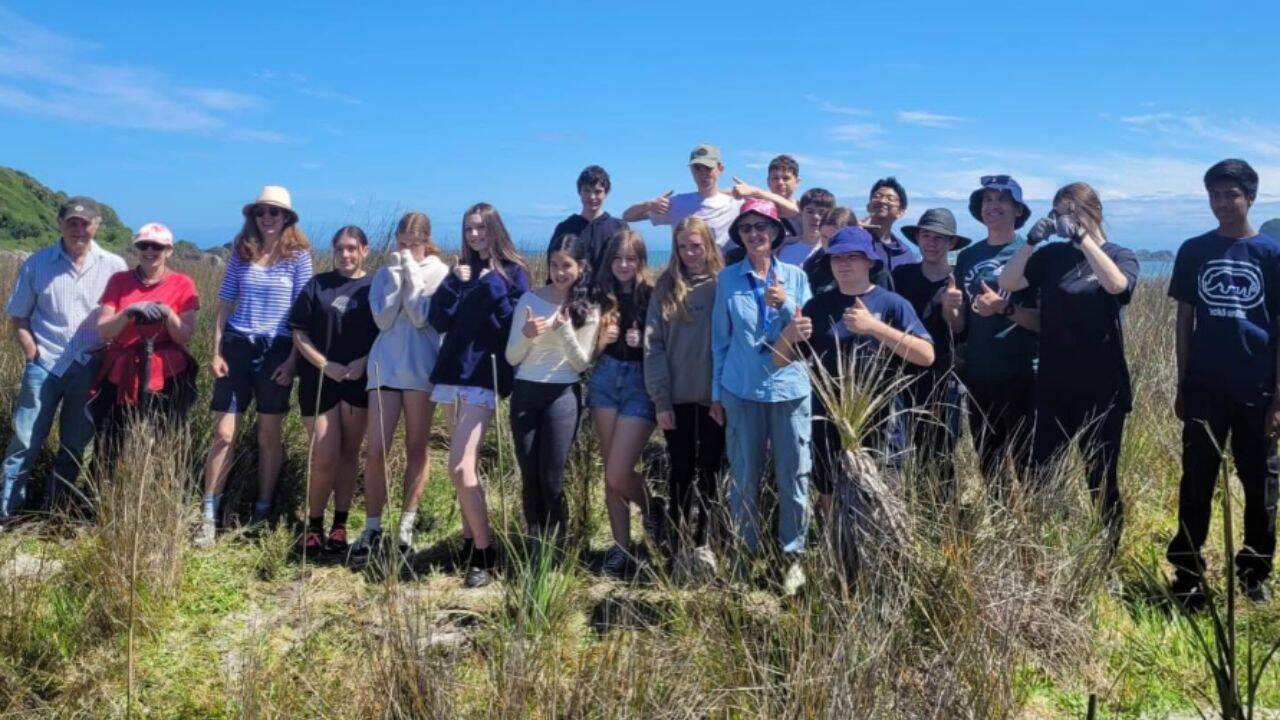
A retired teacher in New Zealand has led an initiative to restore native vegetation at Tauranga Bay and Cape Foulwind. Janet Pottinger, who spent 29 years at Buller High School, has been instrumental in this project since 1997.
Over the years, around 2,800 students have participated in this effort, planting a total of 12,425 native plants across 108 trips. The project has successfully transformed a former grassland into a thriving habitat that supports various native wildlife, including birds, seals, and lizards.
The students' hard work and dedication have paid off, as the restored area now provides a safe haven for native species to flourish. This initiative not only helps to preserve the local ecosystem but also educates students about the importance of conservation and environmental sustainability.
The project's success can be attributed to the collaborative efforts of Janet Pottinger, the students, and the community. It serves as a model for other conservation initiatives, demonstrating the positive impact that can be achieved when people work together towards a common goal.
The restoration of native habitats is crucial for maintaining biodiversity and supporting local ecosystems. By planting native species, the students have helped to create a balanced environment that allows native wildlife to thrive.
This project has also provided students with hands-on experience and knowledge about conservation and environmental sustainability. It has inspired a new generation of conservationists and environmental stewards, who will continue to make a positive impact on their community and the environment.
The success of this initiative is a testament to the power of community-driven conservation efforts. It shows that even small actions, such as planting native plants, can collectively make a significant difference in restoring and preserving native habitats.
In conclusion, the restoration of the coastal paddock at Tauranga Bay and Cape Foulwind is a remarkable achievement that demonstrates the importance of conservation and environmental sustainability. It serves as a model for other communities to follow, inspiring people to take action and make a positive impact on their environment.
Frequently asked questions
What is the location of the restored native habitat?
The restored native habitat is located at Tauranga Bay and Cape Foulwind in New Zealand.
How many native plants have been planted by the students?
The students have planted a total of 12,425 native plants.