BMC Appoints NEERI For ₹3.01-Crore Study On Kanjurmarg Dumping Ground Pollution
BMC to study methane emissions, air pollution at Kanjurmarg dumping ground. NEERI to conduct two-year study.
'%3E%3Crect%20width%3D'96'%20height%3D'96'%20fill%3D'%23B3261E'%2F%3E%3Ccircle%20cx%3D'30'%20cy%3D'24'%20r%3D'44'%20fill%3D'%23fff'%20opacity%3D'.12'%2F%3E%3Ccircle%20cx%3D'60'%20cy%3D'74'%20r%3D'40'%20fill%3D'%23000'%20opacity%3D'.10'%2F%3E%3C%2Fg%3E%3Cg%20fill%3D'%23fff'%3E%3Crect%20x%3D'29'%20y%3D'49'%20width%3D'8'%20height%3D'19'%20rx%3D'1'%2F%3E%3Crect%20x%3D'39'%20y%3D'40'%20width%3D'9'%20height%3D'28'%20rx%3D'1'%2F%3E%3Crect%20x%3D'50'%20y%3D'45'%20width%3D'8'%20height%3D'23'%20rx%3D'1'%2F%3E%3Crect%20x%3D'60'%20y%3D'53'%20width%3D'7'%20height%3D'15'%20rx%3D'1'%2F%3E%3Crect%20x%3D'41'%20y%3D'34'%20width%3D'5'%20height%3D'6'%2F%3E%3C%2Fg%3E%3C%2Fsvg%3E)
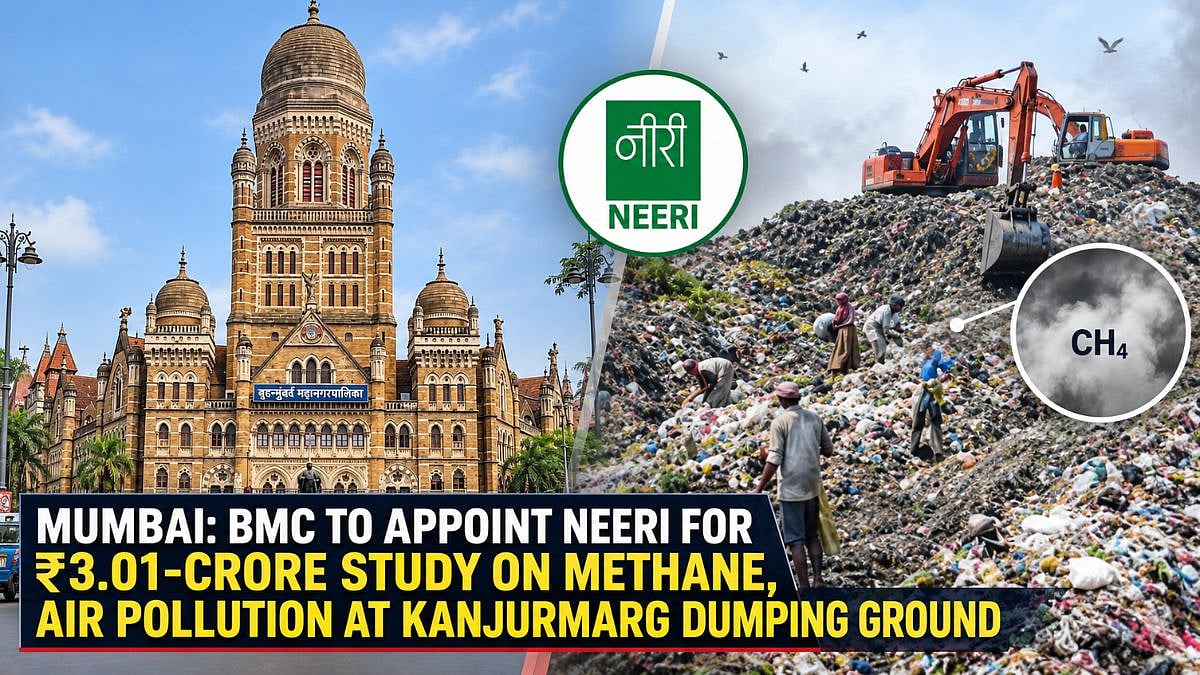
The Brihanmumbai Municipal Corporation (BMC) is set to appoint the National Environmental Engineering Research Institute (NEERI) to conduct a two-year scientific study on methane emissions and air pollution at the Kanjurmarg dumping ground. The study, which is expected to cost ₹3.01 crore, aims to detect methane emissions from the site and assess air quality, odour levels, and other pollutants in surrounding areas.
The decision to appoint NEERI comes after the Bombay High Court directed the BMC to take action to address the issue of foul odour, air pollution, and recurring fire incidents at the Kanjurmarg dumping ground. The court cited a UCLA study that highlighted the potential environmental concerns related to methane emissions from the plant.
Mumbai generates around 6,300 metric tonnes of waste daily, with nearly 90% of it being processed at the Kanjur facility. The facility uses windrow composting and bioreactor technology to process the waste, but potential methane emissions from the plant have raised environmental concerns.
The NEERI study will use ground sensors, drone surveys, satellite imagery, and GIS-based mapping to locate methane hotspots across the facility. The study will also assess odour and air pollution in residential areas around the Kanjur facility, where residents have long complained of foul smells and poor air quality.
The study will have two components: one will focus on quantifying methane emissions using drones, satellite imagery, and ground sensors, while the other will assess air pollution, odour-causing gases, and VOC emissions in residential areas around Kanjur. The total contract value is estimated at ₹3.01 crore.
The assessment will span the pre-monsoon, monsoon, and post-monsoon periods, allowing researchers to track seasonal variations in methane emissions and determine the impact of weather conditions on emission levels. NEERI will submit progress reports at the end of six, 12, and 18 months, followed by the final report after 24 months.
The BMC hopes that the study will provide a scientific basis for making necessary changes to the management and operation of the waste-processing facility. The study's findings are expected to help the BMC identify the sources and hotspots of methane and odour emissions and recommend preventive measures.
The Kanjurmarg dumping ground has been a source of concern for residents and environmentalists alike, with many calling for the facility to be relocated or upgraded. The NEERI study is a step towards addressing these concerns and finding a solution to the environmental problems caused by the dumping ground.
In the long run, the study's findings are expected to have a significant impact on the management of waste in Mumbai. The city's waste management system has been under scrutiny in recent years, with many calling for a more sustainable and environmentally-friendly approach. The NEERI study is a step towards achieving this goal, and its findings are expected to inform future policy decisions on waste management in the city.
The study is also expected to have implications for the health and well-being of residents living near the Kanjurmarg dumping ground. The facility's emissions have been linked to a range of health problems, including respiratory issues and cancer. By identifying the sources and hotspots of methane and odour emissions, the study hopes to provide a basis for reducing these emissions and improving the health and quality of life for residents in the area.
Overall, the NEERI study is an important step towards addressing the environmental concerns related to the Kanjurmarg dumping ground. Its findings are expected to have a significant impact on the management of waste in Mumbai and the health and well-being of residents living near the facility.
Frequently asked questions
What is the purpose of the NEERI study at Kanjurmarg dumping ground?
The study aims to detect methane emissions and assess air quality, odour levels, and other pollutants in surrounding areas.
How much will the NEERI study cost?
The study is expected to cost ₹3.01 crore.