Mumbai Cancer Survivor Highlights Need For More Stem-Cell Donors
Mumbai cancer survivor Sayli Rane receives stem-cell transplant, DKMS registry has 3 lakh donors
'%3E%3Crect%20width%3D'96'%20height%3D'96'%20fill%3D'%23B3261E'%2F%3E%3Ccircle%20cx%3D'30'%20cy%3D'24'%20r%3D'44'%20fill%3D'%23fff'%20opacity%3D'.12'%2F%3E%3Ccircle%20cx%3D'60'%20cy%3D'74'%20r%3D'40'%20fill%3D'%23000'%20opacity%3D'.10'%2F%3E%3C%2Fg%3E%3Cg%20fill%3D'%23fff'%3E%3Crect%20x%3D'29'%20y%3D'49'%20width%3D'8'%20height%3D'19'%20rx%3D'1'%2F%3E%3Crect%20x%3D'39'%20y%3D'40'%20width%3D'9'%20height%3D'28'%20rx%3D'1'%2F%3E%3Crect%20x%3D'50'%20y%3D'45'%20width%3D'8'%20height%3D'23'%20rx%3D'1'%2F%3E%3Crect%20x%3D'60'%20y%3D'53'%20width%3D'7'%20height%3D'15'%20rx%3D'1'%2F%3E%3Crect%20x%3D'41'%20y%3D'34'%20width%3D'5'%20height%3D'6'%2F%3E%3C%2Fg%3E%3C%2Fsvg%3E)
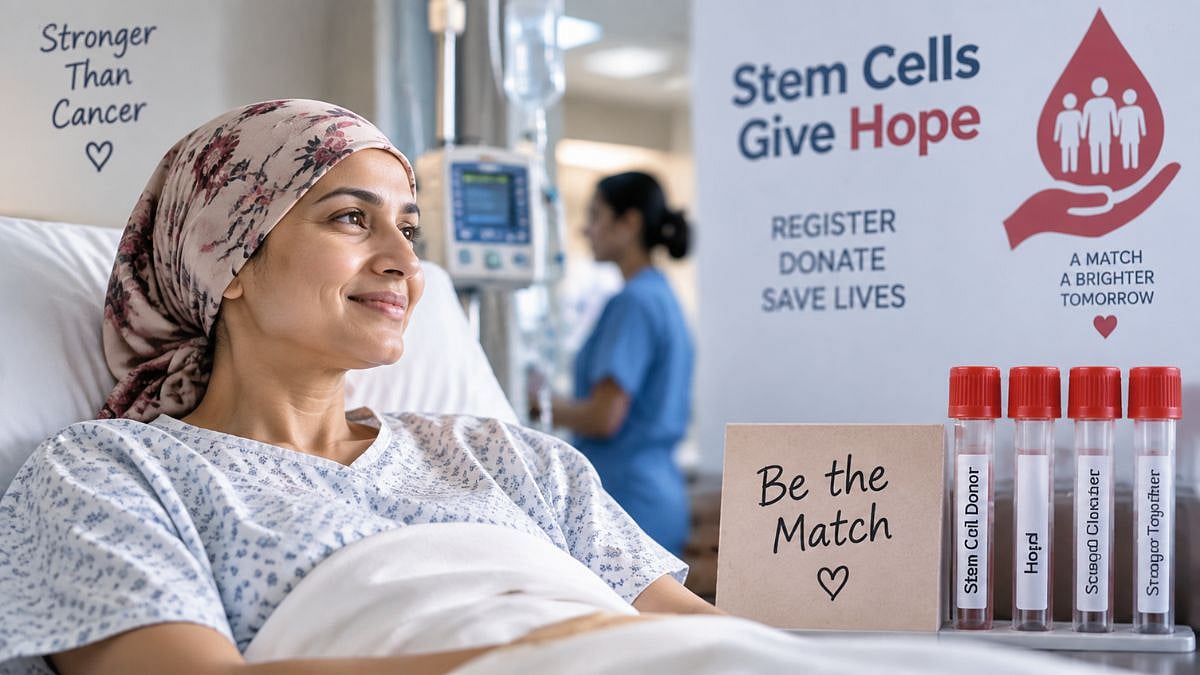
A Mumbai cancer survivor's successful stem-cell transplant has highlighted the need for more donors across India. Sayli Rane, a resident of Mumbai, received a stem-cell transplant from an unrelated donor in Ahmedabad in 2021.
The transplant was made possible after Rane's oncologist advised her to register with donor registries. She first registered with Datri, an Indian-based stem-cell donor registry, and was subsequently registered with DKMS, an international non-profit stem-cell donor registry.
DKMS has registered around three lakh potential donors across India, with 11,000 registered in Mumbai and 40,101 in Maharashtra. However, more registrations are needed to improve the chances of finding a suitable match for patients.
Rane's experience is a testament to the importance of having a larger donor pool. She remains disease-free five years after her transplant and undergoes annual follow-ups.
DKMS said 300 donors registered with the organisation have so far donated stem cells, giving patients a second chance at life. The organisation works with several hospitals in Mumbai to support patients requiring transplantation.
Any adult aged 18 to 55 years and in generally good health can register as a potential donor. When a patient requires a transplant, doctors provide the required donor specifications and registries search for a compatible match based on Human Leukocyte Antigens (HLA) typing.
According to DKMS, there is a need to expand awareness about donor registration and transplantation. More than 1.1 lakh people are diagnosed with blood cancer in India every year, while over 10,000 children are born with thalassaemia.
For several patients with leukaemia, lymphoma, myeloma, thalassaemia and aplastic anaemia, a blood stem-cell transplant can offer a chance of cure. The need for greater access to transplantation was also highlighted by Sankalp India Foundation, an NGO which works with blood disorders patients.
The NGO recently reached the milestone of 1,000 paediatric stem-cell transplants, primarily involving children with severe inherited blood disorders such as thalassaemia. DKMS contributed towards the transplantation costs of more than 820 children.
Speaking about the milestone, Dr Elke Neujahr, Global CEO of DKMS, said that behind 1,000 transplants are 1,000 children and families whose lives have been changed.
With a larger donor pool, registries hope to improve the possibility of finding matches for patients in need of a transplant. This can be achieved by expanding awareness about donor registration and transplantation, and encouraging more people to register as potential donors.
The success of Rane's transplant and the milestone achieved by Sankalp India Foundation highlight the importance of stem-cell donation and the need for more donors across India.
As the number of people diagnosed with blood cancer and other blood disorders continues to rise, the need for a larger donor pool becomes increasingly important. By registering as a potential donor, individuals can give patients a second chance at life and help improve the chances of finding a suitable match for those in need of a transplant.
In conclusion, the story of Sayli Rane and the milestone achieved by Sankalp India Foundation serve as a reminder of the importance of stem-cell donation and the need for more donors across India. By working together, we can build a larger donor pool and improve the chances of finding matches for patients in need of a transplant.
Frequently asked questions
How can I register as a stem-cell donor in Mumbai?
You can register as a potential donor with organisations such as DKMS or Datri, which work with several hospitals in Mumbai to support patients requiring transplantation.
What is the eligibility criteria for stem-cell donation?
Any adult aged 18 to 55 years and in generally good health can register as a potential donor.