Sonam Wangchuk's Hunger Strike Hits 18th Day
Climate activist Sonam Wangchuk continues his hunger strike, demanding education reform and Ladakh's constitutional safeguards. His health deteriorates as the protest's impact is questioned.
'%3E%3Crect%20width%3D'96'%20height%3D'96'%20fill%3D'%231A5276'%2F%3E%3Ccircle%20cx%3D'30'%20cy%3D'24'%20r%3D'44'%20fill%3D'%23fff'%20opacity%3D'.12'%2F%3E%3Ccircle%20cx%3D'60'%20cy%3D'74'%20r%3D'40'%20fill%3D'%23000'%20opacity%3D'.10'%2F%3E%3C%2Fg%3E%3Cg%20fill%3D'%23fff'%3E%3Cpath%20d%3D'M31%2041%20L48%2031%20L65%2041%20Z'%2F%3E%3Crect%20x%3D'33'%20y%3D'43'%20width%3D'4'%20height%3D'17'%2F%3E%3Crect%20x%3D'41'%20y%3D'43'%20width%3D'4'%20height%3D'17'%2F%3E%3Crect%20x%3D'51'%20y%3D'43'%20width%3D'4'%20height%3D'17'%2F%3E%3Crect%20x%3D'59'%20y%3D'43'%20width%3D'4'%20height%3D'17'%2F%3E%3Crect%20x%3D'30'%20y%3D'62'%20width%3D'36'%20height%3D'4'%20rx%3D'1'%2F%3E%3C%2Fg%3E%3C%2Fsvg%3E)
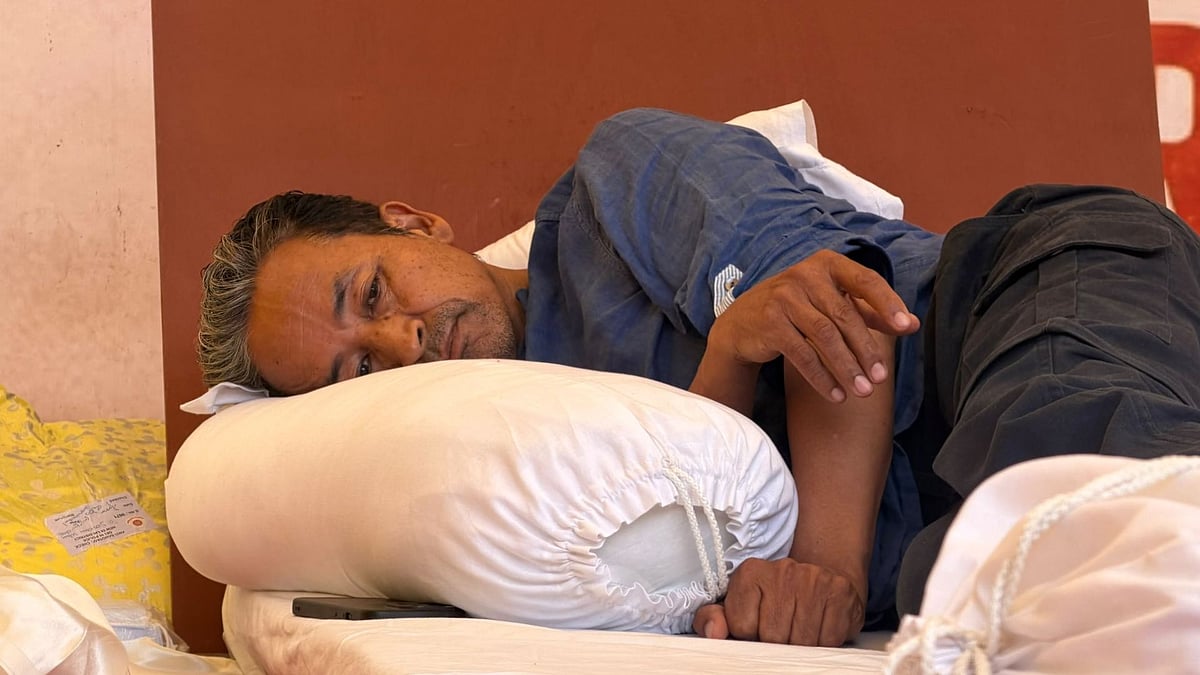
Renowned climate activist and education reformer Sonam Wangchuk from Ladakh has been on an indefinite hunger strike since June 28, 2026, at Jantar Mantar in Delhi. The fast has now entered its 18th day, with Wangchuk's health significantly deteriorating. He has lost over 8 kg, and his blood pressure and blood sugar levels have dropped, causing muscle wasting and increasing pain.
Wangchuk has vowed to continue his fast for up to six weeks or until death, if necessary. His demands focus on two critical issues: accountability in India's education system, specifically the resignation of Union Education Minister Dharmendra Pradhan over the NEET-UG 2026 paper leak scandal, and long-pending constitutional safeguards for Ladakh. The region is seeking inclusion under the Sixth Schedule, greater autonomy, and environmental protections.
The NEET paper leak led to the exam's cancellation, causing widespread student distress, reported suicides, and eroded trust in the National Testing Agency. Ladakh's demands stem from unfulfilled promises since its reorganisation as a Union Territory in 2019 concerning tribal rights, cultural preservation, and ecological fragility.
Wangchuk's track record lends credibility to his cause, having successfully used hunger strikes in Ladakh for local issues. However, his current protest in Delhi appears to be headed toward diminishing returns, largely due to the vague and shortsighted approach of the Cockroach Janta Party (CJP), the primary platform he has joined.
The CJP, founded by Abhijit Dipke, emerged amid the NEET outrage and organised sit-ins, demanding Pradhan's resignation. While student organisations like the All India Students' Association (AISA) have conducted more aggressive, on-ground protests, the CJP's efforts remain confined to Jantar Mantar, reliant on social media appeals and occasional celebrity visits.
The party's leaders have not joined Wangchuk in the fast, positioning him as the solitary symbolic figure while they manage the logistics. This creates an optics problem, with a respected activist fasting alone while organisers stay on the sidelines.
In contrast, proven hunger strike successes, such as Wangchuk's past Ladakh fasts and Anna Hazare's 2011 anti-corruption movement, benefited from massive local participation, clear timelines, and eventual negotiations. Hazare's fast at Jantar Mantar drew crowds in the lakhs, backed by diverse civil society groups and middle-class urban support.
Wangchuk's cause is undeniably important, and his determination is admirable. However, the lack of depth in the CJP's strategy and the solitary nature of his fast may ultimately weaken his impact. As the protest continues, it remains to be seen whether Wangchuk's demands will be met and whether his health will withstand the strain of his hunger strike.
The situation in Ladakh and the NEET paper leak scandal have significant implications for the country. The region's demands for constitutional safeguards and autonomy are long overdue, and the education system's accountability is crucial for the nation's future. As Wangchuk's fast enters its third week, the nation waits with bated breath, hoping for a resolution that will address the critical issues at hand.
In conclusion, Sonam Wangchuk's hunger strike has brought attention to the critical issues of education reform and Ladakh's constitutional safeguards. However, the CJP's strategy and the solitary nature of his fast may ultimately weaken his impact. It is essential for the government to take notice of Wangchuk's demands and work towards a resolution that addresses the critical issues at hand.