China Completes World's Highest Solar Thermal Plant
China's Tushuo facility uses 15,927 mirrors, powers 50,000 homes. New solar thermal plant at 15,000 feet
'%3E%3Crect%20width%3D'96'%20height%3D'96'%20fill%3D'%234A235A'%2F%3E%3Ccircle%20cx%3D'30'%20cy%3D'24'%20r%3D'44'%20fill%3D'%23fff'%20opacity%3D'.12'%2F%3E%3Ccircle%20cx%3D'60'%20cy%3D'74'%20r%3D'40'%20fill%3D'%23000'%20opacity%3D'.10'%2F%3E%3C%2Fg%3E%3Cg%20fill%3D'none'%20stroke%3D'%23fff'%20stroke-width%3D'3'%3E%3Ccircle%20cx%3D'48'%20cy%3D'48'%20r%3D'16'%2F%3E%3Cellipse%20cx%3D'48'%20cy%3D'48'%20rx%3D'6.5'%20ry%3D'16'%2F%3E%3Cline%20x1%3D'32'%20y1%3D'42'%20x2%3D'64'%20y2%3D'42'%2F%3E%3Cline%20x1%3D'32'%20y1%3D'54'%20x2%3D'64'%20y2%3D'54'%2F%3E%3C%2Fg%3E%3C%2Fsvg%3E)
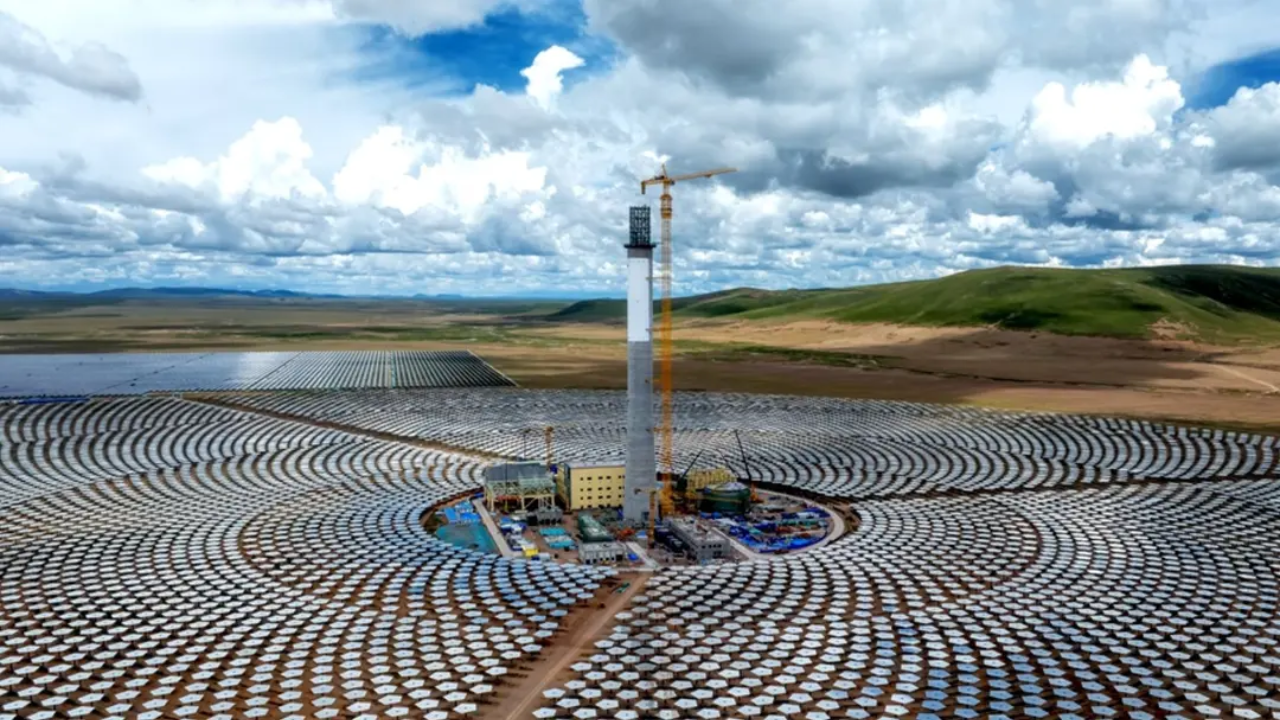
China has successfully completed the construction of the world's highest solar thermal power plant, located at an altitude of over 15,000 feet. The Tushuo facility, with a capacity of 100 MW, uses a unique technology to concentrate solar energy onto molten salts using 15,927 mirrors. This innovative approach allows the plant to store heat, which can then be used to generate electricity even after sunset.
The Tushuo facility is a significant achievement in the field of renewable energy, demonstrating China's commitment to reducing its carbon footprint. The plant's ability to generate electricity after sunset makes it an attractive solution for providing power to households during periods of low sunlight.
Once connected to the grid, the Tushuo facility is expected to supply power to approximately 50,000 households each year. This will not only reduce the region's reliance on fossil fuels but also contribute to a decrease in greenhouse gas emissions.
The use of molten salts in the Tushuo facility is a key component of its technology. The salts are heated by the concentrated solar energy during the day, storing thermal energy that can be used to generate electricity at night. This approach allows the plant to operate continuously, providing a reliable source of power to the grid.
China's investment in renewable energy is a significant step towards reducing its dependence on fossil fuels. The country has set ambitious targets for increasing its use of renewable energy, and the completion of the Tushuo facility is a major milestone in achieving these goals.
The Tushuo facility is also a testament to China's engineering capabilities, demonstrating its ability to design and build complex infrastructure projects in challenging environments. The plant's location at an altitude of over 15,000 feet presented significant engineering challenges, which were successfully overcome by the project's developers.
In the context of global efforts to reduce carbon emissions, the Tushuo facility is an important example of the potential for renewable energy to contribute to a low-carbon future. As the world's largest emitter of greenhouse gases, China's commitment to reducing its carbon footprint is critical to global efforts to mitigate climate change.
The completion of the Tushuo facility is a significant achievement for China, demonstrating its ability to design, build, and operate complex renewable energy infrastructure. The plant's innovative technology and reliable performance make it an attractive solution for providing power to households and contributing to a reduction in greenhouse gas emissions.
In conclusion, the Tushuo facility is a major milestone in China's efforts to increase its use of renewable energy, and its completion is a significant achievement in the field of solar thermal power. The plant's innovative technology and reliable performance make it an important example of the potential for renewable energy to contribute to a low-carbon future.
Frequently asked questions
What is the capacity of the Tushuo facility?
The Tushuo facility has a capacity of 100 MW.
How many households will the Tushuo facility power?
The Tushuo facility is expected to supply power to approximately 50,000 households each year.