Multiple Alarms Leave You Tired
Hitting snooze repeatedly can disrupt sleep, affect mood and focus.
'%3E%3Crect%20width%3D'96'%20height%3D'96'%20fill%3D'%23B3261E'%2F%3E%3Ccircle%20cx%3D'30'%20cy%3D'24'%20r%3D'44'%20fill%3D'%23fff'%20opacity%3D'.12'%2F%3E%3Ccircle%20cx%3D'60'%20cy%3D'74'%20r%3D'40'%20fill%3D'%23000'%20opacity%3D'.10'%2F%3E%3C%2Fg%3E%3Cg%20fill%3D'%23fff'%3E%3Crect%20x%3D'29'%20y%3D'49'%20width%3D'8'%20height%3D'19'%20rx%3D'1'%2F%3E%3Crect%20x%3D'39'%20y%3D'40'%20width%3D'9'%20height%3D'28'%20rx%3D'1'%2F%3E%3Crect%20x%3D'50'%20y%3D'45'%20width%3D'8'%20height%3D'23'%20rx%3D'1'%2F%3E%3Crect%20x%3D'60'%20y%3D'53'%20width%3D'7'%20height%3D'15'%20rx%3D'1'%2F%3E%3Crect%20x%3D'41'%20y%3D'34'%20width%3D'5'%20height%3D'6'%2F%3E%3C%2Fg%3E%3C%2Fsvg%3E)
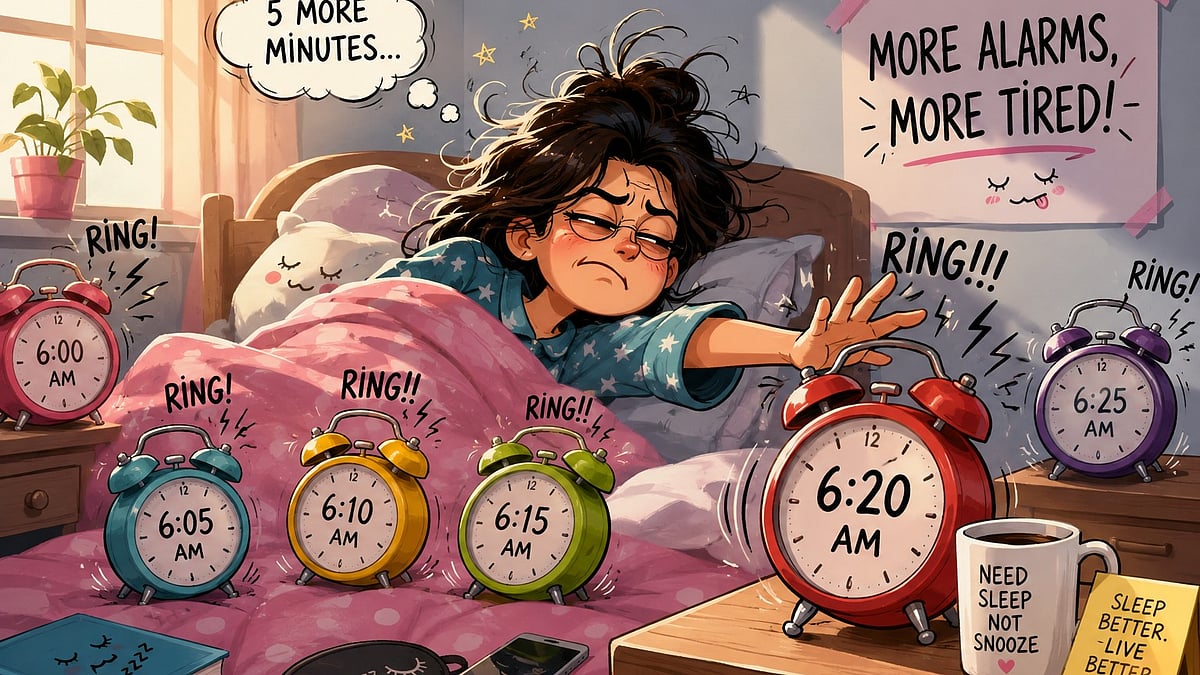
For many people, mornings begin with the sound of an alarm, followed by another, and another. While it may seem like hitting the snooze button will give you a few extra minutes of rest, it can actually leave you feeling more tired. This habit is common, especially among people who struggle to wake up early. However, repeatedly going back to sleep after an alarm may not give your body the proper rest it needs.
According to Dr. Dhiraj Jain, Consultant Pulmonologist & Sleep Medicine Specialist, repeatedly hitting snooze can fragment sleep and disrupt important stages like REM sleep, affecting memory, mood, and mental clarity. He suggests that maintaining a consistent wake-up time and getting up with the first alarm can support better sleep and morning alertness.
There are several reasons why multiple alarms may be leaving you more tired. One reason is interrupted sleep. When you set several alarms, your sleep is repeatedly broken, and your brain keeps moving between sleep and wakefulness. These short periods of sleep may feel like extra rest, but they are not the same as getting uninterrupted sleep.
Another reason is sleep inertia. Sleep happens in different stages, and the body moves through these stages several times during the night. If you fall back asleep after an alarm, you may enter another sleep stage before the next alarm rings. Waking up in the middle of a deeper sleep stage can make you feel particularly groggy.
Dr. Sachin Adukia, International Award-Winning Neurologist and IIT-Bombay Research Collaborator, explains that sleep inertia is the groggy feeling after waking, especially when we wake from deeper sleep or haven't slept enough. He suggests that repeated snoozing can fragment sleep, but the bigger issue may simply be inadequate sleep.
Additionally, those extra five or ten minutes of sleep after hitting the snooze button are usually not long enough for meaningful, uninterrupted sleep. Instead, your brain is caught between trying to return to sleep and preparing to wake up. This can create a frustrating cycle: you feel tired, hit snooze, fall asleep again, hear the alarm, and repeat the process.
Starting the day with multiple alarms can also affect your mood and focus. The constant interruption of sleep can leave you feeling sluggish, confused, and slow to get started. It can also impact your mental clarity and ability to concentrate.
In conclusion, while hitting the snooze button may seem like a harmless way to get a few extra minutes of sleep, it can actually have negative effects on your body and mind. By maintaining a consistent wake-up time and getting up with the first alarm, you can support better sleep and morning alertness.
This habit of hitting snooze repeatedly is a common problem, and it's not just about the alarms themselves, but about the quality of sleep you're getting. If you're finding it hard to wake up in the morning, it may be a sign that you need to adjust your sleep schedule or create a more relaxing bedtime routine.
Ultimately, the key to starting the day feeling rested and alert is to prioritize getting enough sleep and establishing a consistent wake-up time. By doing so, you can improve the quality of your sleep and wake up feeling more refreshed and ready to take on the day.
The impact of multiple alarms on sleep and wakefulness is a significant one, and it's essential to be aware of the effects it can have on your body and mind. By making a few simple changes to your sleep habits, you can improve the quality of your sleep and start the day feeling more rested and alert.
In the end, it's not about the number of alarms you set, but about the quality of sleep you're getting. By prioritizing sleep and establishing a consistent wake-up time, you can wake up feeling more refreshed, alert, and ready to take on the day.
Frequently asked questions
Why do multiple alarms make me feel tired?
Multiple alarms can disrupt sleep and affect mood and focus, leading to feelings of tiredness and grogginess.
How can I improve my sleep quality?
Prioritizing sleep, establishing a consistent wake-up time, and avoiding repeated snoozing can help improve sleep quality and wakefulness.