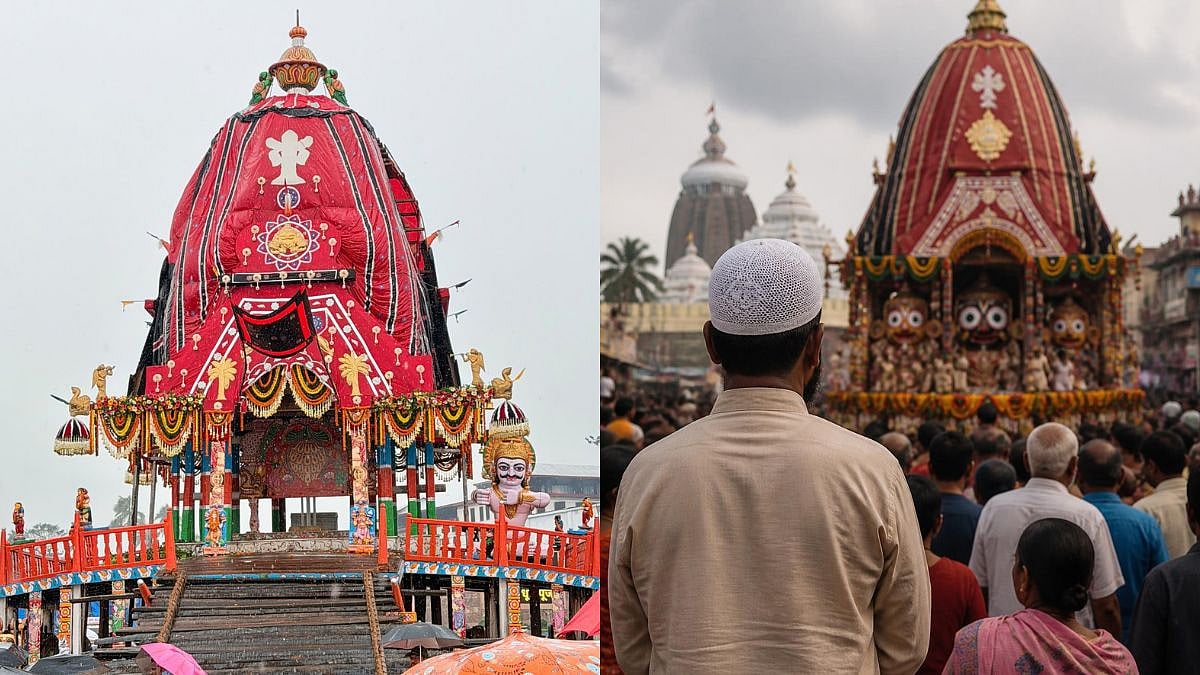
Jagannath Yatra 2026: Chariots Built Without Iron Nails
Lord Jagannath's chariots are built without iron nails. Skilled artisans use traditional techniques.
'%3E%3Crect%20width%3D'96'%20height%3D'96'%20fill%3D'%23B3261E'%2F%3E%3Ccircle%20cx%3D'30'%20cy%3D'24'%20r%3D'44'%20fill%3D'%23fff'%20opacity%3D'.12'%2F%3E%3Ccircle%20cx%3D'60'%20cy%3D'74'%20r%3D'40'%20fill%3D'%23000'%20opacity%3D'.10'%2F%3E%3C%2Fg%3E%3Cg%20fill%3D'%23fff'%3E%3Crect%20x%3D'29'%20y%3D'49'%20width%3D'8'%20height%3D'19'%20rx%3D'1'%2F%3E%3Crect%20x%3D'39'%20y%3D'40'%20width%3D'9'%20height%3D'28'%20rx%3D'1'%2F%3E%3Crect%20x%3D'50'%20y%3D'45'%20width%3D'8'%20height%3D'23'%20rx%3D'1'%2F%3E%3Crect%20x%3D'60'%20y%3D'53'%20width%3D'7'%20height%3D'15'%20rx%3D'1'%2F%3E%3Crect%20x%3D'41'%20y%3D'34'%20width%3D'5'%20height%3D'6'%2F%3E%3C%2Fg%3E%3C%2Fsvg%3E)
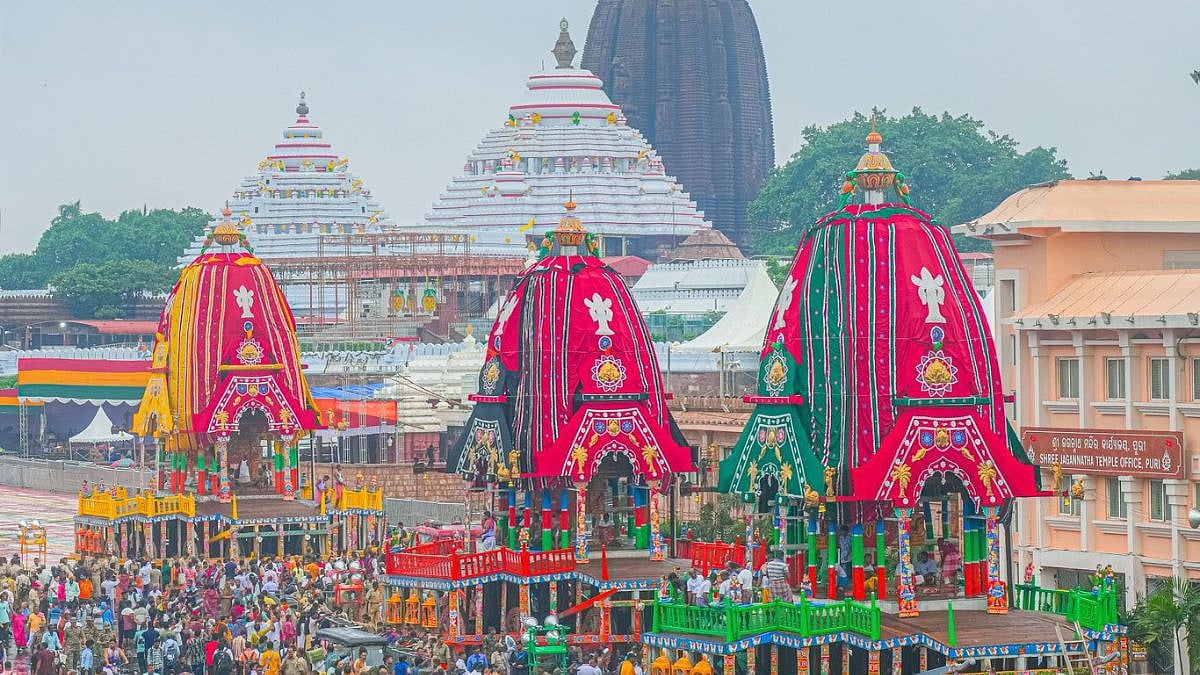
The annual Jagannath Rath Yatra in Puri, Odisha, is one of India's most revered festivals, celebrated every year. The vibrant festival draws millions of devotees from across the world.
Every year, three magnificent wooden chariots carrying Lord Jagannath, Lord Balabhadra, and Goddess Subhadra travel from the Jagannath Temple to the Gundicha Temple.
One of the most fascinating aspects of this centuries-old tradition is that the chariots are constructed without using iron nails or beams. Instead, skilled artisans rely on traditional wooden joints, pegs, ropes, and natural fastening techniques that have been passed down through generations.
The construction of the chariots begins every year on Akshaya Tritiya using specially selected wood from designated forests in Odisha. New chariots are built annually, and the old ones are ceremonially dismantled after the festival.
Each chariot has its own identity. Nandighosha, the chariot of Lord Jagannath, has 16 wheels and is the tallest of the three. Taladhwaja, carrying Lord Balabhadra, has 14 wheels, while Darpadalana, the chariot of Goddess Subhadra, has 12 wheels.
The unique craftsmanship reflects Odisha's rich heritage and follows age-old temple traditions. The festival is a celebration of Lord Jagannath and his siblings, and the chariots are an integral part of the tradition.
The Jagannath Rath Yatra is a significant event in the Hindu calendar, and the construction of the chariots without iron nails is a remarkable aspect of the festival. The use of traditional techniques and materials highlights the importance of preserving cultural heritage.
The festival is a time for devotees to come together and celebrate the divine. The chariots are a symbol of the divine journey, and the construction of the chariots without iron nails is a testament to the skill and craftsmanship of the artisans involved.
The Jagannath Rath Yatra is a celebration of faith, culture, and tradition. The festival is an important part of India's cultural heritage, and the construction of the chariots without iron nails is a unique aspect of the tradition.
In conclusion, the Jagannath Rath Yatra is a significant event in the Hindu calendar, and the construction of the chariots without iron nails is a remarkable aspect of the festival. The use of traditional techniques and materials highlights the importance of preserving cultural heritage, and the festival is a celebration of faith, culture, and tradition.
The significance of the Jagannath Rath Yatra extends beyond the festival itself, as it highlights the importance of preserving cultural heritage and traditional craftsmanship. The festival is a reminder of the rich cultural diversity of India and the importance of preserving traditional practices and techniques.
Overall, the Jagannath Rath Yatra is a unique and significant event in the Hindu calendar, and the construction of the chariots without iron nails is a remarkable aspect of the festival. The festival is a celebration of faith, culture, and tradition, and it highlights the importance of preserving cultural heritage and traditional craftsmanship.