Alps Glacier Reveals 2000 Years of Climate History
Ice core reveals fires, mining and eruptions. Climate timeline spans 2000 years.
'%3E%3Crect%20width%3D'96'%20height%3D'96'%20fill%3D'%23B3261E'%2F%3E%3Ccircle%20cx%3D'30'%20cy%3D'24'%20r%3D'44'%20fill%3D'%23fff'%20opacity%3D'.12'%2F%3E%3Ccircle%20cx%3D'60'%20cy%3D'74'%20r%3D'40'%20fill%3D'%23000'%20opacity%3D'.10'%2F%3E%3C%2Fg%3E%3Cg%20fill%3D'%23fff'%3E%3Crect%20x%3D'29'%20y%3D'49'%20width%3D'8'%20height%3D'19'%20rx%3D'1'%2F%3E%3Crect%20x%3D'39'%20y%3D'40'%20width%3D'9'%20height%3D'28'%20rx%3D'1'%2F%3E%3Crect%20x%3D'50'%20y%3D'45'%20width%3D'8'%20height%3D'23'%20rx%3D'1'%2F%3E%3Crect%20x%3D'60'%20y%3D'53'%20width%3D'7'%20height%3D'15'%20rx%3D'1'%2F%3E%3Crect%20x%3D'41'%20y%3D'34'%20width%3D'5'%20height%3D'6'%2F%3E%3C%2Fg%3E%3C%2Fsvg%3E)
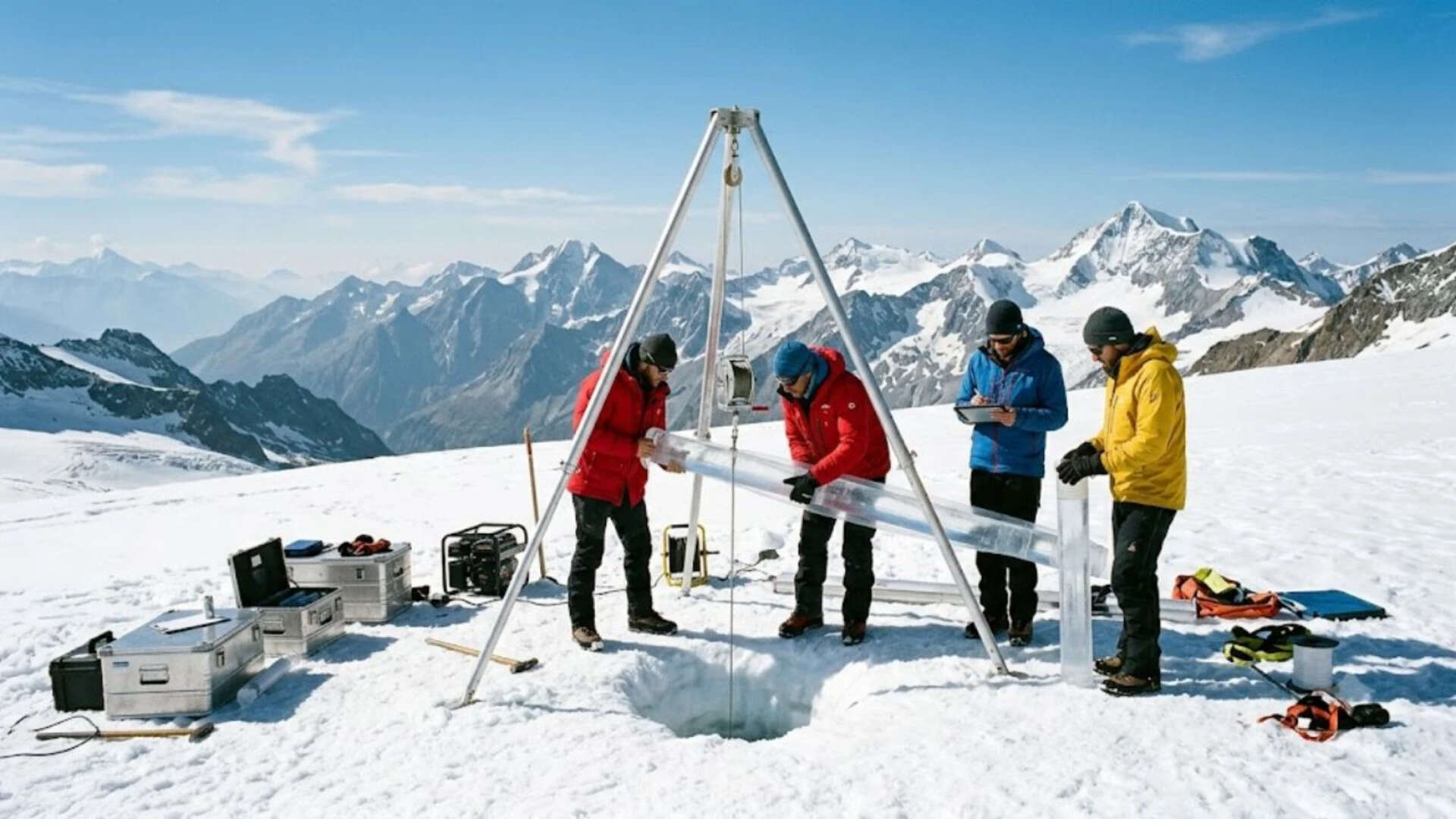
A recently discovered ice core from the Alps has provided a unique glimpse into the region's climate history, spanning an impressive 2000 years. This natural archive has revealed early instances of metal smelting, extensive forest fires, and even volcanic ash from distant eruptions. The ice core acts as a vital record of air quality in Europe before the onset of industrial contaminants.
The discovery of this ice core is significant, as it provides a comprehensive timeline of climate events in the region. The core contains layers of ice that have accumulated over centuries, each layer telling a story of the region's climate history. By analyzing these layers, scientists have been able to reconstruct a detailed picture of the region's past climate.
The ice core reveals that the region experienced extensive forest fires, which were likely caused by human activity. The core also contains evidence of metal smelting, which suggests that the region was home to early industrial activities. Additionally, the core contains volcanic ash from distant eruptions, which provides a record of major volcanic events in the region.
As glaciers retreat due to climate change, scientists are racing against time to safeguard these precious climate memories for future generations. The discovery of this ice core highlights the importance of preserving these natural archives, which provide a unique window into the past. By studying these ice cores, scientists can gain a better understanding of the region's climate history and how it has been impacted by human activity.
The Alps have long been recognized as a sensitive region for climate change, with glaciers retreating at an alarming rate. The discovery of this ice core provides a unique opportunity for scientists to study the region's climate history and gain a better understanding of the impacts of climate change. As the world continues to grapple with the challenges of climate change, the study of ice cores like this one will be crucial in informing our understanding of the past and predicting the future.
The study of ice cores is a complex and challenging process, requiring specialized equipment and expertise. However, the rewards are well worth the effort, as these natural archives provide a unique window into the past. By analyzing the layers of ice, scientists can reconstruct a detailed picture of the region's climate history, including temperature fluctuations, precipitation patterns, and even major volcanic events.
In conclusion, the discovery of this ice core from the Alps provides a remarkable glimpse into the region's climate history, spanning 2000 years. The core reveals a comprehensive timeline of climate events, including early instances of metal smelting, extensive forest fires, and volcanic ash from distant eruptions. As glaciers retreat, scientists are racing against time to safeguard these precious climate memories for future generations.
The significance of this discovery cannot be overstated, as it provides a unique opportunity for scientists to study the region's climate history and gain a better understanding of the impacts of climate change. The study of ice cores like this one will be crucial in informing our understanding of the past and predicting the future. As the world continues to grapple with the challenges of climate change, the preservation of these natural archives will be essential in ensuring that we can learn from the past and build a more sustainable future.
Frequently asked questions
What does the ice core from the Alps reveal?
The ice core reveals a comprehensive climate timeline spanning 2000 years, including early instances of metal smelting, extensive forest fires, and volcanic ash from distant eruptions.
Why is the discovery of this ice core significant?
The discovery of this ice core is significant because it provides a unique window into the past, allowing scientists to reconstruct a detailed picture of the region's climate history and gain a better understanding of the impacts of climate change.