UNESCO Adds West Bank's Sebastia To World Heritage List
Sebastia and 5 Lebanese castles added despite Israel's objections. UNESCO committee voted in Busan, South Korea.
'%3E%3Crect%20width%3D'96'%20height%3D'96'%20fill%3D'%234A235A'%2F%3E%3Ccircle%20cx%3D'30'%20cy%3D'24'%20r%3D'44'%20fill%3D'%23fff'%20opacity%3D'.12'%2F%3E%3Ccircle%20cx%3D'60'%20cy%3D'74'%20r%3D'40'%20fill%3D'%23000'%20opacity%3D'.10'%2F%3E%3C%2Fg%3E%3Cg%20fill%3D'none'%20stroke%3D'%23fff'%20stroke-width%3D'3'%3E%3Ccircle%20cx%3D'48'%20cy%3D'48'%20r%3D'16'%2F%3E%3Cellipse%20cx%3D'48'%20cy%3D'48'%20rx%3D'6.5'%20ry%3D'16'%2F%3E%3Cline%20x1%3D'32'%20y1%3D'42'%20x2%3D'64'%20y2%3D'42'%2F%3E%3Cline%20x1%3D'32'%20y1%3D'54'%20x2%3D'64'%20y2%3D'54'%2F%3E%3C%2Fg%3E%3C%2Fsvg%3E)
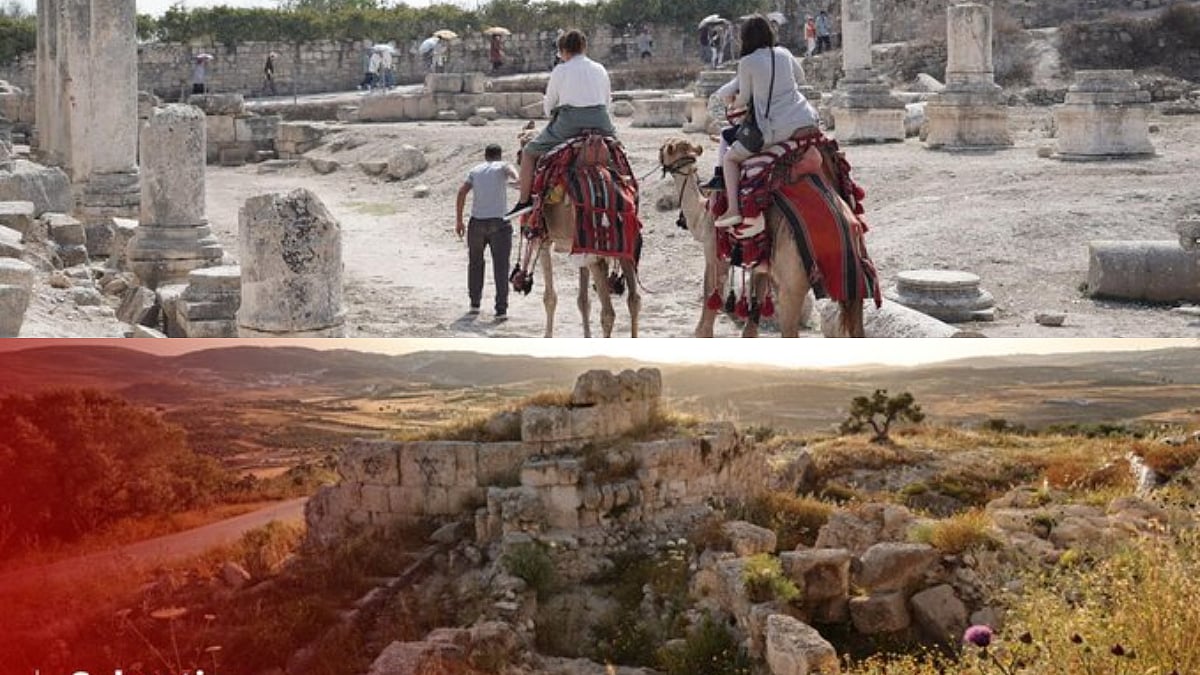
The United Nations Educational, Scientific and Cultural Organisation (UNESCO) committee has voted to add the archaeological site of Sebastia in the Israeli-occupied West Bank to the World Heritage List and the List of World Heritage in Danger.
The decision was taken at the committee's meeting in Busan, South Korea, after reviewing the nomination on an emergency basis. This move came despite objections from Israel, whose Foreign Ministry had urged UNESCO to reject the nomination, describing it as a “weaponisation of cultural heritage.”
Sebastia, located about 10 kilometres northwest of Nablus, is identified by scholars as ancient Samaria, the capital of the biblical Kingdom of Israel. The site contains archaeological remains from the Iron Age, Roman, Byzantine and Islamic periods. According to UNESCO, Christian and Islamic traditions hold that John the Baptist was buried there.
The Palestinian delegation first submitted Sebastia's nomination to UNESCO in 2012, arguing that World Heritage status was necessary to preserve the largely undeveloped site, which remains under Israeli control and requires further conservation despite attracting tourists.
Israel opposes the listing, raising concerns that it risks politicizing heritage. The country accuses the Palestinian Authority of weaponizing UNESCO in its bid to list Sebastia, a 450-acre site with 3,000+ years of history.
The latest designation comes as Israel, which does not recognise a Palestinian state, moves to expropriate large areas of land around Sebastia while facing international pressure to curb violence by Israeli settlers in the Palestinian territory.
In addition to Sebastia, five castles in southern Lebanon's Mount Amel region were also recognised for their layered architectural heritage, combining Crusader, Ayyubid, and other styles.
The decision by UNESCO is significant, as it highlights the importance of preserving cultural heritage sites, even in areas of conflict. It also underscores the challenges of balancing the need to protect these sites with the political tensions that often surround them.
The move is likely to have significant implications for the preservation of cultural heritage in the region, and may set a precedent for future nominations.
In a broader context, the decision reflects the ongoing complexities of the Israeli-Palestinian conflict, and the ways in which cultural heritage can be both a source of pride and a point of contention.
Ultimately, the addition of Sebastia and the five Lebanese castles to the World Heritage List is a reminder of the importance of preserving our shared cultural heritage, and the need for international cooperation to protect these sites for future generations.
Frequently asked questions
Why did Israel object to Sebastia's nomination?
Israel accused the Palestinian Authority of weaponizing UNESCO and attempting to erase the site's Jewish and Christian history.
What is the significance of Sebastia?
Sebastia is identified as ancient Samaria, the capital of the biblical Kingdom of Israel, and contains archaeological remains from multiple periods.