Cloudburst Hits Pahalgam, Damages Hotels
Flash floods inundate Pahalgam, tourists evacuated. Hotels and huts damaged.
'%3E%3Crect%20width%3D'96'%20height%3D'96'%20fill%3D'%23B3261E'%2F%3E%3Ccircle%20cx%3D'30'%20cy%3D'24'%20r%3D'44'%20fill%3D'%23fff'%20opacity%3D'.12'%2F%3E%3Ccircle%20cx%3D'60'%20cy%3D'74'%20r%3D'40'%20fill%3D'%23000'%20opacity%3D'.10'%2F%3E%3C%2Fg%3E%3Cg%20fill%3D'%23fff'%3E%3Crect%20x%3D'29'%20y%3D'49'%20width%3D'8'%20height%3D'19'%20rx%3D'1'%2F%3E%3Crect%20x%3D'39'%20y%3D'40'%20width%3D'9'%20height%3D'28'%20rx%3D'1'%2F%3E%3Crect%20x%3D'50'%20y%3D'45'%20width%3D'8'%20height%3D'23'%20rx%3D'1'%2F%3E%3Crect%20x%3D'60'%20y%3D'53'%20width%3D'7'%20height%3D'15'%20rx%3D'1'%2F%3E%3Crect%20x%3D'41'%20y%3D'34'%20width%3D'5'%20height%3D'6'%2F%3E%3C%2Fg%3E%3C%2Fsvg%3E)
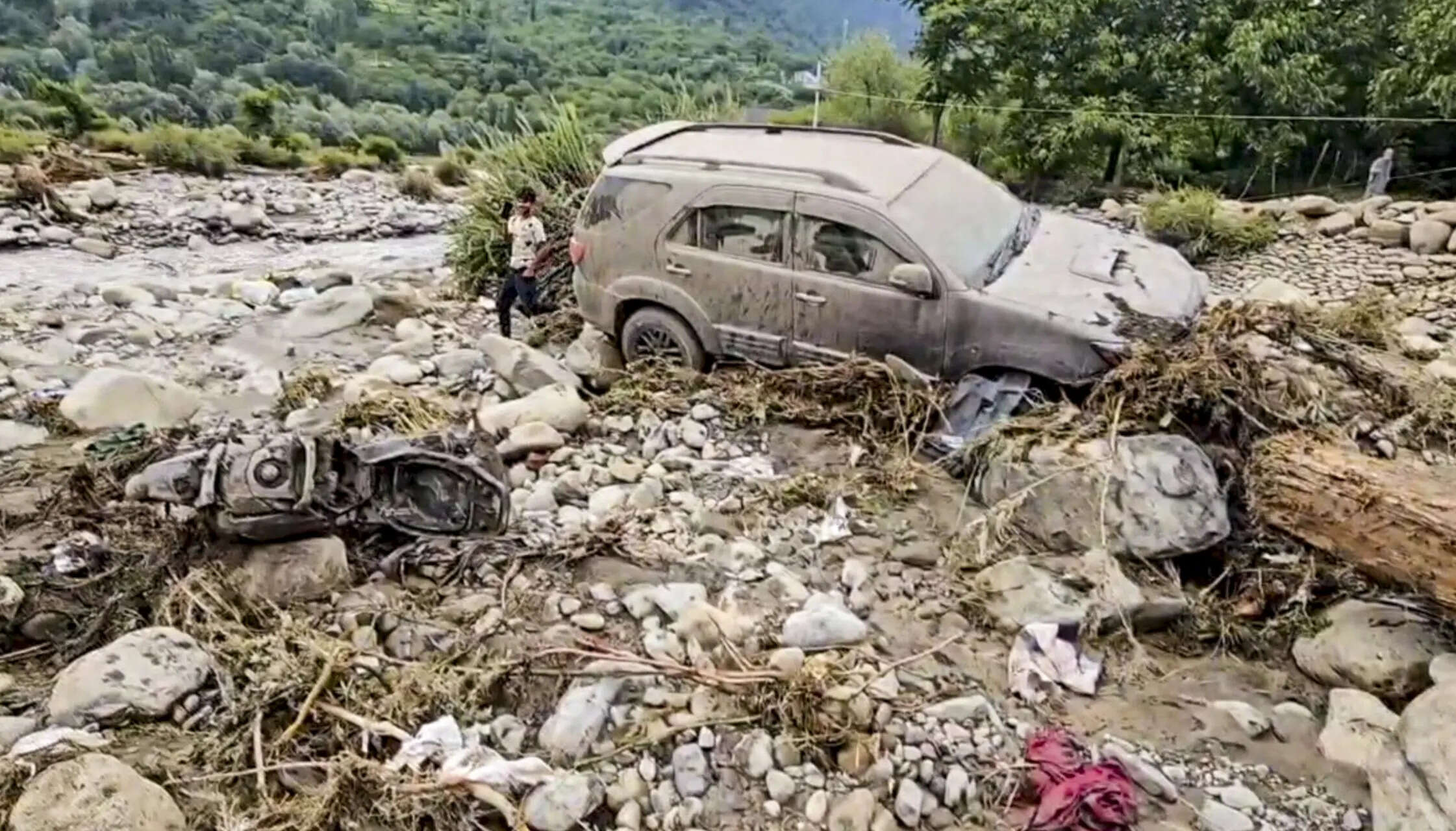
A cloudburst in Pahalgam, Jammu and Kashmir, on Saturday evening caused widespread damage to hotels, huts, and infrastructure. The flash floods, which occurred along the Overa stream, damaged roads, power lines, and agricultural fields, leaving eleven villages severely affected.
The sudden onset of the flood forced tourists to evacuate swiftly, with many describing the terrifying experience of water gushing into their hotels. The incident has raised concerns about the construction of hotels within flood channels in recent years, highlighting the need for stricter regulations.
The cloudburst, which occurred on Saturday evening, caught many off guard, resulting in significant damage to property and infrastructure. The roads in the area were washed away, leaving many villages cut off from the rest of the region. Utilities, including power and water supply, were also disrupted, adding to the misery of the locals.
The Overa stream, which runs through Pahalgam, overflowed its banks, causing the flash floods. The stream is known to be prone to flooding, and the recent cloudburst has highlighted the need for better flood management systems in the area.
Tourists, who were in the area at the time of the cloudburst, were quickly evacuated to safer locations. Many described the experience as traumatic, with some recounting how the water suddenly gushed into their hotels, forcing them to flee.
The incident has raised questions about the wisdom of allowing hotel constructions within flood channels. Over the years, many hotels and huts have been built in the area, often without proper regard for the flood risk. The cloudburst has highlighted the need for stricter regulations and better planning to prevent such incidents in the future.
The local authorities have begun assessing the damage caused by the cloudburst and are working to restore utilities and infrastructure in the affected areas. The incident serves as a reminder of the importance of being prepared for natural disasters and the need for sustainable development practices.
In the context of Jammu and Kashmir, the incident is a stark reminder of the region's vulnerability to natural disasters. The region is prone to flash floods, landslides, and other natural disasters, which can have devastating consequences. The incident highlights the need for better disaster management systems and more sustainable development practices in the region.
The cloudburst in Pahalgam has significant implications for the region's tourism industry, which is a major contributor to the local economy. The incident may deter tourists from visiting the area, at least in the short term, which could have a negative impact on the local economy. However, it also presents an opportunity for the authorities to reassess and improve their disaster management systems, ensuring that the region is better prepared to handle such incidents in the future.
In conclusion, the cloudburst in Pahalgam is a wake-up call for the authorities to take a closer look at their disaster management systems and development practices. It highlights the need for sustainable development, better planning, and stricter regulations to prevent such incidents in the future. The incident also serves as a reminder of the importance of being prepared for natural disasters and the need for a more proactive approach to disaster management.