West Africa Coral Reef Rediscovered After 60 Years
A coral reef presumed dead since 1960s is found alive, thriving with fish and coral. Drones aid in rediscovery. New insights into marine life expected.
'%3E%3Crect%20width%3D'96'%20height%3D'96'%20fill%3D'%23B3261E'%2F%3E%3Ccircle%20cx%3D'30'%20cy%3D'24'%20r%3D'44'%20fill%3D'%23fff'%20opacity%3D'.12'%2F%3E%3Ccircle%20cx%3D'60'%20cy%3D'74'%20r%3D'40'%20fill%3D'%23000'%20opacity%3D'.10'%2F%3E%3C%2Fg%3E%3Cg%20fill%3D'%23fff'%3E%3Crect%20x%3D'29'%20y%3D'49'%20width%3D'8'%20height%3D'19'%20rx%3D'1'%2F%3E%3Crect%20x%3D'39'%20y%3D'40'%20width%3D'9'%20height%3D'28'%20rx%3D'1'%2F%3E%3Crect%20x%3D'50'%20y%3D'45'%20width%3D'8'%20height%3D'23'%20rx%3D'1'%2F%3E%3Crect%20x%3D'60'%20y%3D'53'%20width%3D'7'%20height%3D'15'%20rx%3D'1'%2F%3E%3Crect%20x%3D'41'%20y%3D'34'%20width%3D'5'%20height%3D'6'%2F%3E%3C%2Fg%3E%3C%2Fsvg%3E)
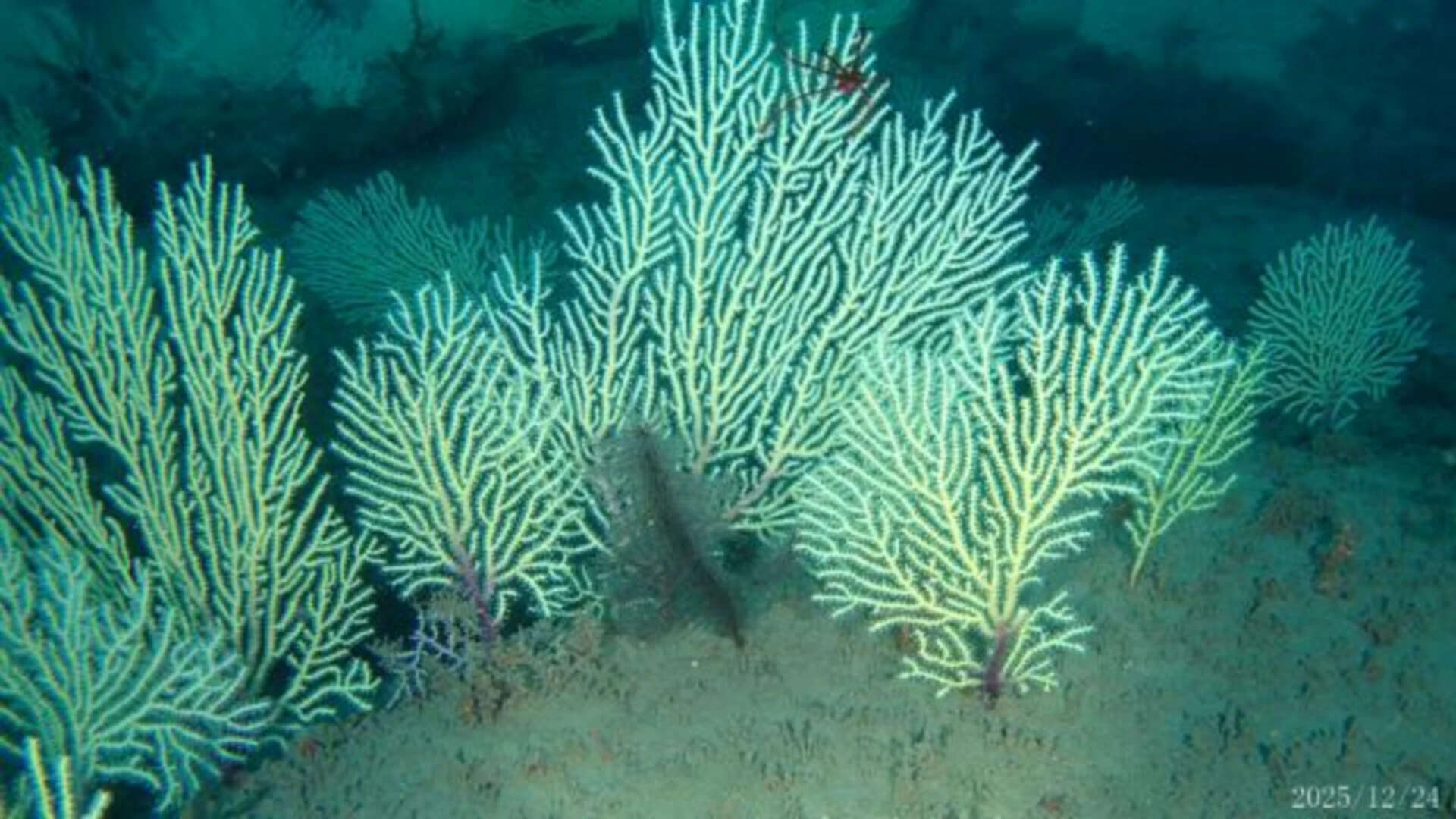
A coral reef located off the coast of West Africa, which was marked as dead by scientists in the 1960s, has been rediscovered and found to be thriving. The reef, a mesophotic coral ecosystem, is home to a diverse array of fish and coral species and exists in low-light environments beneath the ocean's surface.
The rediscovery of the reef was made possible with the use of drones, which were able to explore and map the area. This technology has opened up new possibilities for exploring the ocean and discovering hidden ecosystems.
Researchers are excited about the discovery, as it provides valuable insights into the evolutionary history of the region's marine life and past environmental changes. The reef's ability to thrive in a low-light environment is particularly interesting, as it suggests that similar ecosystems could exist in other areas along the West African coastline.
The discovery of this reef has significant implications for our understanding of the ocean and its many ecosystems. It highlights the importance of continued exploration and research into the world's oceans, as there is still much to be discovered.
The researchers involved in the project speculate that there may be other hidden reefs along the West African coastline, which could provide further insights into the region's marine life and environmental history. The use of drones and other technologies will be crucial in locating and exploring these potential ecosystems.
The rediscovery of the coral reef is a significant finding, as it was previously thought to be extinct. The fact that it has been found to be thriving is a testament to the resilience of marine ecosystems and the importance of continued conservation efforts.
The discovery is also expected to shed new light on the region's environmental history, including the impact of climate change and other human activities on the ocean's ecosystems. As researchers continue to study the reef and its inhabitants, they hope to gain a better understanding of the complex relationships between the ocean's ecosystems and the environment.
In conclusion, the rediscovery of the West African coral reef is a significant finding that highlights the importance of continued exploration and research into the world's oceans. The use of drones and other technologies has opened up new possibilities for discovering hidden ecosystems, and the discovery of this reef is expected to provide valuable insights into the region's marine life and environmental history.
The finding also underscores the need for continued conservation efforts to protect the world's oceans and their many ecosystems. As researchers continue to study the reef and its inhabitants, they hope to gain a better understanding of the complex relationships between the ocean's ecosystems and the environment, and to develop effective strategies for preserving these ecosystems for future generations.
The discovery of the coral reef is a reminder that there is still much to be discovered in the world's oceans, and that continued exploration and research are essential for advancing our understanding of these complex ecosystems.