SEBI Allows IFSCA Entities To Access KYC Records
SEBI enables IFSCA-regulated entities to access KYC records. Interoperability facilitated.
'%3E%3Crect%20width%3D'96'%20height%3D'96'%20fill%3D'%230B6E4F'%2F%3E%3Ccircle%20cx%3D'30'%20cy%3D'24'%20r%3D'44'%20fill%3D'%23fff'%20opacity%3D'.12'%2F%3E%3Ccircle%20cx%3D'60'%20cy%3D'74'%20r%3D'40'%20fill%3D'%23000'%20opacity%3D'.10'%2F%3E%3C%2Fg%3E%3Cg%20fill%3D'none'%20stroke%3D'%23fff'%20stroke-width%3D'3.2'%20stroke-linecap%3D'round'%20stroke-linejoin%3D'round'%3E%3Cpolyline%20points%3D'31%2C59%2041%2C49%2049%2C54%2063%2C37'%2F%3E%3Cpolyline%20points%3D'55%2C37%2063%2C37%2063%2C45'%2F%3E%3C%2Fg%3E%3C%2Fsvg%3E)
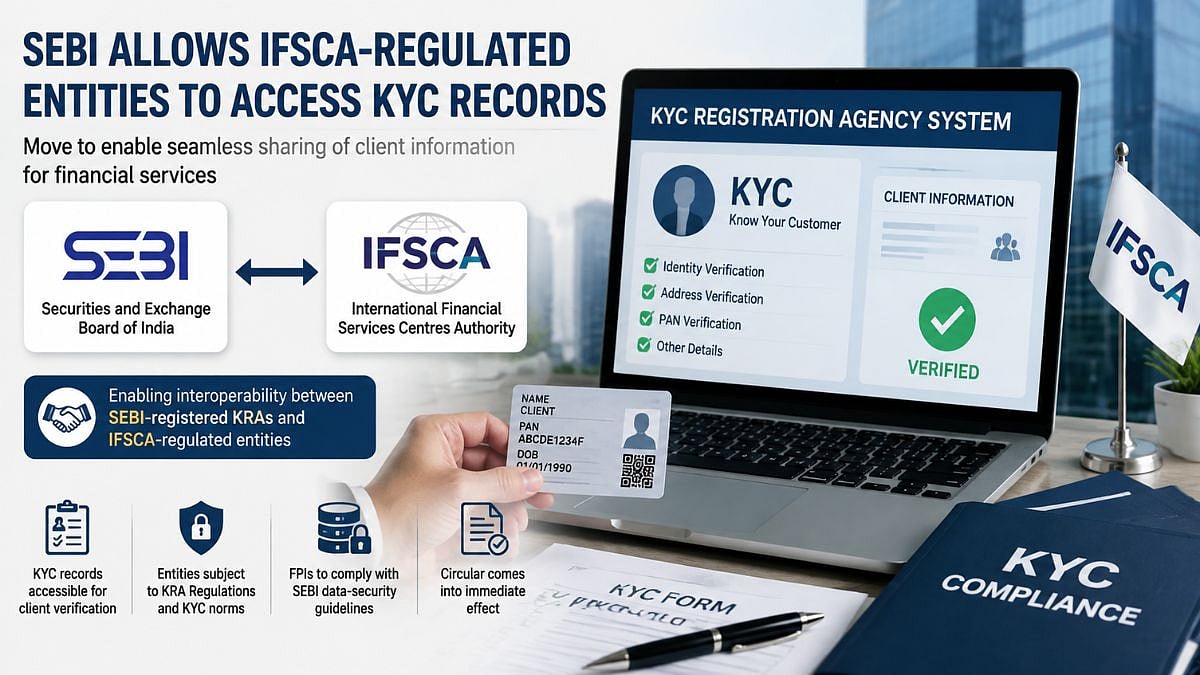
The Securities and Exchange Board of India (SEBI) has allowed entities regulated by the International Financial Services Centres Authority (IFSCA) to access the systems of registered KYC registration agencies. This move will facilitate seamless sharing of client information for financial services.
The decision enables interoperability and facilitates sharing of information between SEBI-registered KRAs and entities regulated by IFSCA. IFSCA-regulated entities can now access KYC Registration Agencies (KRAs) records for carrying out KYC of clients who engage them for financial services.
A KYC Registration Agency (KRA) is an agency that maintains investors' KYC (Know Your Customer) records. KYC is the process through which financial institutions verify the identity and other required details of their clients.
SEBI has included IFSCA-regulated entities under Regulation 16A(1) of the KYC Registration Agency Regulations, 2011. This permits entities regulated by financial-sector regulators specified by SEBI to access the KRA system for conducting KYC.
All entities accessing the KRA system will be subject to the applicable provisions of the KRA Regulations and SEBI's master circular on KYC norms for the securities market. In case of clients registered as Foreign Portfolio Investors (FPIs), the entities will also have to comply with SEBI's data-security guidelines.
The provisions of this circular will come into force with immediate effect, according to SEBI. This decision is expected to enhance the efficiency of financial services and improve the overall regulatory framework.
The move is seen as a significant step towards facilitating the growth of financial services in the country. It will enable IFSCA-regulated entities to access KYC records, reducing the need for duplicate KYC processes and enhancing the overall customer experience.
SEBI's decision is also expected to promote interoperability between different financial sector regulators. This will facilitate the sharing of information and enhance the overall regulatory framework.
In conclusion, SEBI's decision to allow IFSCA-regulated entities to access KYC records is a significant step towards enhancing the efficiency of financial services. It will promote interoperability, reduce duplicate KYC processes, and enhance the overall customer experience.
The decision is also expected to have a positive impact on the overall regulatory framework. It will facilitate the sharing of information between different financial sector regulators and promote the growth of financial services in the country.
Overall, SEBI's decision is a welcome move that is expected to have a positive impact on the financial services sector. It will enhance the efficiency of financial services, promote interoperability, and improve the overall regulatory framework.
The move is seen as a significant step towards achieving the government's goal of promoting financial inclusion and enhancing the overall financial regulatory framework. It will enable IFSCA-regulated entities to access KYC records, reducing the need for duplicate KYC processes and enhancing the overall customer experience.
In the long run, SEBI's decision is expected to have a positive impact on the overall economy. It will facilitate the growth of financial services, promote interoperability, and enhance the overall regulatory framework. This will lead to increased economic activity, job creation, and overall economic growth.
The decision is also expected to promote transparency and accountability in the financial services sector. It will enable regulators to monitor and supervise financial services more effectively, reducing the risk of fraud and other illicit activities.
In conclusion, SEBI's decision to allow IFSCA-regulated entities to access KYC records is a significant step towards enhancing the efficiency of financial services. It will promote interoperability, reduce duplicate KYC processes, and enhance the overall customer experience. The decision is expected to have a positive impact on the overall regulatory framework and the economy as a whole.
SEBI's move is a welcome step towards achieving the government's goal of promoting financial inclusion and enhancing the overall financial regulatory framework. It will enable IFSCA-regulated entities to access KYC records, reducing the need for duplicate KYC processes and enhancing the overall customer experience.
The decision is expected to have a positive impact on the financial services sector, promoting transparency, accountability, and overall economic growth. It will facilitate the growth of financial services, promote interoperability, and enhance the overall regulatory framework.
Overall, SEBI's decision is a significant step towards enhancing the efficiency of financial services and promoting the growth of the financial services sector. It will have a positive impact on the overall regulatory framework and the economy as a whole.
The move is seen as a significant step towards facilitating the growth of financial services in the country. It will enable IFSCA-regulated entities to access KYC records, reducing the need for duplicate KYC processes and enhancing the overall customer experience.
In the long run, SEBI's decision is expected to have a positive impact on the overall economy. It will facilitate the growth of financial services, promote interoperability, and enhance the overall regulatory framework. This will lead to increased economic activity, job creation, and overall economic growth.
The decision is also expected to promote transparency and accountability in the financial services sector. It will enable regulators to monitor and supervise financial services more effectively, reducing the risk of fraud and other illicit activities.
In conclusion, SEBI's decision to allow IFSCA-regulated entities to access KYC records is a significant step towards enhancing the efficiency of financial services. It will promote interoperability, reduce duplicate KYC processes, and enhance the overall customer experience. The decision is expected to have a positive impact on the overall regulatory framework and the economy as a whole.
What it means for Mumbai is that the city's financial services sector is expected to benefit from SEBI's decision. The move will facilitate the growth of financial services, promote interoperability, and enhance the overall regulatory framework. This will lead to increased economic activity, job creation, and overall economic growth in the city.
The decision is also expected to promote transparency and accountability in the financial services sector in Mumbai. It will enable regulators to monitor and supervise financial services more effectively, reducing the risk of fraud and other illicit activities.
Overall, SEBI's decision is a welcome move that is expected to have a positive impact on the financial services sector in Mumbai. It will enhance the efficiency of financial services, promote interoperability, and improve the overall regulatory framework.
Frequently asked questions
What is the significance of SEBI's decision to allow IFSCA entities to access KYC records?
SEBI's decision will facilitate seamless sharing of client information for financial services and promote interoperability between different financial sector regulators.
What are the implications of SEBI's decision for the financial services sector in Mumbai?
The decision is expected to facilitate the growth of financial services, promote transparency and accountability, and enhance the overall regulatory framework in Mumbai.