BMC Proposes Survey To Identify Hazardous Trees
Mumbai to survey trees after monsoon falls, 830 trees collapsed in 2 weeks
'%3E%3Crect%20width%3D'96'%20height%3D'96'%20fill%3D'%23B3261E'%2F%3E%3Ccircle%20cx%3D'30'%20cy%3D'24'%20r%3D'44'%20fill%3D'%23fff'%20opacity%3D'.12'%2F%3E%3Ccircle%20cx%3D'60'%20cy%3D'74'%20r%3D'40'%20fill%3D'%23000'%20opacity%3D'.10'%2F%3E%3C%2Fg%3E%3Cg%20fill%3D'%23fff'%3E%3Crect%20x%3D'29'%20y%3D'49'%20width%3D'8'%20height%3D'19'%20rx%3D'1'%2F%3E%3Crect%20x%3D'39'%20y%3D'40'%20width%3D'9'%20height%3D'28'%20rx%3D'1'%2F%3E%3Crect%20x%3D'50'%20y%3D'45'%20width%3D'8'%20height%3D'23'%20rx%3D'1'%2F%3E%3Crect%20x%3D'60'%20y%3D'53'%20width%3D'7'%20height%3D'15'%20rx%3D'1'%2F%3E%3Crect%20x%3D'41'%20y%3D'34'%20width%3D'5'%20height%3D'6'%2F%3E%3C%2Fg%3E%3C%2Fsvg%3E)
Mumbai witnessed a significant number of tree collapses during the recent heavy rains, with 830 trees falling between June 22 and July 6. In response, the Brihanmumbai Municipal Corporation (BMC) has proposed a city-wide scientific survey to classify Mumbai's trees as extremely hazardous, hazardous, or healthy.
The survey will involve arborists, botanists, environmental experts, civic officials, and botany students from all administrative wards. The exercise aims to assess the health, structural stability, and lifespan of the trees. The BMC has recorded 480 tree falls on private premises and 1,238 branch falls, including 709 on private properties, so far this year.
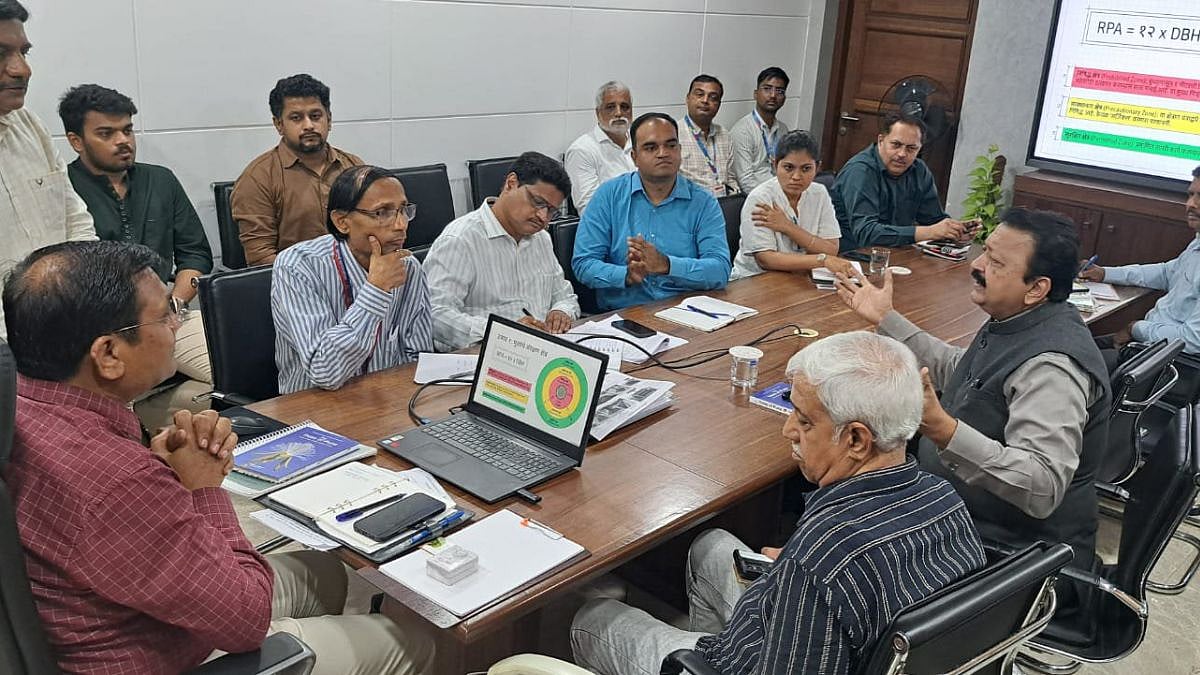
A high-level meeting was held on Thursday evening, led by Additional Municipal Commissioner (Eastern Suburbs) Dr Avinash Dhakane, to discuss scientific measures for improving urban tree safety and management. The meeting was attended by senior educationist and biologist Prof. Sanjay Deshmukh, environmental researcher Shrikant Inglikalkar, arborist Vaibhav Raje, and senior civic officials.
The meeting proposed a city-wide survey to create a database documenting the species, age, health, structural condition, and estimated lifespan of roadside trees. Experts also called for a citizen handbook on tree care, a scientific pruning SOP, modern equipment, regular staff training, and clear guidelines for pruning trees on private premises.
The BMC has been urged to adopt a coordinated approach to tree protection, involving the Roads, Storm Water Drains, Sewerage Operations, and Gardens departments. The meeting also proposed scientific analysis of every tree collapse to identify its root cause, the creation of biodiversity zones with native species, increased bamboo cultivation, and a long-term, climate-resilient tree management policy.
The BMC will study the recommendations and prepare a phased action plan. The civic body will also consult with experts from IIT Bombay and Mumbai University to address the issue of tree falls. The decision on the proposal will be taken soon, according to Dr Dhakane.
The proposal is a significant step towards addressing the issue of tree falls in Mumbai, which has been a major concern during the monsoon season. The city's tree cover is essential for maintaining its ecological balance, and the BMC's efforts to identify and manage hazardous trees will help prevent accidents and ensure public safety.
The survey will also help the BMC to identify areas where tree plantation can be done, and to select suitable species for planting. The civic body will also ensure that adequate space is provided for root growth, which is essential for the healthy growth of trees.
In the long run, the BMC's efforts to manage trees scientifically will help to reduce the number of tree falls, and ensure that Mumbai's tree cover is maintained and enhanced. This will not only improve the city's ecological balance but also contribute to the well-being of its citizens.
The BMC's proposal is a welcome step towards addressing the issue of tree falls, and it is expected that the civic body will take concrete actions to implement the recommendations made by the experts. The citizens of Mumbai can expect a safer and more sustainable urban environment, with a well-managed tree cover that will provide numerous benefits for generations to come.
The issue of tree falls is not limited to Mumbai, and it is a concern that is shared by many cities across the country. The BMC's efforts to address this issue will serve as a model for other cities, and will contribute to the development of a more sustainable and resilient urban environment.
In conclusion, the BMC's proposal to survey and manage trees scientifically is a significant step towards addressing the issue of tree falls in Mumbai. The civic body's efforts to identify and manage hazardous trees, plant new trees, and adopt a coordinated approach to tree protection will help to prevent accidents, ensure public safety, and maintain the city's ecological balance.