IWSA Opens Learning Garden In Navi Mumbai
Navi Mumbai gets a new Learning Garden, promoting urban biodiversity and sustainability. Over 450 plant species are on display.
'%3E%3Crect%20width%3D'96'%20height%3D'96'%20fill%3D'%23B3261E'%2F%3E%3Ccircle%20cx%3D'30'%20cy%3D'24'%20r%3D'44'%20fill%3D'%23fff'%20opacity%3D'.12'%2F%3E%3Ccircle%20cx%3D'60'%20cy%3D'74'%20r%3D'40'%20fill%3D'%23000'%20opacity%3D'.10'%2F%3E%3C%2Fg%3E%3Cg%20fill%3D'%23fff'%3E%3Crect%20x%3D'29'%20y%3D'49'%20width%3D'8'%20height%3D'19'%20rx%3D'1'%2F%3E%3Crect%20x%3D'39'%20y%3D'40'%20width%3D'9'%20height%3D'28'%20rx%3D'1'%2F%3E%3Crect%20x%3D'50'%20y%3D'45'%20width%3D'8'%20height%3D'23'%20rx%3D'1'%2F%3E%3Crect%20x%3D'60'%20y%3D'53'%20width%3D'7'%20height%3D'15'%20rx%3D'1'%2F%3E%3Crect%20x%3D'41'%20y%3D'34'%20width%3D'5'%20height%3D'6'%2F%3E%3C%2Fg%3E%3C%2Fsvg%3E)
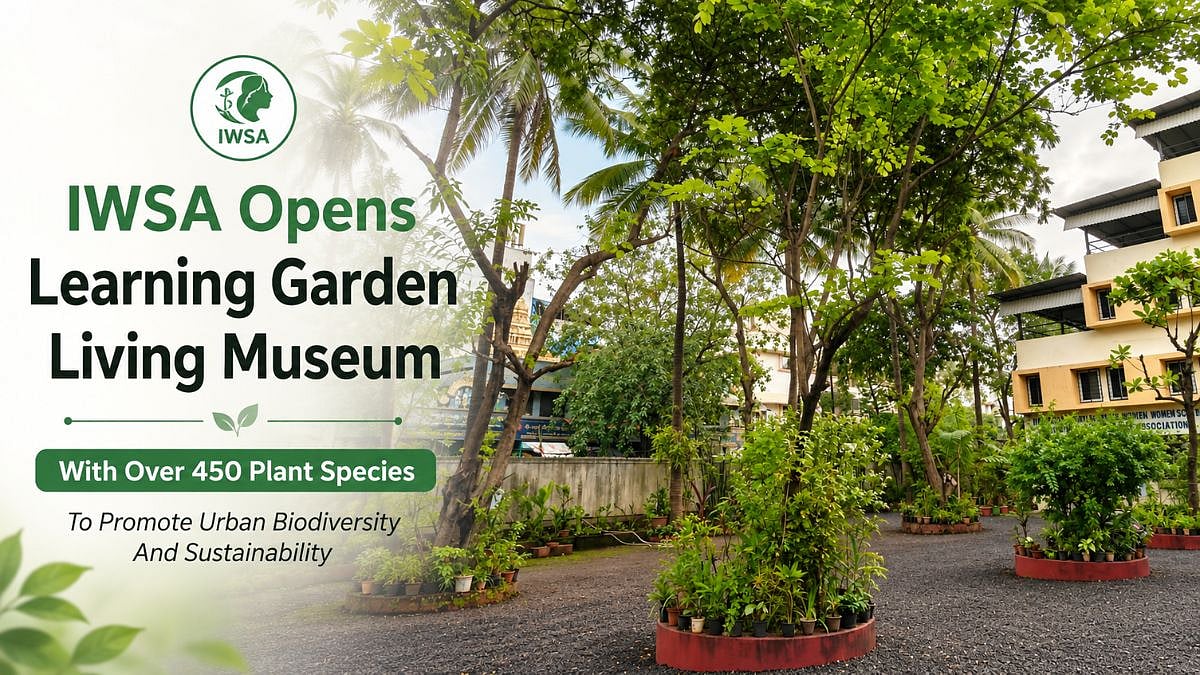
The Indian Women Scientists’ Association (IWSA) has launched its Learning Garden Living Museum in Navi Mumbai, offering a unique opportunity for citizens, students, and educational institutions to experience biodiversity conservation and sustainable urban landscaping firsthand.
Located within the IWSA campus, the Learning Garden features an impressive collection of over 450 plant species, including medicinal, edible, aromatic, and ornamental plants. The garden also includes fruit trees, butterfly-supporting habitats, sensory gardens, sacred groves, and pollinator-friendly landscapes.
The initiative is supported by the NatConnect Foundation as an outreach partner, with the goal of promoting environmental awareness and taking the concept of learning gardens to schools, colleges, housing societies, and nature enthusiasts.
According to Dr Nootan Bhakal, president of IWSA, the Learning Garden is more than just a collection of plants - it's a living museum where biodiversity, science, conservation, and education come together. The objective is to promote environmental awareness through direct observation and hands-on learning, making sustainability more practical and relevant to everyday life.
Priya Jacob, secretary of IWSA, emphasized that the garden aims to create a generation of citizens who understand their role in protecting natural habitats. The Learning Garden Living Museum has inspired many young minds to ask questions, explore answers, and develop a deeper understanding of ecosystems.
B. N. Kumar, director of NatConnect Foundation, praised the garden for demonstrating how biodiversity-rich spaces can be created even within limited urban areas. He believes that the garden can serve as a reference centre for architects, educational institutions, and developers looking to incorporate scientifically planned green spaces into their projects.
The initiative also seeks to shift the focus from purely ornamental landscaping towards ecologically functional spaces. By promoting sustainable practices such as solar power, rainwater harvesting, composting, and efficient water management, the Learning Garden sets an example for urban spaces to support biodiversity while conserving natural resources.
The Learning Garden Living Museum is a significant step towards promoting urban biodiversity and sustainability in Navi Mumbai. By providing a hands-on experience of biodiversity conservation and sustainable urban landscaping, the initiative aims to inspire a new generation of environmentally conscious citizens.
In the context of Mumbai's rapidly urbanizing landscape, the Learning Garden serves as a reminder of the importance of preserving natural habitats and promoting sustainability. The initiative has the potential to make a positive impact on the environment and inspire others to follow in its footsteps.
The launch of the Learning Garden Living Museum is a significant development for Navi Mumbai, and its impact is likely to be felt in the years to come. As the city continues to grow and develop, initiatives like the Learning Garden will play a crucial role in promoting sustainability and preserving the natural environment.
In conclusion, the IWSA's Learning Garden Living Museum is a unique initiative that promotes urban biodiversity and sustainability in Navi Mumbai. By providing a hands-on experience of biodiversity conservation and sustainable urban landscaping, the initiative aims to inspire a new generation of environmentally conscious citizens and make a positive impact on the environment.
Frequently asked questions
What is the Learning Garden Living Museum in Navi Mumbai?
The Learning Garden Living Museum is an initiative by the Indian Women Scientists’ Association (IWSA) to promote urban biodiversity and sustainability through a hands-on experience of biodiversity conservation and sustainable urban landscaping.
How many plant species are featured in the Learning Garden?
The Learning Garden features over 450 plant species, including medicinal, edible, aromatic, and ornamental plants.