Maine Volunteers Plant 32,000 Dune Grass Stalks
Volunteers in Maine plant dune grass after storms. Restoration efforts study dune recovery.
'%3E%3Crect%20width%3D'96'%20height%3D'96'%20fill%3D'%23B3261E'%2F%3E%3Ccircle%20cx%3D'30'%20cy%3D'24'%20r%3D'44'%20fill%3D'%23fff'%20opacity%3D'.12'%2F%3E%3Ccircle%20cx%3D'60'%20cy%3D'74'%20r%3D'40'%20fill%3D'%23000'%20opacity%3D'.10'%2F%3E%3C%2Fg%3E%3Cg%20fill%3D'%23fff'%3E%3Crect%20x%3D'29'%20y%3D'49'%20width%3D'8'%20height%3D'19'%20rx%3D'1'%2F%3E%3Crect%20x%3D'39'%20y%3D'40'%20width%3D'9'%20height%3D'28'%20rx%3D'1'%2F%3E%3Crect%20x%3D'50'%20y%3D'45'%20width%3D'8'%20height%3D'23'%20rx%3D'1'%2F%3E%3Crect%20x%3D'60'%20y%3D'53'%20width%3D'7'%20height%3D'15'%20rx%3D'1'%2F%3E%3Crect%20x%3D'41'%20y%3D'34'%20width%3D'5'%20height%3D'6'%2F%3E%3C%2Fg%3E%3C%2Fsvg%3E)
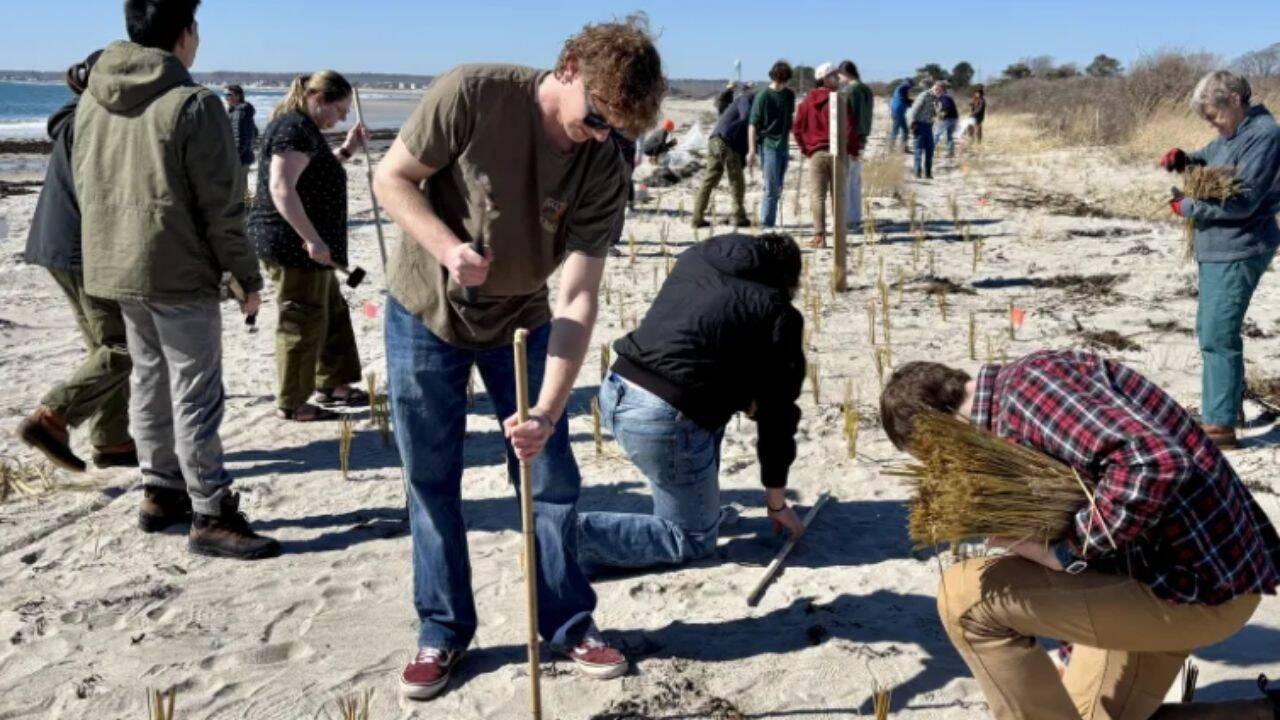
A major restoration effort is underway in Maine after storms in 2024 damaged the state's coastal dunes. In 2026, a group of volunteers, including students from the University of New England, returned to Biddeford Pool to plant dune grass as part of a second restoration effort.
The volunteers planted 20,000 dune-grass stalks across 20,000 square feet of land. This effort is not only aimed at restoring the damaged dunes but also at studying how different factors affect dune recovery. Researchers are investigating how grass spacing, wind, and waves impact the recovery of the dunes.
The initial goal of the project was to plant 32,000 dune grass stalks, and the volunteers have made significant progress towards achieving this target. The restoration effort is crucial for protecting the coastal ecosystem and preventing further erosion.
The University of New England students and local volunteers have been working together to restore the dunes and study the effects of different factors on dune recovery. The project has provided valuable insights into the importance of dune grass in maintaining the stability of the coastal ecosystem.
The 2024 storms had a devastating impact on Maine's coastal dunes, causing significant erosion and damage. The restoration effort is a testament to the community's commitment to protecting the environment and preserving the state's natural beauty.
The project has also highlighted the importance of collaboration between local communities, researchers, and volunteers in restoring damaged ecosystems. The findings of the study will be useful in informing future restoration efforts and ensuring the long-term sustainability of the coastal ecosystem.
The restoration of the dunes is not only important for the environment, but it also has significant economic and social benefits. The coastal ecosystem supports a wide range of industries, including tourism and fishing, and is an important part of Maine's identity.
In conclusion, the restoration effort in Maine is a significant step towards protecting the state's coastal ecosystem and preventing further erosion. The project has demonstrated the importance of community involvement and collaboration in restoring damaged ecosystems, and its findings will be useful in informing future restoration efforts.
Frequently asked questions
What happened to Maine's coastal dunes in 2024?
The 2024 storms caused significant erosion and damage to Maine's coastal dunes.
How many dune grass stalks were planted by volunteers?
The volunteers planted 20,000 dune-grass stalks across 20,000 square feet, with a goal of planting 32,000 stalks.