MP's Kukshi Records 205mm Rainfall Deficit
Kukshi region faces rainfall deficit, farmers await September rain. Kharif crops satisfactory but need more rain.
'%3E%3Crect%20width%3D'96'%20height%3D'96'%20fill%3D'%23B3261E'%2F%3E%3Ccircle%20cx%3D'30'%20cy%3D'24'%20r%3D'44'%20fill%3D'%23fff'%20opacity%3D'.12'%2F%3E%3Ccircle%20cx%3D'60'%20cy%3D'74'%20r%3D'40'%20fill%3D'%23000'%20opacity%3D'.10'%2F%3E%3C%2Fg%3E%3Cg%20fill%3D'%23fff'%3E%3Crect%20x%3D'29'%20y%3D'49'%20width%3D'8'%20height%3D'19'%20rx%3D'1'%2F%3E%3Crect%20x%3D'39'%20y%3D'40'%20width%3D'9'%20height%3D'28'%20rx%3D'1'%2F%3E%3Crect%20x%3D'50'%20y%3D'45'%20width%3D'8'%20height%3D'23'%20rx%3D'1'%2F%3E%3Crect%20x%3D'60'%20y%3D'53'%20width%3D'7'%20height%3D'15'%20rx%3D'1'%2F%3E%3Crect%20x%3D'41'%20y%3D'34'%20width%3D'5'%20height%3D'6'%2F%3E%3C%2Fg%3E%3C%2Fsvg%3E)
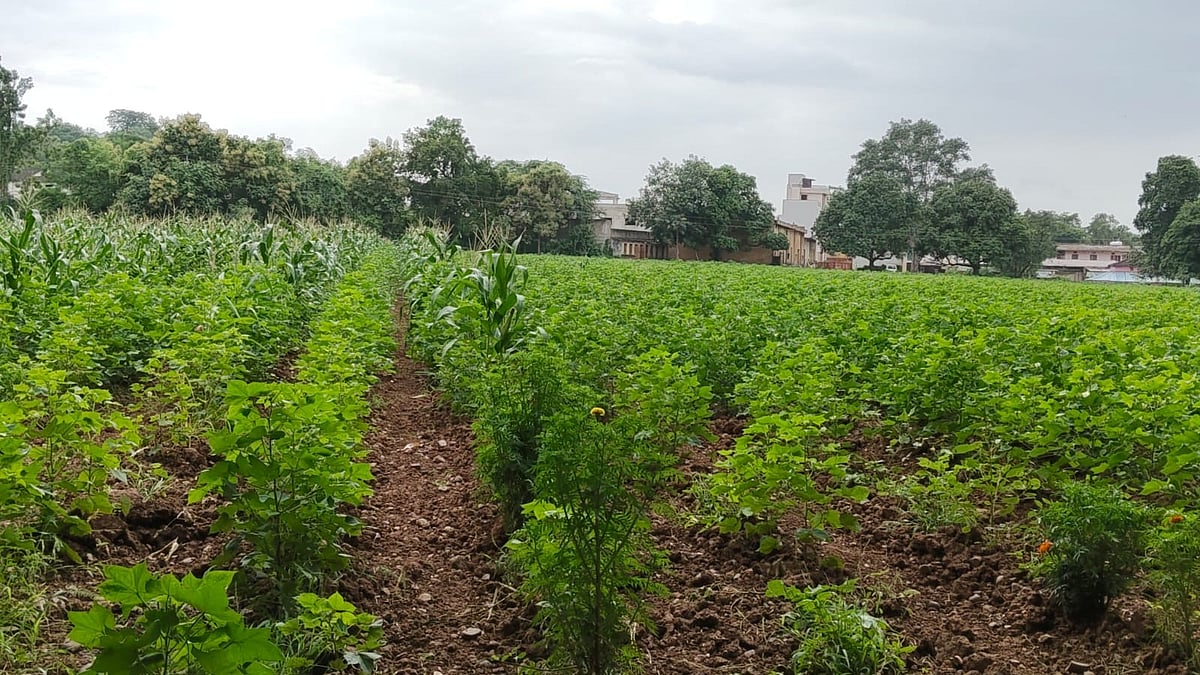
The Kukshi region in Madhya Pradesh has recorded significantly less rainfall this year compared to the previous year, raising concerns over Kharif crops, the upcoming Rabi season, and drinking water availability. By the end of August, Kukshi, Bagh, Nisarpur, and Dahi had recorded rainfall deficits of 205 mm, 279 mm, 143 mm, and 167 mm, respectively.
The region's rainfall has been uneven, with occasional showers providing little relief. The area's rainfall this year has been significantly lower than last year, with Kukshi recording 186 mm compared to 391 mm in 2025, Bagh recording 255 mm compared to 534 mm, Nisarpur recording 147 mm compared to 290 mm, and Dahi recording 226 mm compared to 393 mm.
Despite the satisfactory condition of Kharif crops, farmers are concerned about the lack of rainfall and have started irrigating cotton in some areas. The low water levels in rivers, ponds, barrages, and stop dams have increased concerns over Rabi cultivation and drinking water. Farmers are also reporting viral disease in chilli and pest attacks in other crops, adding to their concerns.
The rising costs of seeds, fertilizers, pesticides, and irrigation have further exacerbated the situation. Farmers are now hoping for widespread rainfall in September to alleviate their concerns. The weak monsoon in the Tribal-dominated Aalirajpur district is becoming a growing concern for farmers, with several rainless days reducing soil moisture in rain-dependent fields.
From June 1 to August 30, the district recorded 2,396.8 mm of rainfall against 5,844.4 mm during the same period last year, marking a deficit of 3,447.6 mm. The average rainfall has also declined to 399.4 mm from 974 mm last year. The shortfall is visible across tehsils, with no tehsil recording any rainfall on August 30.
Agriculture officer Sandeep Rawat emphasized the importance of the timing of rainfall, stating that longer dry spells can reduce soil moisture and affect crop growth and production. He advised farmers to conserve available moisture, use irrigation water carefully, and regularly monitor crop conditions.
The concern extends beyond agriculture, as a decline in crop production could reduce farmers' income and employment opportunities for agricultural laborers, affecting village markets and rural economic activity. If the dry spell continues and farming income falls, families may face increased pressure to migrate in search of work.
Farmers are therefore hoping for sufficient rainfall in the coming days to restore soil moisture, support standing crops, and prevent the rainfall deficit from affecting rural employment and livelihoods. The situation in Kukshi and surrounding areas highlights the need for urgent attention to address the rainfall deficit and its potential impact on the region's agriculture and economy.
The monsoon deficit has significant implications for the region's farmers, who are struggling to cope with the lack of rainfall. The situation is a reminder of the importance of adequate rainfall for agriculture and the need for effective strategies to mitigate the effects of droughts and rainfall deficits.
In conclusion, the rainfall deficit in Kukshi and surrounding areas is a pressing concern that requires immediate attention. The region's farmers are hoping for sufficient rainfall in September to alleviate their concerns and support their crops. The situation highlights the need for effective strategies to address the rainfall deficit and its potential impact on the region's agriculture and economy.
Frequently asked questions
What is the rainfall deficit in Kukshi?
The rainfall deficit in Kukshi is 205mm.
How has the rainfall deficit affected farmers in the region?
The rainfall deficit has affected farmers in the region, with concerns over Kharif crops, Rabi cultivation, and drinking water availability.