Tamil Nadu Minister S Keerthana Slams Misogynistic Trolls
Tamil Nadu minister hits back at viral video trolls, accuses opponents of misogyny.
'%3E%3Crect%20width%3D'96'%20height%3D'96'%20fill%3D'%231A5276'%2F%3E%3Ccircle%20cx%3D'30'%20cy%3D'24'%20r%3D'44'%20fill%3D'%23fff'%20opacity%3D'.12'%2F%3E%3Ccircle%20cx%3D'60'%20cy%3D'74'%20r%3D'40'%20fill%3D'%23000'%20opacity%3D'.10'%2F%3E%3C%2Fg%3E%3Cg%20fill%3D'%23fff'%3E%3Cpath%20d%3D'M31%2041%20L48%2031%20L65%2041%20Z'%2F%3E%3Crect%20x%3D'33'%20y%3D'43'%20width%3D'4'%20height%3D'17'%2F%3E%3Crect%20x%3D'41'%20y%3D'43'%20width%3D'4'%20height%3D'17'%2F%3E%3Crect%20x%3D'51'%20y%3D'43'%20width%3D'4'%20height%3D'17'%2F%3E%3Crect%20x%3D'59'%20y%3D'43'%20width%3D'4'%20height%3D'17'%2F%3E%3Crect%20x%3D'30'%20y%3D'62'%20width%3D'36'%20height%3D'4'%20rx%3D'1'%2F%3E%3C%2Fg%3E%3C%2Fsvg%3E)
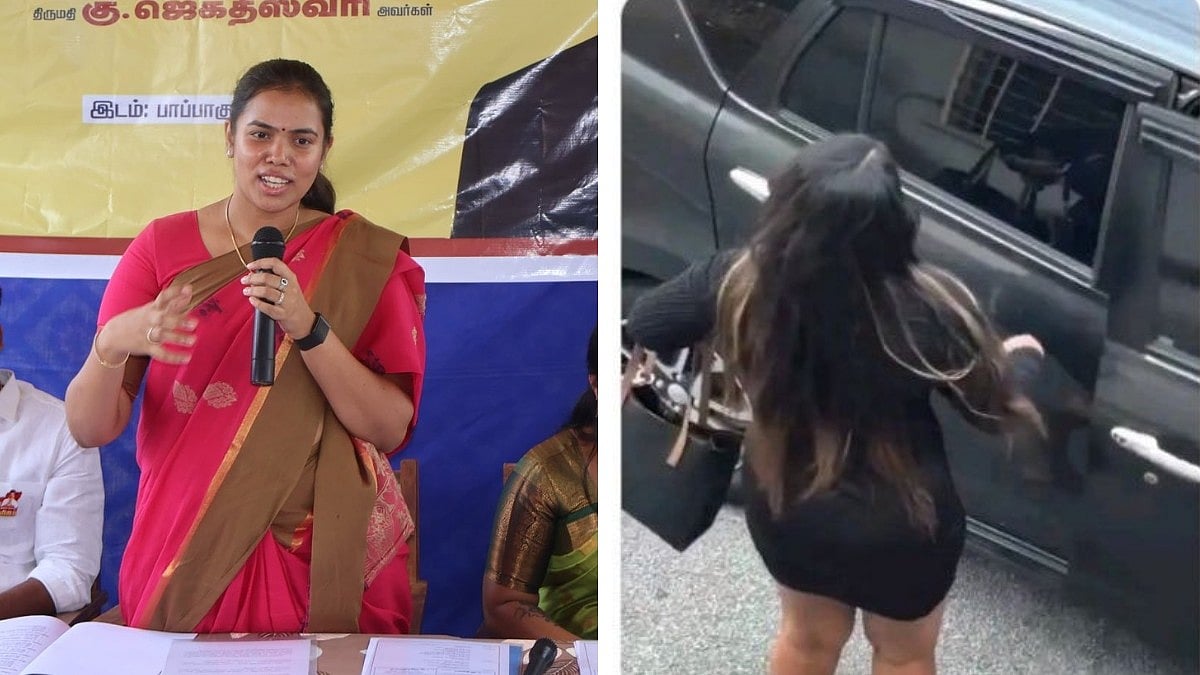
Tamil Nadu minister and Sivakasi MLA S Keerthana has strongly criticized the circulation of a viral video featuring a woman in a short dress, after social media users questioned whether the woman was her.
The video, which was shared on several social media accounts, reportedly linked to DMK supporters, drew criticism and online trolling. Keerthana clarified that she was not the woman in the video and accused supporters of the DMK and AIADMK of turning a woman’s appearance and clothing into a political issue.
She described the controversy as a reflection of a “fragile, regressive mindset” and questioned why a woman’s clothes, appearance or personal choices should become a matter of public scrutiny. Keerthana also took an indirect swipe at her political opponents, saying personal attacks were often used when there was little substantive criticism of a government’s policies or performance.
The minister said that even if the woman in the video was her, it should not matter, and that misogyny was being used as a political weapon. At a separate public event, she accused both the DMK and AIADMK of running what she called false campaigns against women online.
DMK IT wing secretary TRB Rajaa condemned the online abuse, saying women should not be targeted over their personal choices. He said the DMK stood firmly for women’s dignity, rights and freedom, and that behaviour crossing the limits of decency would not be tolerated.
The incident highlights the ongoing issue of misogyny and online harassment in Indian politics. Women in public life, particularly politicians, often face scrutiny and criticism over their appearance and personal choices. Keerthana’s response to the trolls has been praised by many, who see it as a strong stand against misogyny and online abuse.
The controversy also raises questions about the role of social media in Indian politics. While social media can be a powerful tool for politicians to connect with their constituents, it can also be used to spread misinformation and harass women. The incident has sparked a wider debate about the need for greater accountability and regulation of social media platforms in India.
In recent years, there have been several instances of women politicians being targeted online, with many facing abuse and harassment over their appearance and personal choices. The incident has highlighted the need for greater awareness and action to address the issue of online harassment and misogyny in Indian politics.
The Tamil Nadu government has been criticized in the past for its handling of issues related to women’s rights and safety. However, the state has also taken several steps to address the issue of online harassment and misogyny, including the launch of a dedicated helpline for women to report online abuse.
The incident has sparked a wider debate about the need for greater action to address the issue of online harassment and misogyny in Indian politics. It remains to be seen how the incident will play out and what steps will be taken to address the issue.
In conclusion, the incident highlights the ongoing issue of misogyny and online harassment in Indian politics. It is a reminder that women in public life, particularly politicians, often face scrutiny and criticism over their appearance and personal choices. The need for greater awareness and action to address the issue of online harassment and misogyny in Indian politics is clear, and it is hoped that the incident will spark a wider debate about the need for greater accountability and regulation of social media platforms in India.
Frequently asked questions
What was the controversy surrounding Tamil Nadu minister S Keerthana?
A viral video featuring a woman in a short dress sparked controversy, with some social media users questioning whether the woman was Keerthana.
How did Keerthana respond to the controversy?
Keerthana clarified that she was not the woman in the video and accused supporters of the DMK and AIADMK of turning a woman’s appearance and clothing into a political issue.