India's EV Surge To Drive Up Mineral Demand
India's EV growth to boost mineral demand, supply chain concerns rise.
'%3E%3Crect%20width%3D'96'%20height%3D'96'%20fill%3D'%23B3261E'%2F%3E%3Ccircle%20cx%3D'30'%20cy%3D'24'%20r%3D'44'%20fill%3D'%23fff'%20opacity%3D'.12'%2F%3E%3Ccircle%20cx%3D'60'%20cy%3D'74'%20r%3D'40'%20fill%3D'%23000'%20opacity%3D'.10'%2F%3E%3C%2Fg%3E%3Cg%20fill%3D'%23fff'%3E%3Crect%20x%3D'29'%20y%3D'49'%20width%3D'8'%20height%3D'19'%20rx%3D'1'%2F%3E%3Crect%20x%3D'39'%20y%3D'40'%20width%3D'9'%20height%3D'28'%20rx%3D'1'%2F%3E%3Crect%20x%3D'50'%20y%3D'45'%20width%3D'8'%20height%3D'23'%20rx%3D'1'%2F%3E%3Crect%20x%3D'60'%20y%3D'53'%20width%3D'7'%20height%3D'15'%20rx%3D'1'%2F%3E%3Crect%20x%3D'41'%20y%3D'34'%20width%3D'5'%20height%3D'6'%2F%3E%3C%2Fg%3E%3C%2Fsvg%3E)
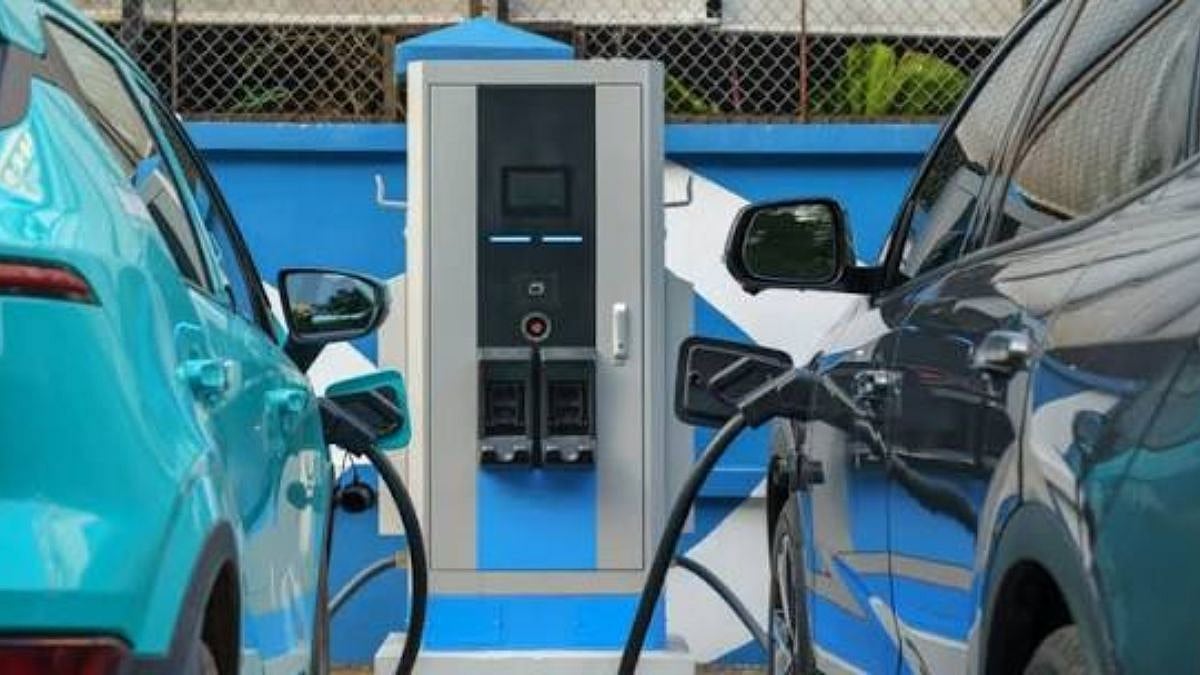
India's transport sector is undergoing a significant transformation with the adoption of electric vehicles (EVs). The country's diverse mix of two-wheelers, auto-rickshaws, buses, trains, and passenger cars will electrify at different paces, distinguishing its transition from that of Europe and the US.
According to a recent article, India's electrification pathway will differ significantly from other major economies. As millions of EVs enter Indian roads, demand for critical minerals such as lithium, copper, nickel, and cobalt is expected to rise to unprecedented levels. In some cases, this demand may even exceed recent global production benchmarks.
The first phase of India's electrification journey will be driven by the rapid electrification of two-wheelers and auto-rickshaws, which dominate everyday mobility. As these markets mature, growth will come from replacing older vehicles rather than expanding the overall fleet. Cars, on the other hand, are expected to continue expanding well beyond 2050, accounting for an increasing proportion of battery demand and critical mineral consumption.
Consequently, India's electrification pathway will become progressively more material-intensive, even as overall vehicle growth begins to stabilize. Demand for slow chargers could increase six to nine times by 2030, driven largely by two- and three-wheelers. Fast chargers, increasingly driven by passenger cars, are expected to continue expanding well into the following decades.
The implications for critical minerals are significant. Lithium demand could more than double, copper demand could approach three times, and nickel demand could approach two-and-a-half times its production benchmark. Cobalt demand could also approach its corresponding global production benchmark, despite starting from a much smaller base.
These projections illustrate how India's electrification pathway could become a major driver of global demand for critical minerals. To address this challenge, policy must evolve beyond promoting EV adoption towards a comprehensive mineral strategy. This strategy should include securing long-term access to critical minerals through partnerships with resource-rich countries and long-term supply agreements.
India's EV revolution is set to trigger a massive surge in critical mineral demand, raising supply chain concerns. The country must anticipate and prepare for this increased demand to ensure a smooth transition to electric mobility.
In the coming decades, India's transport sector will undergo a significant transformation, driven by the adoption of EVs. As the country moves towards a more sustainable and environmentally friendly transportation system, it is essential to address the challenges associated with critical mineral demand and supply chain concerns.
The Indian government has already taken steps to promote EV adoption, including the launch of the PM E-DRIVE scheme. However, more needs to be done to address the supply chain concerns and ensure a stable supply of critical minerals. By developing a comprehensive mineral strategy, India can ensure a smooth transition to electric mobility and become a leader in the global EV market.
In conclusion, India's EV revolution is set to drive up mineral demand, and the country must be prepared to address the associated supply chain concerns. By developing a comprehensive mineral strategy and securing long-term access to critical minerals, India can ensure a smooth transition to electric mobility and achieve its sustainability goals.
Frequently asked questions
What is the expected increase in lithium demand due to India's EV growth?
Lithium demand is expected to more than double.
What is the expected increase in copper demand due to India's EV growth?
Copper demand is expected to approach three times its production benchmark.