Rural India Sees High Pregnancy-Related Deaths
Pregnant women face obstacles, inadequate care in rural India. Lives at risk due to inaccessible roads and scarce doctors.
'%3E%3Crect%20width%3D'96'%20height%3D'96'%20fill%3D'%23B3261E'%2F%3E%3Ccircle%20cx%3D'30'%20cy%3D'24'%20r%3D'44'%20fill%3D'%23fff'%20opacity%3D'.12'%2F%3E%3Ccircle%20cx%3D'60'%20cy%3D'74'%20r%3D'40'%20fill%3D'%23000'%20opacity%3D'.10'%2F%3E%3C%2Fg%3E%3Cg%20fill%3D'%23fff'%3E%3Crect%20x%3D'29'%20y%3D'49'%20width%3D'8'%20height%3D'19'%20rx%3D'1'%2F%3E%3Crect%20x%3D'39'%20y%3D'40'%20width%3D'9'%20height%3D'28'%20rx%3D'1'%2F%3E%3Crect%20x%3D'50'%20y%3D'45'%20width%3D'8'%20height%3D'23'%20rx%3D'1'%2F%3E%3Crect%20x%3D'60'%20y%3D'53'%20width%3D'7'%20height%3D'15'%20rx%3D'1'%2F%3E%3Crect%20x%3D'41'%20y%3D'34'%20width%3D'5'%20height%3D'6'%2F%3E%3C%2Fg%3E%3C%2Fsvg%3E)
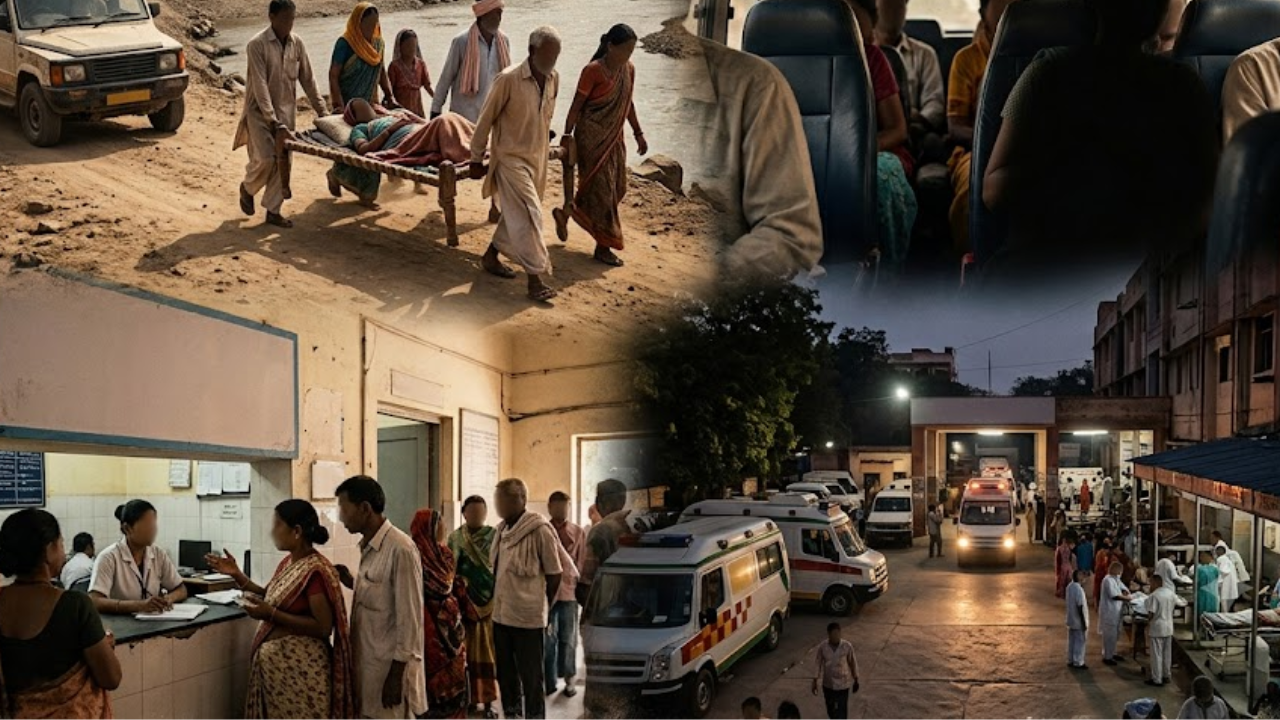
Pregnant women in rural India are dying en route to medical care due to inaccessible roads and a lack of ambulances. This issue is further complicated by the scarcity of specialist doctors in these areas, leading to potentially life-threatening obstetric situations.
The lack of adequate healthcare facilities in rural regions is a significant concern, as it hinders emergency response and puts the lives of mothers and infants at risk. In many cases, pregnant women are forced to travel long distances to reach the nearest hospital, often resulting in delayed medical attention.
The scarcity of specialist doctors, particularly gynecologists and obstetricians, is a major issue in rural India. This shortage of skilled medical professionals exacerbates the risks associated with pregnancy and childbirth, making it even more challenging for women to receive timely and adequate care.
In addition to the lack of medical facilities and specialist doctors, the condition of roads in rural areas is also a significant obstacle. Inaccessible roads and a lack of ambulances make it difficult for pregnant women to reach hospitals in emergency situations, further increasing the risk of complications and fatalities.
The Indian government has launched several initiatives to improve healthcare facilities in rural areas, including the deployment of mobile health units and the training of community health workers. However, more needs to be done to address the systemic issues that are contributing to the high number of pregnancy-related deaths in rural India.
Enhancing healthcare facilities in rural regions is essential to safeguard the lives of pregnant women and their infants. This can be achieved by increasing the number of specialist doctors, improving the condition of roads, and providing adequate ambulances and emergency response services.
The situation is critical, and immediate attention is required to address the issue of pregnancy-related deaths in rural India. By improving healthcare facilities and services, the government can help reduce the number of maternal and infant deaths, ensuring that pregnant women receive the medical care they need in a timely and efficient manner.
In conclusion, the high number of pregnancy-related deaths in rural India is a pressing concern that requires immediate attention. By addressing the systemic issues that are contributing to this problem, including the lack of specialist doctors, inaccessible roads, and inadequate healthcare facilities, the government can help safeguard the lives of pregnant women and their infants, ensuring that they receive the medical care they need to stay safe and healthy.
The issue of pregnancy-related deaths in rural India is a complex one, requiring a multi-faceted approach to resolve. However, with the right strategies and initiatives in place, it is possible to reduce the number of maternal and infant deaths, improving the health and wellbeing of pregnant women and their families in rural India.
Ultimately, the key to reducing pregnancy-related deaths in rural India lies in enhancing healthcare facilities and services, particularly in remote and inaccessible areas. By doing so, the government can help ensure that pregnant women receive the medical care they need, when they need it, reducing the risk of complications and fatalities, and improving the overall health and wellbeing of mothers and infants alike.
Frequently asked questions
What are the main obstacles faced by pregnant women in rural India
The main obstacles faced by pregnant women in rural India include inaccessible roads, a lack of ambulances, and a scarcity of specialist doctors.
What can be done to reduce pregnancy-related deaths in rural India
To reduce pregnancy-related deaths in rural India, the government can enhance healthcare facilities, increase the number of specialist doctors, and improve the condition of roads and emergency response services.