CBI Files Chargesheet Against Reliance Home Finance
CBI files first chargesheet against RHFL and 3 former executives. Alleged diversion of funds causes Rs 3,526.35 crore loss to public sector banks.

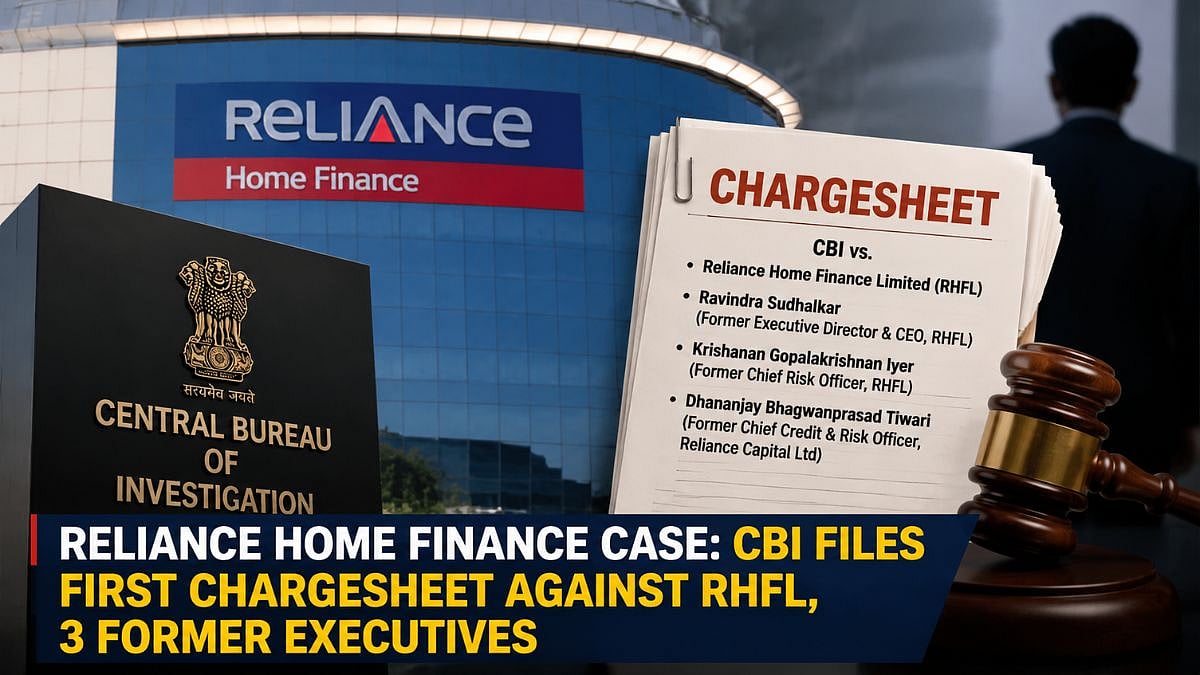
The Central Bureau of Investigation (CBI) has filed its first chargesheet in the Reliance Home Finance Limited (RHFL) case against the company and three former executives. The chargesheet was filed before the Special Judge for CBI cases in Mumbai on Thursday.
The accused include Ravindra Sudhalkar, Executive Director and CEO of RHFL, Krishanan Gopalakrishnan Iyer, Chief Risk Officer of RHFL, and Dhananjay Bhagwanprasad Tiwari, Chief Credit and Risk Officer of Reliance Capital Ltd. They have been charged with criminal conspiracy and cheating with intent to cause huge losses to public sector banks.
According to the CBI, the investigation revealed that funds borrowed by RHFL were diverted to various Reliance ADA Group companies through intermediary and conduit entities. This diversion was in violation of the terms and conditions governing such borrowings, causing wrongful loss to the lending banks and corresponding wrongful gain to the accused persons and related entities.
The total loss caused to 10 public sector banks in the consortium is estimated to be Rs 3,526.35 crore. The CBI had registered the case based on complaints received from Union Bank of India and other public sector banks.
The investigation is ongoing, and further probe has been kept open to ascertain the role of other directors, entities, and public servants involved in causing wrongful loss to the public sector banks. Supplementary chargesheets are expected to be filed in due course.
This is the third chargesheet filed by the CBI in the Reliance ADA Group cases. The agency has registered seven FIRs against various Reliance companies, including Reliance Communications Limited, Reliance Home Finance Limited, Reliance Commercial Finance Limited, and Reliance Telecom Limited.
The CBI had earlier filed its first chargesheet in the Reliance Communications Limited case on May 29 against 16 accused persons and the second chargesheet in the Reliance Commercial Finance Limited case on July 7 against seven accused persons.
The investigation into these cases is being monitored by the Supreme Court. The CBI's action is a significant step towards holding accountable those responsible for the alleged diversion of funds and causing losses to public sector banks.
The case highlights the importance of ensuring that companies and their executives comply with the terms and conditions of borrowings and do not engage in fraudulent activities that can cause harm to the banking system and the economy.
The development is also a reminder of the need for effective regulatory oversight and enforcement to prevent such instances of alleged fraud and diversion of funds. The CBI's investigation and the filing of chargesheets are expected to send a strong message to companies and executives that such activities will not be tolerated.
In the context of the Indian banking system, the case is a significant one, as it involves allegations of diversion of funds and cheating by a prominent company and its executives. The outcome of the investigation and the prosecution of the accused will be closely watched by the banking and financial sectors.
The Reliance ADA Group cases are a reminder of the challenges faced by the Indian banking system in recent years, including the issue of non-performing assets and the need for effective regulatory oversight. The CBI's investigation and the filing of chargesheets are an important step towards addressing these challenges and ensuring that those responsible for alleged fraud and diversion of funds are held accountable.
In conclusion, the CBI's filing of the first chargesheet in the Reliance Home Finance Limited case is a significant development in the investigation into the alleged diversion of funds and cheating by the company and its executives. The case highlights the importance of ensuring compliance with the terms and conditions of borrowings and the need for effective regulatory oversight to prevent such instances of alleged fraud and diversion of funds.