UCC Changes for Indians Explained
Find out what the Uniform Civil Code means for you. Know the changes ahead.
'%3E%3Crect%20width%3D'96'%20height%3D'96'%20fill%3D'%231A5276'%2F%3E%3Ccircle%20cx%3D'30'%20cy%3D'24'%20r%3D'44'%20fill%3D'%23fff'%20opacity%3D'.12'%2F%3E%3Ccircle%20cx%3D'60'%20cy%3D'74'%20r%3D'40'%20fill%3D'%23000'%20opacity%3D'.10'%2F%3E%3C%2Fg%3E%3Cg%20fill%3D'%23fff'%3E%3Cpath%20d%3D'M31%2041%20L48%2031%20L65%2041%20Z'%2F%3E%3Crect%20x%3D'33'%20y%3D'43'%20width%3D'4'%20height%3D'17'%2F%3E%3Crect%20x%3D'41'%20y%3D'43'%20width%3D'4'%20height%3D'17'%2F%3E%3Crect%20x%3D'51'%20y%3D'43'%20width%3D'4'%20height%3D'17'%2F%3E%3Crect%20x%3D'59'%20y%3D'43'%20width%3D'4'%20height%3D'17'%2F%3E%3Crect%20x%3D'30'%20y%3D'62'%20width%3D'36'%20height%3D'4'%20rx%3D'1'%2F%3E%3C%2Fg%3E%3C%2Fsvg%3E)
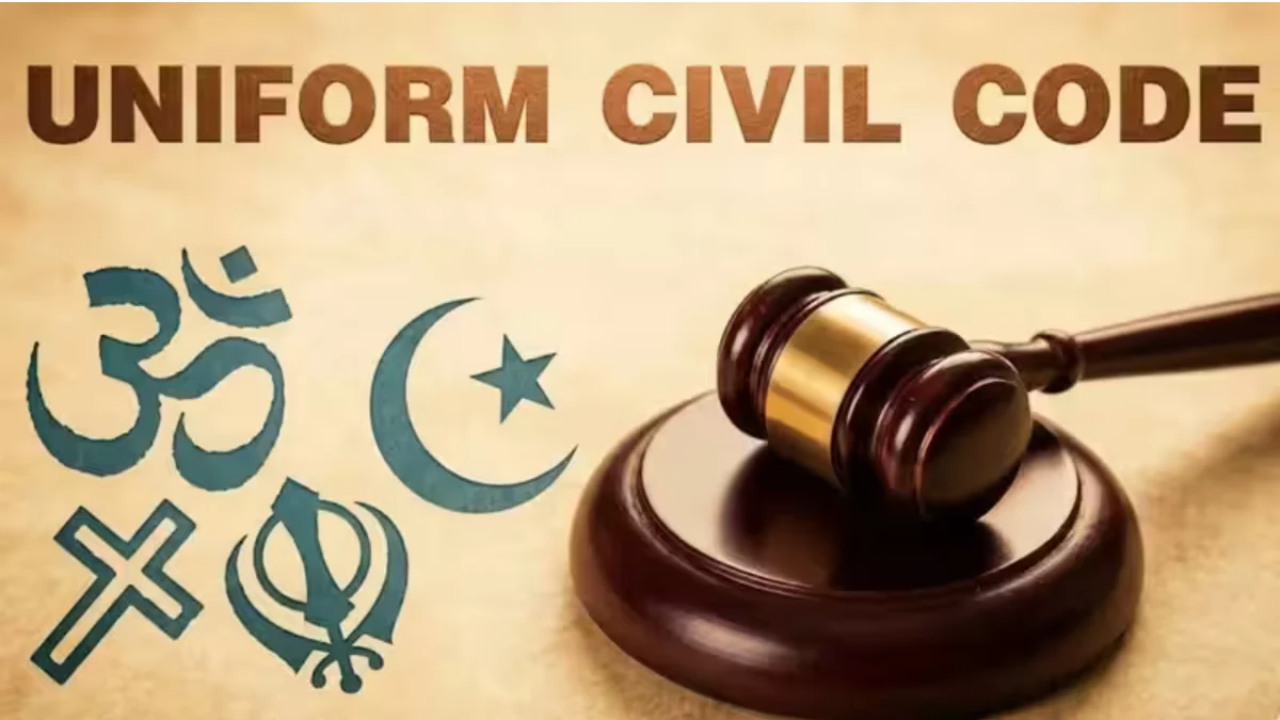
The Uniform Civil Code (UCC) has been a topic of discussion in India for a while now. But what does it actually mean for the average citizen? In simple terms, the UCC aims to replace the existing personal laws of various communities with a single, uniform code that applies to all Indians.
The idea behind the UCC is to provide a common set of laws that govern aspects such as marriage, divorce, inheritance, and adoption. This means that regardless of one's religion or community, the same laws will apply to everyone. For instance, the UCC proposes to make the minimum age of marriage the same for both men and women, which is currently not the case.
One of the key changes that the UCC will bring about is in the area of marriage and divorce. Under the current system, different communities have their own laws governing these aspects. For example, Muslims are governed by the Muslim Personal Law, while Hindus are governed by the Hindu Marriage Act. The UCC will replace these laws with a single, uniform code that applies to all.
Another area where the UCC will bring about significant changes is in the realm of inheritance. Currently, different communities have their own laws governing the distribution of property after the death of a family member. The UCC proposes to introduce a uniform system of inheritance, where the property will be divided equally among all heirs, regardless of their gender or community.
The UCC will also have an impact on the area of adoption. Currently, different communities have their own laws governing adoption, which can make it difficult for couples to adopt children. The UCC proposes to introduce a uniform system of adoption, where the process will be simplified and made more accessible to all.
It's worth noting that the UCC is still a proposal and has not yet been implemented. The government has set up a committee to examine the feasibility of implementing the UCC and to suggest changes to the existing laws. The committee's report is expected to be submitted soon, after which the government will take a decision on the implementation of the UCC.
In the context of Indian history, the UCC has been a long-standing demand of many social reformers and politicians. The idea of a uniform civil code was first introduced by the Indian National Congress in the 1930s. Since then, there have been several attempts to implement the UCC, but none have been successful so far.
The UCC has the potential to bring about significant changes in the lives of Indians. By providing a common set of laws that apply to all, it can help to promote unity and equality among different communities. However, the implementation of the UCC will not be without its challenges. There are many who oppose the idea of a uniform civil code, citing concerns about the erosion of community-specific laws and traditions.
In conclusion, the UCC is a significant proposal that has the potential to bring about far-reaching changes in the lives of Indians. While it's still early days, and the implementation of the UCC is yet to be decided, it's essential to understand what the UCC means for the average citizen and how it can impact their lives.
The significance of the UCC for India lies in its potential to promote unity and equality among different communities. By providing a common set of laws that apply to all, the UCC can help to reduce conflicts and promote social cohesion. Additionally, the UCC can help to simplify the legal system and make it more accessible to all, which can have a positive impact on the overall development of the country.
Overall, the UCC is an important proposal that deserves careful consideration. While there are challenges to its implementation, the potential benefits of the UCC make it an idea worth exploring further.
Frequently asked questions
What is the Uniform Civil Code?
The Uniform Civil Code is a proposal to replace the existing personal laws of various communities with a single, uniform code that applies to all Indians.
How will the UCC affect marriage and divorce laws?
The UCC proposes to make the minimum age of marriage the same for both men and women and introduce a uniform system of divorce laws.