Scientists Edit Beagle Embryos to Remove Allergen
Beagle embryos edited, dog allergen removed. New study brings hope.
'%3E%3Crect%20width%3D'96'%20height%3D'96'%20fill%3D'%23B3261E'%2F%3E%3Ccircle%20cx%3D'30'%20cy%3D'24'%20r%3D'44'%20fill%3D'%23fff'%20opacity%3D'.12'%2F%3E%3Ccircle%20cx%3D'60'%20cy%3D'74'%20r%3D'40'%20fill%3D'%23000'%20opacity%3D'.10'%2F%3E%3C%2Fg%3E%3Cg%20fill%3D'%23fff'%3E%3Crect%20x%3D'29'%20y%3D'49'%20width%3D'8'%20height%3D'19'%20rx%3D'1'%2F%3E%3Crect%20x%3D'39'%20y%3D'40'%20width%3D'9'%20height%3D'28'%20rx%3D'1'%2F%3E%3Crect%20x%3D'50'%20y%3D'45'%20width%3D'8'%20height%3D'23'%20rx%3D'1'%2F%3E%3Crect%20x%3D'60'%20y%3D'53'%20width%3D'7'%20height%3D'15'%20rx%3D'1'%2F%3E%3Crect%20x%3D'41'%20y%3D'34'%20width%3D'5'%20height%3D'6'%2F%3E%3C%2Fg%3E%3C%2Fsvg%3E)
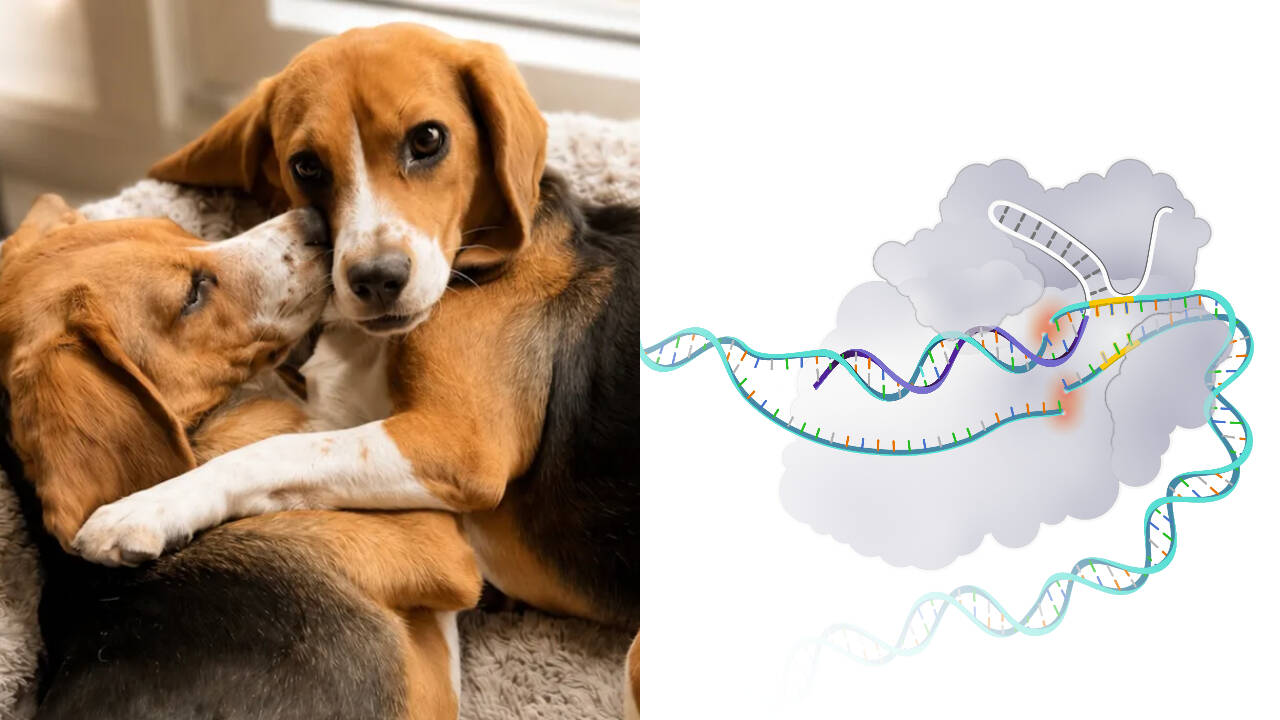
Scientists have successfully edited beagle embryos to remove a major dog allergen, a breakthrough that could potentially reduce the prevalence of allergies in the future. The study, which focused on beagles, aimed to eliminate the primary culprit behind dog allergies, a protein called Can f 1. This protein is found in the saliva, urine, and skin of dogs and is responsible for triggering allergic reactions in many people.
The researchers used a gene-editing tool to modify the embryos and remove the gene responsible for producing Can f 1. The edited embryos were then implanted into surrogate mothers, who gave birth to healthy puppies. The study's findings suggest that the edited puppies do not produce the Can f 1 protein, making them potentially hypoallergenic.
The team of scientists behind the study believes that this breakthrough could have significant implications for people who suffer from dog allergies. With over 10% of the global population affected by allergies, this discovery could bring relief to millions of people worldwide. However, it is essential to note that the study is still in its early stages, and more research is needed to confirm the long-term effects of the gene editing.
Dog allergies are a common problem, and many people are forced to avoid having dogs as pets due to the risk of allergic reactions. The removal of the Can f 1 protein could make it possible for people with allergies to own dogs without worrying about the potential health risks. Furthermore, this study could also pave the way for the development of new treatments for allergies.
The use of gene-editing tools has revolutionized the field of genetics, allowing scientists to make precise modifications to the DNA of living organisms. This technology has the potential to treat a wide range of diseases and conditions, from genetic disorders to complex diseases like cancer.
In the context of dog allergies, the removal of the Can f 1 protein is a significant step forward. While the study's findings are promising, it is crucial to consider the potential risks and challenges associated with gene editing. As the technology continues to evolve, it is essential to address the ethical and regulatory implications of gene editing in animals.
The study's results are a testament to the power of genetic engineering and its potential to improve human health. As researchers continue to explore the possibilities of gene editing, we can expect to see new breakthroughs and innovations in the field. For now, the prospect of hypoallergenic dogs is an exciting development that could bring joy and companionship to people who previously thought they could not have a dog as a pet.
In conclusion, the editing of beagle embryos to remove a major dog allergen is a significant breakthrough that could have far-reaching implications for people with allergies. While more research is needed to confirm the long-term effects of the gene editing, this study brings hope to those who have been forced to avoid having dogs as pets due to the risk of allergic reactions.
Frequently asked questions
What is the main cause of dog allergies?
The main cause of dog allergies is a protein called Can f 1, found in the saliva, urine, and skin of dogs.
What is the potential benefit of editing dog embryos to remove the Can f 1 protein?
The potential benefit is the creation of hypoallergenic dogs, which could allow people with allergies to own dogs without worrying about the risk of allergic reactions.