UP Launches Anti-Drug Campaign In Universities, Colleges
Uttar Pradesh government starts anti-drug campaign in universities and colleges. Daily pledge and strict monitoring to be implemented.
'%3E%3Crect%20width%3D'96'%20height%3D'96'%20fill%3D'%231A5276'%2F%3E%3Ccircle%20cx%3D'30'%20cy%3D'24'%20r%3D'44'%20fill%3D'%23fff'%20opacity%3D'.12'%2F%3E%3Ccircle%20cx%3D'60'%20cy%3D'74'%20r%3D'40'%20fill%3D'%23000'%20opacity%3D'.10'%2F%3E%3C%2Fg%3E%3Cg%20fill%3D'%23fff'%3E%3Cpath%20d%3D'M31%2041%20L48%2031%20L65%2041%20Z'%2F%3E%3Crect%20x%3D'33'%20y%3D'43'%20width%3D'4'%20height%3D'17'%2F%3E%3Crect%20x%3D'41'%20y%3D'43'%20width%3D'4'%20height%3D'17'%2F%3E%3Crect%20x%3D'51'%20y%3D'43'%20width%3D'4'%20height%3D'17'%2F%3E%3Crect%20x%3D'59'%20y%3D'43'%20width%3D'4'%20height%3D'17'%2F%3E%3Crect%20x%3D'30'%20y%3D'62'%20width%3D'36'%20height%3D'4'%20rx%3D'1'%2F%3E%3C%2Fg%3E%3C%2Fsvg%3E)
The Uttar Pradesh government has launched a comprehensive anti-drug campaign across all higher educational institutions in the state. The campaign aims to transform Prime Minister Narendra Modi's call for a Nasha Mukt Bharat into a people's movement.
A key meeting of Registrars and Controllers of Examinations of all state universities was held in the Assembly premises under the chairmanship of Higher Education Minister Yogendra Upadhyay. The meeting finalized a detailed action plan to make the anti-drug campaign effective, sustained and result-oriented in higher educational institutions.
According to Higher Education Minister Yogendra Upadhyay, the youth are the greatest strength of a Viksit Bharat. He stated that if young people are kept away from the social evil of substance abuse, the future of both the state and the nation will become even stronger.
The Uttar Pradesh Government is working to make higher educational institutions not merely centers of education, but also foundations of values, discipline and nation-building. The anti-drug campaign is an important part of this resolve.
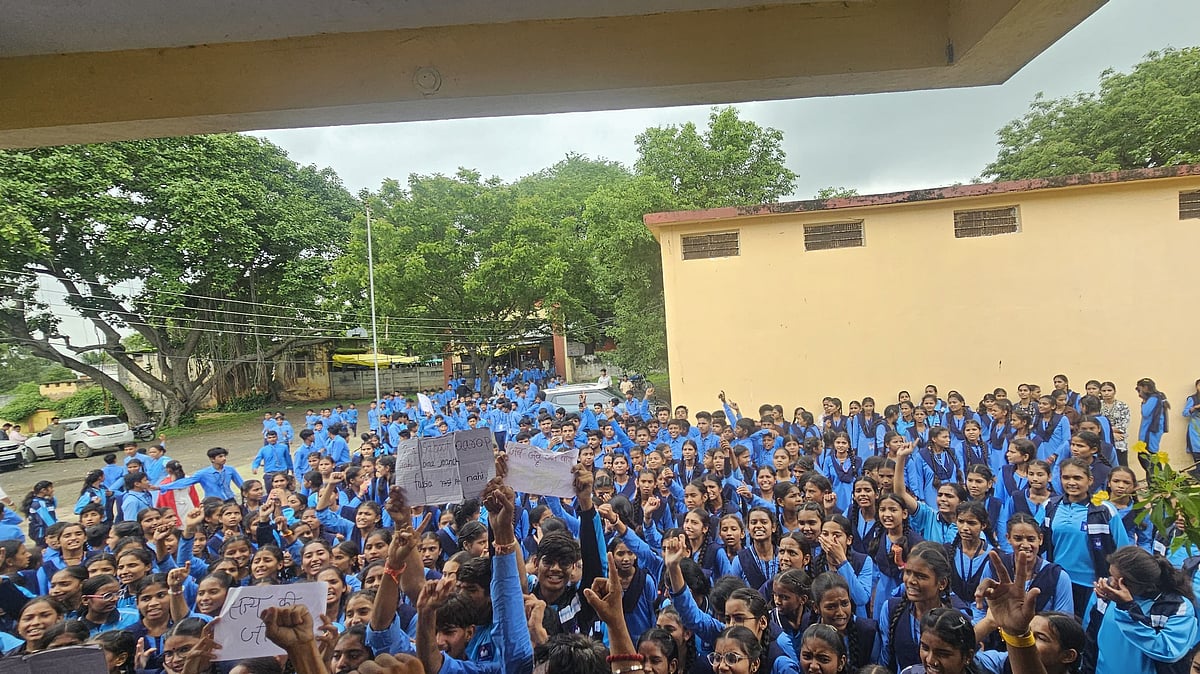
As part of the campaign, a two-minute anti-drug pledge will be administered to students before the beginning of every working day in all government and private universities and colleges across the state. Public awareness activities such as 'Run for Nasha Mukti', marathons, marches, speech competitions, essay competitions, painting competitions, plays and street plays will also be organized.
Every teacher will dedicate the last 10 minutes of one class every week to interaction and motivational discussions with students on the subject of a drug-free life. Educational visits to cultural, spiritual and inspirational places will also be organized to promote positive thinking and life values among students.
For wider outreach of the campaign, hoardings, wall paintings and social media will be used across campuses and public places, and efforts will be made to connect the maximum number of students with the My Bharat portal.
The entire state has been divided into 5 zones for effective monitoring of the campaign. A senior departmental officer will be appointed as the nodal officer for each zone. At the university level, a senior nodal officer; at the college level, the Principal; and at each faculty level, a separate nodal officer will regularly monitor the campaign.
Several stringent measures were also approved to prevent substance abuse. A strict prohibition will be enforced on the sale of any intoxicating substance within a 100-meter radius of educational institutions.
The campaign is part of the government's efforts to create a drug-free society and promote positive values among young people. The success of the campaign will depend on the active participation of students, teachers, and parents.
In the context of the campaign, it is worth noting that substance abuse is a major problem in India, with many young people falling prey to it. The campaign is a step in the right direction, as it aims to create awareness and promote positive values among young people.
The Uttar Pradesh government's initiative is significant, as it has the potential to make a positive impact on the lives of young people in the state. The campaign's success will depend on the sustained efforts of all stakeholders involved.
In conclusion, the launch of the anti-drug campaign in universities and colleges in Uttar Pradesh is a welcome move. It is a step towards creating a drug-free society and promoting positive values among young people. The campaign's success will have a positive impact on the state and the nation as a whole.
Frequently asked questions
What is the purpose of the anti-drug campaign in Uttar Pradesh?
The purpose of the campaign is to create awareness and promote positive values among young people, and to prevent substance abuse.
How will the campaign be monitored?
The entire state has been divided into 5 zones, and a senior departmental officer will be appointed as the nodal officer for each zone, with regular monitoring at the university, college, and faculty levels.