Pronghorns Tracked With GPS Near Solar Farm
Scientists study pronghorn movement, find fences a barrier.
'%3E%3Crect%20width%3D'96'%20height%3D'96'%20fill%3D'%23B3261E'%2F%3E%3Ccircle%20cx%3D'30'%20cy%3D'24'%20r%3D'44'%20fill%3D'%23fff'%20opacity%3D'.12'%2F%3E%3Ccircle%20cx%3D'60'%20cy%3D'74'%20r%3D'40'%20fill%3D'%23000'%20opacity%3D'.10'%2F%3E%3C%2Fg%3E%3Cg%20fill%3D'%23fff'%3E%3Crect%20x%3D'29'%20y%3D'49'%20width%3D'8'%20height%3D'19'%20rx%3D'1'%2F%3E%3Crect%20x%3D'39'%20y%3D'40'%20width%3D'9'%20height%3D'28'%20rx%3D'1'%2F%3E%3Crect%20x%3D'50'%20y%3D'45'%20width%3D'8'%20height%3D'23'%20rx%3D'1'%2F%3E%3Crect%20x%3D'60'%20y%3D'53'%20width%3D'7'%20height%3D'15'%20rx%3D'1'%2F%3E%3Crect%20x%3D'41'%20y%3D'34'%20width%3D'5'%20height%3D'6'%2F%3E%3C%2Fg%3E%3C%2Fsvg%3E)
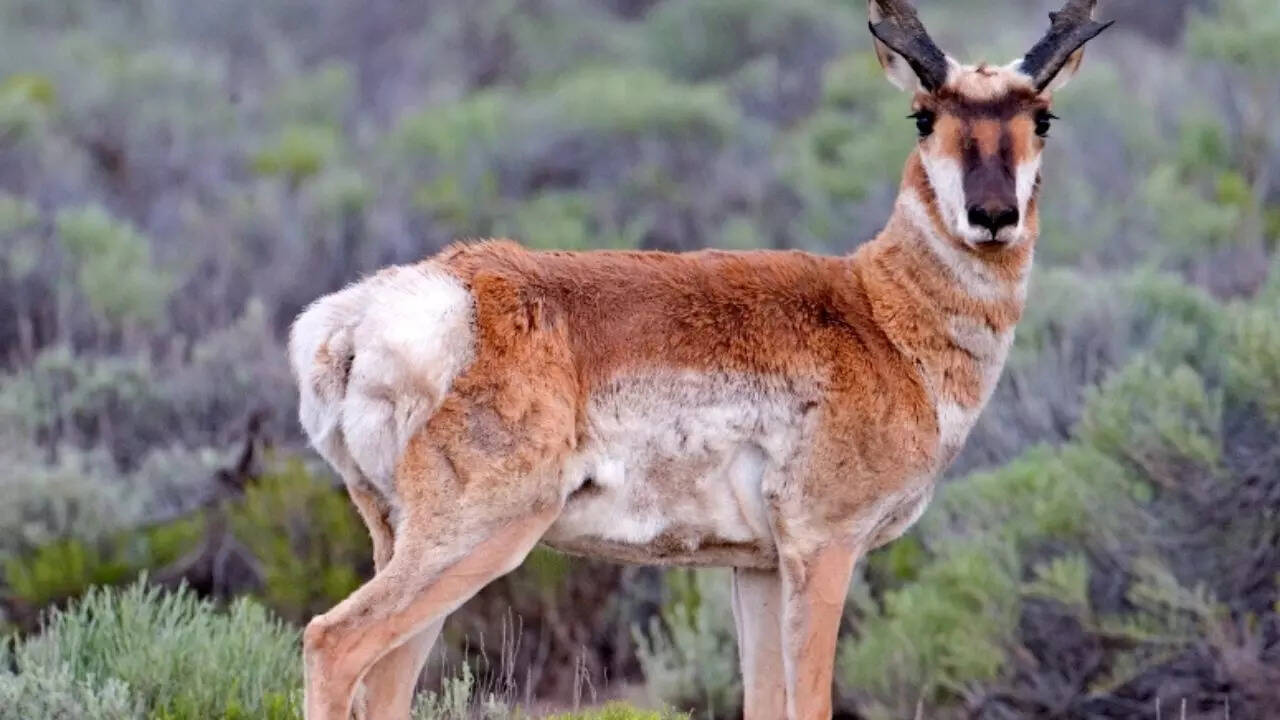
Scientists have fitted 75 pronghorns, the fastest land animal in the Americas, with GPS collars to track their movement near a solar project in New Mexico. The study revealed that fences around the solar farm pose a significant obstacle to the animals.
Pronghorns typically crawl under fences rather than jumping over them, and the fences around the solar farm are no exception. Researchers observed that the animals would often try to crawl under the fences, but were unable to do so due to the fence design.
The researchers suggest that simple modifications to the fences could aid wildlife movement. By making a few changes to the fence design, the animals would be able to use their traditional migration paths. This would help to reduce the impact of the solar farm on the pronghorn population.
The study highlights the importance of considering wildlife movement when designing and building large infrastructure projects such as solar farms. By taking into account the needs of local wildlife, developers can help to minimize the impact of their projects on the environment.
Pronghorns are an important part of the ecosystem in the Americas, and their migration patterns play a crucial role in maintaining the balance of nature. The study's findings have significant implications for the development of solar farms and other infrastructure projects in areas where pronghorns and other wildlife are present.
The use of GPS collars to track pronghorn movement has provided valuable insights into the behavior of these animals. The data collected from the GPS collars has helped researchers to understand the migration patterns of pronghorns and the impact of human activities on their movement.
In recent years, there has been an increasing focus on the development of renewable energy sources, such as solar power. While solar farms have the potential to provide a significant amount of clean energy, they can also have a negative impact on local wildlife. The study's findings highlight the need for developers to consider the potential impact of their projects on wildlife and to take steps to mitigate any negative effects.
The modifications suggested by the researchers are relatively simple and could be implemented at a minimal cost. By making these changes, developers can help to ensure that their projects do not harm local wildlife and that the animals are able to continue using their traditional migration paths.
In conclusion, the study's findings have significant implications for the development of solar farms and other infrastructure projects in areas where pronghorns and other wildlife are present. By considering the needs of local wildlife and taking steps to minimize the impact of their projects, developers can help to protect the environment and preserve the natural balance of the ecosystem.
The study's results are also relevant to other parts of the world where similar projects are being developed. As the world continues to transition to renewable energy sources, it is essential that developers consider the potential impact of their projects on local wildlife and take steps to mitigate any negative effects.
Overall, the study provides valuable insights into the behavior of pronghorns and the impact of human activities on their movement. The findings have significant implications for the development of solar farms and other infrastructure projects, and highlight the need for developers to consider the potential impact of their projects on wildlife.