Gen Z Pushes Back Against Government
Young protesters use social media to challenge authority, government struggles to respond
'%3E%3Crect%20width%3D'96'%20height%3D'96'%20fill%3D'%231A5276'%2F%3E%3Ccircle%20cx%3D'30'%20cy%3D'24'%20r%3D'44'%20fill%3D'%23fff'%20opacity%3D'.12'%2F%3E%3Ccircle%20cx%3D'60'%20cy%3D'74'%20r%3D'40'%20fill%3D'%23000'%20opacity%3D'.10'%2F%3E%3C%2Fg%3E%3Cg%20fill%3D'%23fff'%3E%3Cpath%20d%3D'M31%2041%20L48%2031%20L65%2041%20Z'%2F%3E%3Crect%20x%3D'33'%20y%3D'43'%20width%3D'4'%20height%3D'17'%2F%3E%3Crect%20x%3D'41'%20y%3D'43'%20width%3D'4'%20height%3D'17'%2F%3E%3Crect%20x%3D'51'%20y%3D'43'%20width%3D'4'%20height%3D'17'%2F%3E%3Crect%20x%3D'59'%20y%3D'43'%20width%3D'4'%20height%3D'17'%2F%3E%3Crect%20x%3D'30'%20y%3D'62'%20width%3D'36'%20height%3D'4'%20rx%3D'1'%2F%3E%3C%2Fg%3E%3C%2Fsvg%3E)
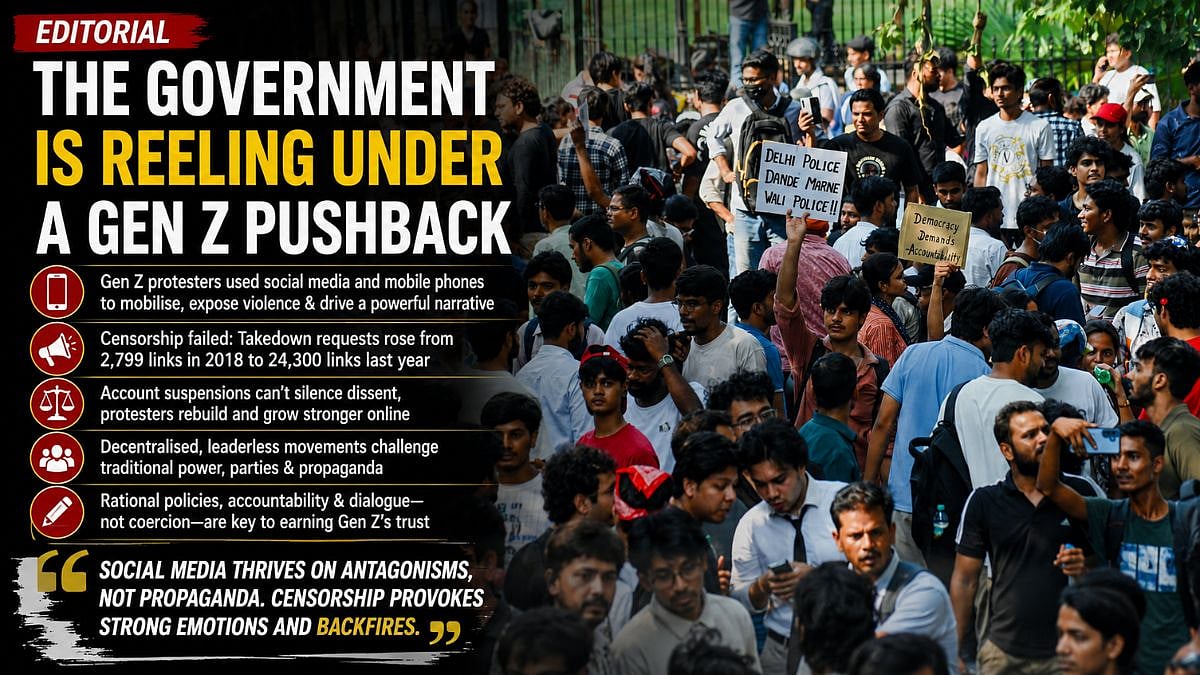
The Indian government is facing a backlash from Gen Z protesters who are using social media to challenge its authority. The protesters, led by the Cockroach Janta Party (CJP), have been using creative and chaotic tactics to spread their message and mobilize support. Despite the government's efforts to block their videos and messages, the protesters have been able to regrow their online presence and continue their campaign.
The government's attempts to censor social media content have been widely criticized, with many seeing it as an attack on free speech. The number of requests to technology companies to block access to content has risen sharply in recent years, from 2,799 links in 2018 to 24,300 links last year. Internet takedown orders have also soared, increasing by 252% in three years.
The CJP's use of social media has been highly effective, with their messages and videos going viral and capturing the attention of the nation. The government's initial response to the protests, which included characterizing the protesters as violent and anti-national, was widely criticized and had to be walked back.
The protests have highlighted the importance of social media in modern politics and the need for governments to engage with citizens in a more meaningful way. The government's attempts to impose authoritarian control over social media have been seen as heavy-handed and counterproductive.
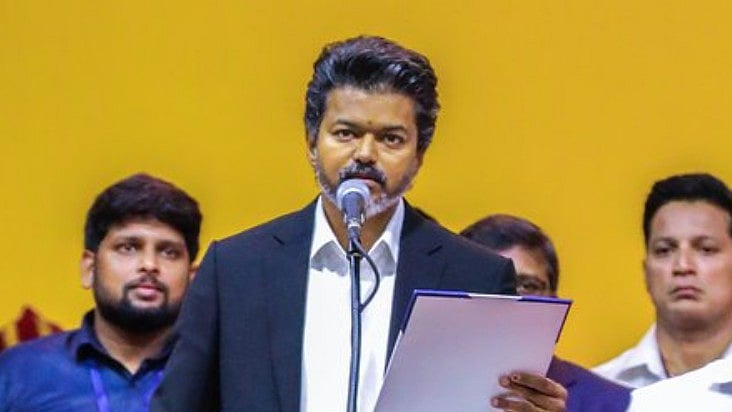
The DMK party in Tamil Nadu has also learned the hard way about the importance of engaging with citizens on social media. Their failure to understand the nature of decentralized democracy in the age of social media cost them the last election. The upstart TVK party, led by C. Joseph Vijay, was able to use social media to its advantage, using cinematic charisma and slick video messaging to promise new beginnings and win the election.
The lessons for political parties and institutions are clear. Rational policies are only effective if they deliver on the social contract that voters signed up for. Key institutions responsible for examinations, justice, elections, finance, and law-making must retain legitimacy and engage with citizens in a more meaningful way.
The government's response to the protests has been widely criticized, with many seeing it as an attack on democracy and free speech. The use of coercion and censorship has only served to provoke strong negative emotions and mobilize further support for the protesters. As the government struggles to respond to the protests, it is clear that a new reality has emerged, one in which social media plays a central role in shaping public opinion and mobilizing support for social and political causes.
In this new reality, governments and institutions must learn to engage with citizens in a more meaningful way, using social media to listen to their concerns and respond to their needs. The days of authoritarian control and censorship are over, and a new era of decentralized democracy has begun.
The protests have also highlighted the importance of protecting free speech and the right to dissent. The government's attempts to block access to content and impose censorship have been widely criticized, and it is clear that such actions are not only counterproductive but also undermine the very foundations of democracy.
As the government struggles to respond to the protests, it is clear that a new era has dawned, one in which social media plays a central role in shaping public opinion and mobilizing support for social and political causes. The lessons for political parties and institutions are clear: engage with citizens, protect free speech, and deliver on the social contract.
The future of Indian democracy depends on it.
Frequently asked questions
What is the Cockroach Janta Party?
The Cockroach Janta Party (CJP) is a group of young protesters who are using social media to challenge the Indian government's authority.
Why is the government trying to block social media content?
The government is trying to block social media content in an attempt to suppress dissent and maintain control over the narrative, but this has been widely criticized as an attack on free speech.