MSME Amendment Bill 2026 Introduced In Rajya Sabha
The Bill aims to tackle delayed payments to MSMEs, provide liquidity support and ensure faster adjudication of disputes.
'%3E%3Crect%20width%3D'96'%20height%3D'96'%20fill%3D'%231A5276'%2F%3E%3Ccircle%20cx%3D'30'%20cy%3D'24'%20r%3D'44'%20fill%3D'%23fff'%20opacity%3D'.12'%2F%3E%3Ccircle%20cx%3D'60'%20cy%3D'74'%20r%3D'40'%20fill%3D'%23000'%20opacity%3D'.10'%2F%3E%3C%2Fg%3E%3Cg%20fill%3D'%23fff'%3E%3Cpath%20d%3D'M31%2041%20L48%2031%20L65%2041%20Z'%2F%3E%3Crect%20x%3D'33'%20y%3D'43'%20width%3D'4'%20height%3D'17'%2F%3E%3Crect%20x%3D'41'%20y%3D'43'%20width%3D'4'%20height%3D'17'%2F%3E%3Crect%20x%3D'51'%20y%3D'43'%20width%3D'4'%20height%3D'17'%2F%3E%3Crect%20x%3D'59'%20y%3D'43'%20width%3D'4'%20height%3D'17'%2F%3E%3Crect%20x%3D'30'%20y%3D'62'%20width%3D'36'%20height%3D'4'%20rx%3D'1'%2F%3E%3C%2Fg%3E%3C%2Fsvg%3E)
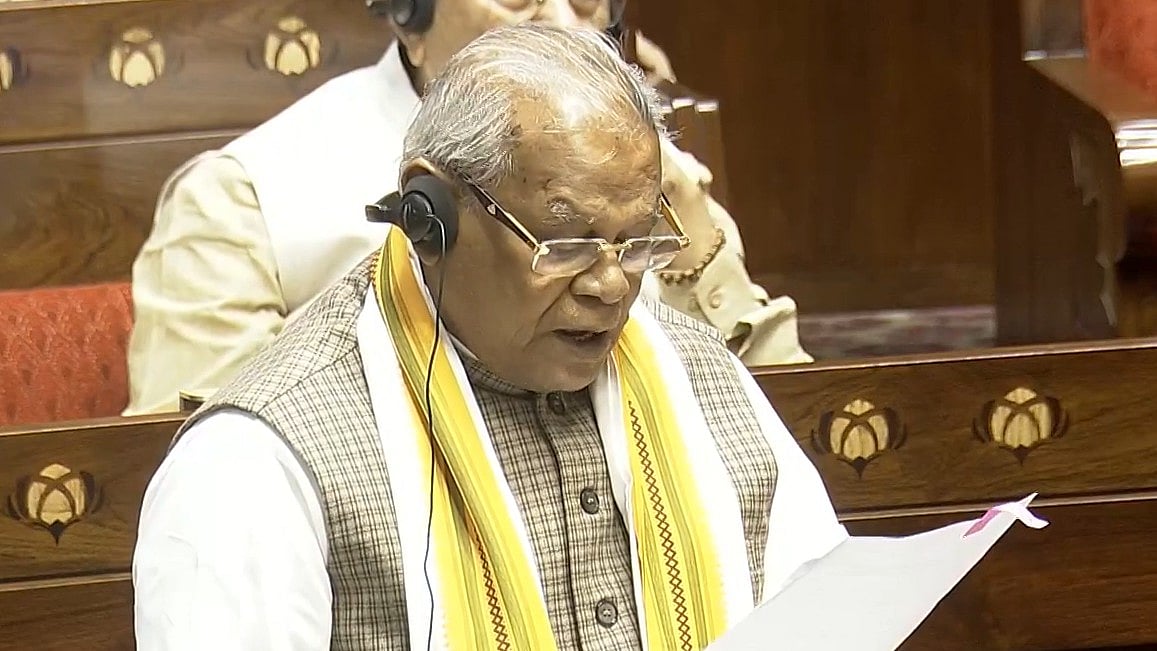
The Micro, Small and Medium Enterprises Development (Amendment) Bill, 2026 was introduced in the Rajya Sabha on Tuesday by Union Minister for MSMEs Jitan Ram Manjhi. The Bill seeks to amend the Micro, Small and Medium Enterprises Development Act, 2006, to address the issue of delayed payments to micro, small and medium enterprises (MSMEs).
The proposed legislation aims to empower courts to order payment of at least 50 per cent of the awarded amount to MSME suppliers if the application to set aside an order is pending for more than six months. It also seeks to provide recovery of the mediated settlement agreement or the arbitral award as arrear of land revenue.
The Bill proposes to decriminalise offences regarding contravention of certain provisions, replacing conviction-based fines with graded penalties by including warning at the first instance. It provides for notifying a national digital platform for free and voluntary registration of micro, small and medium enterprises.
Another key provision of the Bill aims to address liquidity issues of MSMEs by mandating all central public sector enterprises to route the settlement of invoices through the Trade Receivables Discounting System for procurement of goods and services from them. A provision has also been made empowering states to adopt similar provision for their public sector enterprises.
The provisions also include facilitating state governments to establish additional Micro and Small Enterprises Facilitation Council by rationalising their composition, apart from prescribing timelines to ensure faster adjudication of delayed payment disputes of micro and small enterprises.
Over the years, the micro, small and medium enterprises landscape has undergone a change due to technological advancements, emergence of information technology enabled systems and changing legal landscape, which requires that the Act be amended to facilitate growth of micro, small and medium enterprises.
The proposed amendments look to incentivise the growth of MSMEs, enable them to scale up and become champions of growth. This will augment Ease of Doing Business and promote compliance.
According to the Bill, the mediated settlement agreement or arbitral award may be recovered as an arrear of land revenue by the state government through district collector or deputy commissioner or any such authority notified by the state where assets of the buyer are located.
The introduction of the MSME Amendment Bill 2026 is a significant step towards addressing the long-standing issues faced by MSMEs in India. The Bill's provisions aim to provide a more conducive environment for the growth and development of MSMEs, which are a crucial part of the country's economy.
In conclusion, the MSME Amendment Bill 2026 has the potential to make a significant impact on the MSME sector in India. By providing faster payments, liquidity support and ensuring faster adjudication of disputes, the Bill can help MSMEs to grow and thrive, which in turn can contribute to the country's economic growth and development.
The Bill's introduction is a welcome move, and its passage is eagerly awaited by the MSME sector. It is expected that the Bill will be debated and discussed in the Rajya Sabha, and its provisions will be refined and finalized before it becomes a law.
The MSME Amendment Bill 2026 is a crucial piece of legislation that can have far-reaching implications for the MSME sector in India. Its passage can help to create a more favorable business environment, promote entrepreneurship and job creation, and contribute to the country's economic growth and development.
The government's efforts to support the MSME sector are commendable, and the introduction of the MSME Amendment Bill 2026 is a significant step in this direction. It is hoped that the Bill will be passed soon, and its provisions will be implemented effectively to benefit the MSME sector.
In the context of the Indian economy, the MSME sector plays a vital role in contributing to the country's GDP, employment and exports. The sector is comprised of a large number of small and medium-sized enterprises, which are often faced with challenges such as delayed payments, liquidity issues and regulatory compliance.
The MSME Amendment Bill 2026 aims to address these challenges and provide a more conducive environment for the growth and development of MSMEs. The Bill's provisions, such as the establishment of a national digital platform for MSME registration, the empowerment of courts to order payment of awarded amounts, and the decriminalisation of offences, are expected to make a significant impact on the sector.
Overall, the MSME Amendment Bill 2026 is a welcome move, and its passage is eagerly awaited by the MSME sector. It is expected that the Bill will be debated and discussed in the Rajya Sabha, and its provisions will be refined and finalized before it becomes a law.
The significance of the MSME Amendment Bill 2026 cannot be overstated. The Bill has the potential to make a significant impact on the MSME sector, and its passage can help to create a more favorable business environment, promote entrepreneurship and job creation, and contribute to the country's economic growth and development.
In conclusion, the MSME Amendment Bill 2026 is a crucial piece of legislation that can have far-reaching implications for the MSME sector in India. Its passage can help to address the long-standing issues faced by MSMEs, provide a more conducive environment for their growth and development, and contribute to the country's economic growth and development.
Frequently asked questions
What is the main objective of the MSME Amendment Bill 2026?
The main objective of the MSME Amendment Bill 2026 is to tackle the issue of delayed payments to micro, small and medium enterprises (MSMEs) and provide liquidity support.
How will the Bill address delayed payments to MSMEs?
The Bill proposes to empower courts to order payment of at least 50 per cent of the awarded amount to MSME suppliers if the application to set aside an order is pending for more than six months.