Chile Telescope Captures Dying Star's Gas Clouds
A Chile telescope has made a groundbreaking discovery, capturing dense gas clouds from a dying star. The findings offer new insights into stellar mass loss interactions. This breakthrough demonstrates how stellar elements are recycled.
'%3E%3Crect%20width%3D'96'%20height%3D'96'%20fill%3D'%23B3261E'%2F%3E%3Ccircle%20cx%3D'30'%20cy%3D'24'%20r%3D'44'%20fill%3D'%23fff'%20opacity%3D'.12'%2F%3E%3Ccircle%20cx%3D'60'%20cy%3D'74'%20r%3D'40'%20fill%3D'%23000'%20opacity%3D'.10'%2F%3E%3C%2Fg%3E%3Cg%20fill%3D'%23fff'%3E%3Crect%20x%3D'29'%20y%3D'49'%20width%3D'8'%20height%3D'19'%20rx%3D'1'%2F%3E%3Crect%20x%3D'39'%20y%3D'40'%20width%3D'9'%20height%3D'28'%20rx%3D'1'%2F%3E%3Crect%20x%3D'50'%20y%3D'45'%20width%3D'8'%20height%3D'23'%20rx%3D'1'%2F%3E%3Crect%20x%3D'60'%20y%3D'53'%20width%3D'7'%20height%3D'15'%20rx%3D'1'%2F%3E%3Crect%20x%3D'41'%20y%3D'34'%20width%3D'5'%20height%3D'6'%2F%3E%3C%2Fg%3E%3C%2Fsvg%3E)
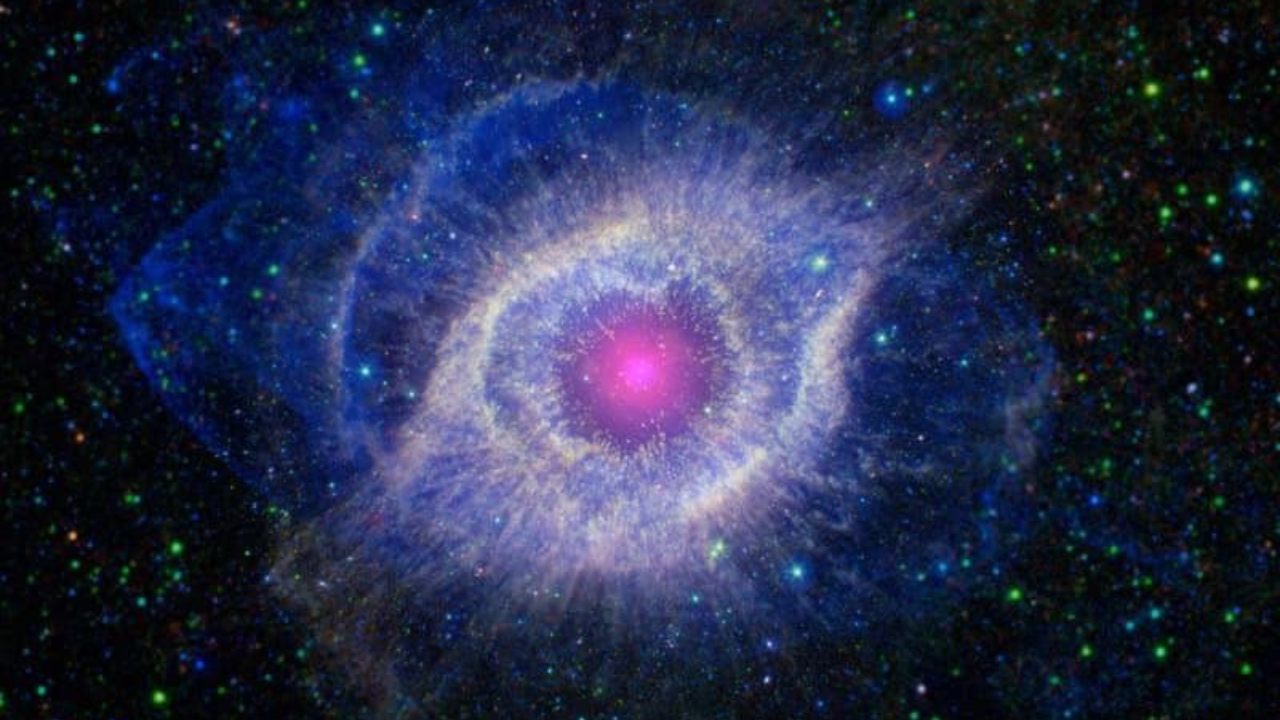
The MOTHRA observatory in Chile has made a significant breakthrough in astronomy, capturing dense gas clouds expelled from a dying star. This discovery was made during calibration tests in November 2025, when the observatory was still unfinished. The expelled clouds are now blending back into the Milky Way galaxy, providing critical new insights into stellar mass loss interactions.
The MOTHRA observatory achieved this feat while conducting routine calibration tests, demonstrating the potential of the telescope to make significant contributions to the field of astronomy. The discovery of the dense gas clouds from the dying star has shed new light on how stellar elements are recycled for future celestial bodies.
The process of stellar mass loss is a crucial aspect of astronomy, as it helps to understand how stars evolve and eventually die. The expelled gas clouds from the dying star are rich in elements such as carbon, nitrogen, and oxygen, which are essential for the formation of new stars and planets.
The Milky Way galaxy is home to hundreds of billions of stars, and the discovery of the dense gas clouds from the dying star has provided new insights into the galaxy's evolution. The findings suggest that the stellar elements are recycled and reused to form new celestial bodies, highlighting the dynamic and ever-changing nature of the galaxy.
The MOTHRA observatory's discovery has significant implications for the field of astronomy, as it demonstrates the importance of understanding stellar mass loss interactions. The findings will help astronomers to better understand the life cycle of stars and the formation of new celestial bodies.
The discovery is also a testament to the potential of the MOTHRA observatory, which is still in its early stages of development. The telescope's ability to capture high-quality images of the dense gas clouds from the dying star has demonstrated its capabilities and has paved the way for future discoveries.
In the coming years, the MOTHRA observatory is expected to make significant contributions to the field of astronomy, providing new insights into the universe and its many mysteries. The discovery of the dense gas clouds from the dying star is just the beginning, and astronomers are eager to see what other secrets the universe holds.
The breakthrough has sparked excitement among astronomers, who are eager to learn more about the stellar mass loss interactions and the recycling of stellar elements. The discovery has also highlighted the importance of continued investment in astronomical research and the development of new telescopes and observatories.
In conclusion, the MOTHRA observatory's discovery of the dense gas clouds from the dying star has made a significant contribution to the field of astronomy, providing new insights into stellar mass loss interactions and the recycling of stellar elements. The findings have demonstrated the potential of the telescope and have paved the way for future discoveries, highlighting the dynamic and ever-changing nature of the universe.
Frequently asked questions
What is the MOTHRA observatory?
The MOTHRA observatory is a telescope located in Chile that made a groundbreaking discovery by capturing dense gas clouds from a dying star.
What does the discovery of the dense gas clouds tell us about the universe?
The discovery provides new insights into stellar mass loss interactions and the recycling of stellar elements, highlighting the dynamic and ever-changing nature of the universe.