India Develops Precision Strike Systems
India enhances strike capabilities, shifts towards non-contact warfare. New systems like Pinaka and Suryastra boost deterrence.

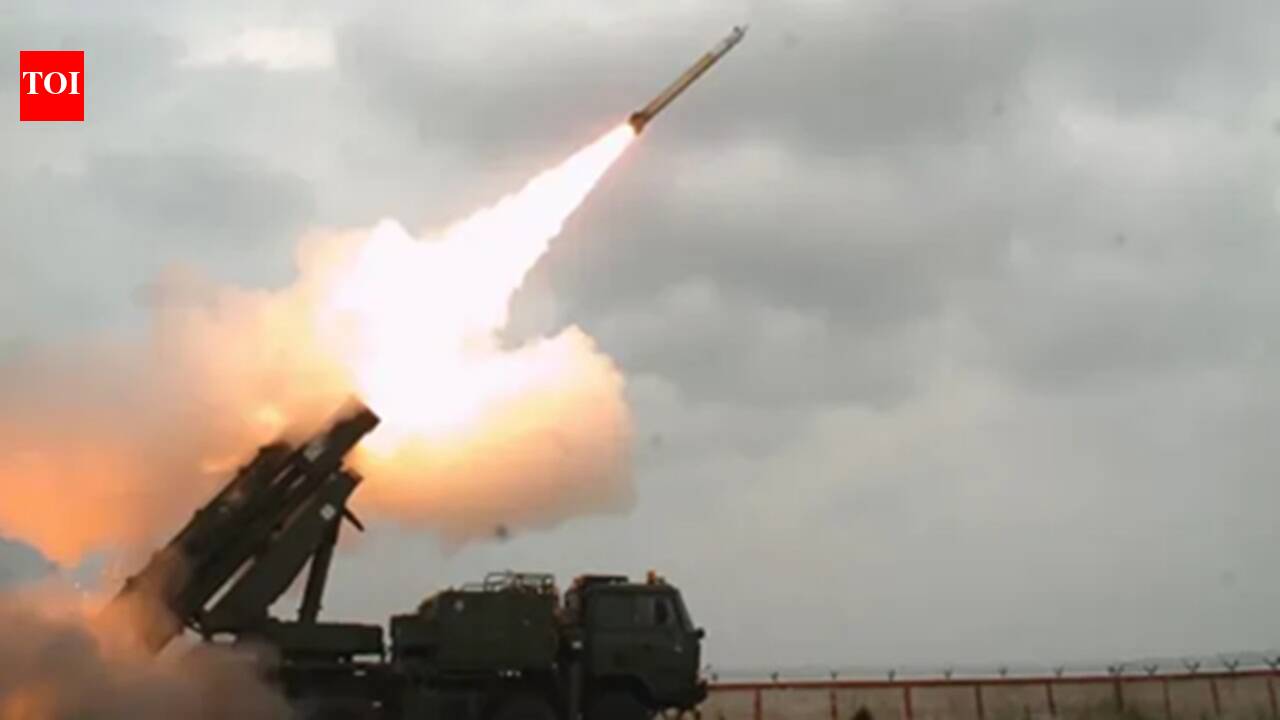
India has made significant strides in developing precision strike systems, demonstrating its capability to hit targets deep inside enemy territory without relying on fighter jets.
The recent Operation Sindoor showcased the country's ability to conduct precise strikes against terror targets in Pakistan. A key component of this capability is the Pinaka rocket system, which has undergone significant evolution to enhance its range and accuracy.
The Pinaka system can now hit targets up to 120 kilometers away, providing the Indian military with a formidable strike capability. Furthermore, new variants like the Long Range Guided Rocket are being developed to further enhance the system's accuracy and range.
Another system in the pipeline is the Suryastra, envisioned as a next-generation precision strike system that can rival the accuracy of missiles. These developments underscore India's shift towards non-contact warfare, where the emphasis is on using advanced technology to strike enemy targets with precision and minimal risk to Indian personnel.
The development of these systems is a significant boost to India's deterrence capabilities, allowing the country to project power without necessarily having to deploy fighter jets. This is particularly important in the context of India's security challenges, where the ability to conduct precise strikes can be a major deterrent against enemy aggression.
The Indian military has been working tirelessly to develop and integrate these systems into its arsenal, with a focus on enhancing their accuracy and range. The results of these efforts are already being seen, with the Pinaka system having undergone successful trials and the Suryastra system being developed with cutting-edge technology.
The shift towards non-contact warfare is a global trend, with many countries investing heavily in developing precision strike capabilities. India's efforts in this regard are aimed at enhancing its national security and providing the military with the tools it needs to respond effectively to emerging threats.
In the coming years, India is expected to continue developing and refining its precision strike systems, with a focus on enhancing their accuracy, range, and lethality. This will not only boost the country's deterrence capabilities but also provide the military with a significant edge in terms of responding to security challenges.
The development of precision strike systems like Pinaka and Suryastra is a significant milestone in India's defense modernization efforts, and underscores the country's commitment to enhancing its national security. As the Indian military continues to evolve and adapt to emerging threats, the development of these systems will play a critical role in shaping the country's defense posture.
In conclusion, India's push for deeper and more precise strikes without fighter jets is a significant development that underscores the country's commitment to enhancing its national security. The development of systems like Pinaka and Suryastra is a major boost to the country's deterrence capabilities, and will play a critical role in shaping India's defense posture in the years to come.