Mumbai Residents Demand Halt To Deonar Waste Plant
Residents serve legal notice over safety concerns, citing recent Pune landfill collapse.
'%3E%3Crect%20width%3D'96'%20height%3D'96'%20fill%3D'%23B3261E'%2F%3E%3Ccircle%20cx%3D'30'%20cy%3D'24'%20r%3D'44'%20fill%3D'%23fff'%20opacity%3D'.12'%2F%3E%3Ccircle%20cx%3D'60'%20cy%3D'74'%20r%3D'40'%20fill%3D'%23000'%20opacity%3D'.10'%2F%3E%3C%2Fg%3E%3Cg%20fill%3D'%23fff'%3E%3Crect%20x%3D'29'%20y%3D'49'%20width%3D'8'%20height%3D'19'%20rx%3D'1'%2F%3E%3Crect%20x%3D'39'%20y%3D'40'%20width%3D'9'%20height%3D'28'%20rx%3D'1'%2F%3E%3Crect%20x%3D'50'%20y%3D'45'%20width%3D'8'%20height%3D'23'%20rx%3D'1'%2F%3E%3Crect%20x%3D'60'%20y%3D'53'%20width%3D'7'%20height%3D'15'%20rx%3D'1'%2F%3E%3Crect%20x%3D'41'%20y%3D'34'%20width%3D'5'%20height%3D'6'%2F%3E%3C%2Fg%3E%3C%2Fsvg%3E)
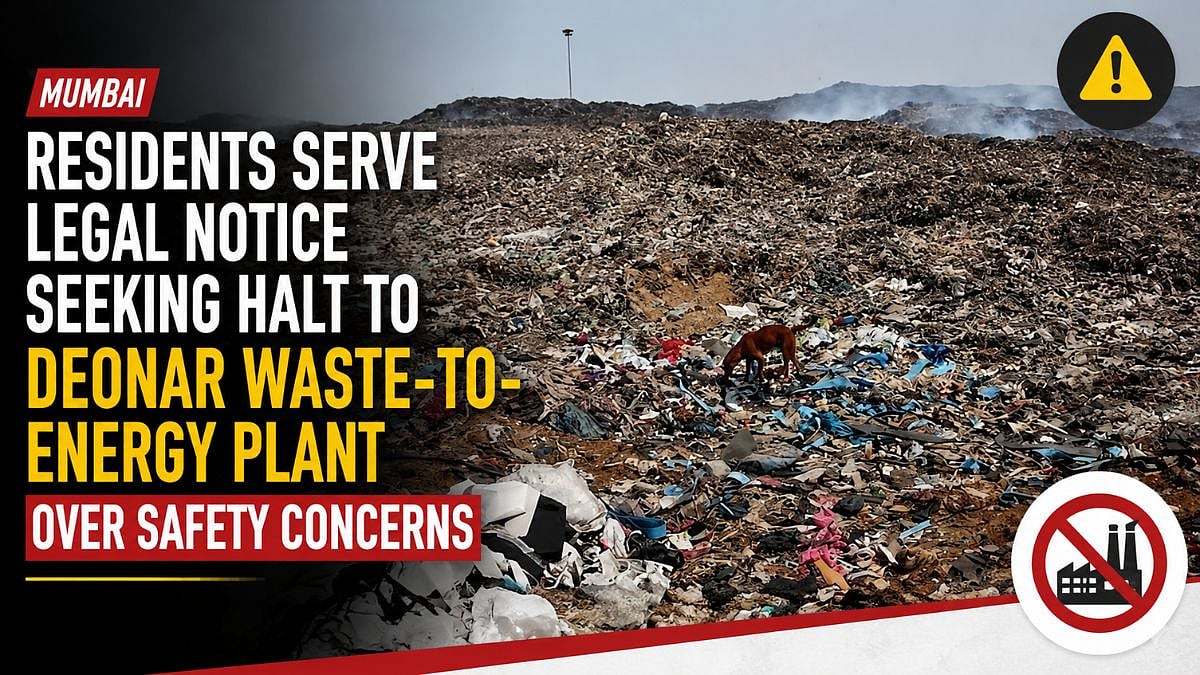
Mumbai residents have taken a significant step by serving a legal notice to the Brihanmumbai Municipal Corporation (BMC), the Maharashtra Pollution Control Board (MPCB), and the state Environment Department. The notice demands an immediate halt to the proposed 600 metric tonnes per day Waste-to-Energy (WTE) plant at the Deonar dumping ground.
The legal notice, sent by the Govandi New Sangam Welfare Society through environmental activist and advocate Faiyaz Alam Shaikh, cites the recent collapse at the Moshi landfill in Pune as a validation of their concerns. The incident, which resulted in the deaths of nine people, has raised questions about the safety of constructing a WTE plant on unstable legacy waste.
The Deonar dumping ground, established in 1927, contains millions of tonnes of unstable legacy waste, making it a high-risk area for slope failures, methane gas explosions, and landfill collapses, particularly during the monsoon season. The notice also argues that storing refuse-derived fuel at the site would create an additional fire hazard in the densely populated Govandi-Deonar area.
While the BMC has recently decided to conduct safety audits at the Deonar, Kanjurmarg, and Mulund dumping grounds, the notice describes this exercise as inadequate. Instead, it calls for an independent expert committee comprising environmental specialists, structural engineers, and local civic representatives to conduct a thorough safety and environmental audit.
The legal notice also alleges violations of the Solid Waste Management Rules, 2016, and Article 21 of the Constitution. It seeks an immediate stop-work order, suspension of bio-mining activities during the monsoon, and adoption of alternative waste management measures such as mechanical segregation, composting, and green belt development.
The residents have warned that failure to respond within seven days would result in proceedings before the National Green Tribunal and the Bombay High Court. This move highlights the growing concerns among Mumbai residents about the safety and environmental impact of the proposed WTE plant.
The Deonar dumping ground has been a major concern for residents and environmental activists for years. The area is already plagued by pollution, and the proposed WTE plant has raised fears about the potential health and environmental risks. The recent incident in Pune has only added to these concerns, making it essential for the authorities to take immediate action to address the safety and environmental concerns.
The BMC and other authorities must take the concerns of the residents seriously and conduct a thorough safety and environmental audit. The proposed WTE plant must be designed and constructed with the utmost care, taking into account the unstable legacy waste and the potential risks associated with it.
In conclusion, the demand by Mumbai residents to halt the Deonar Waste-to-Energy plant is a significant development that highlights the need for safe and sustainable waste management practices. The authorities must prioritize the safety and well-being of the residents and take immediate action to address the concerns raised by the legal notice.
The outcome of this legal notice will have significant implications for the future of waste management in Mumbai. It will determine whether the city will adopt safe and sustainable practices or continue to prioritize convenience over safety and environmental concerns. As the city continues to grow and develop, it is essential that the authorities prioritize the well-being of its residents and take a proactive approach to addressing environmental and safety concerns.
The National Green Tribunal and the Bombay High Court will play a crucial role in determining the outcome of this case. Their decisions will set a precedent for future waste management projects in the city and will have a significant impact on the environment and public health.
In the end, the decision to halt the Deonar Waste-to-Energy plant will depend on the ability of the authorities to balance the need for waste management with the need for safety and environmental protection. It is a complex issue that requires careful consideration and a commitment to prioritizing the well-being of Mumbai's residents.