Britain Housing Market Loses Momentum
Britain's housing market slows, prices flat in July. Mortgage rates rise, demand falls.
'%3E%3Crect%20width%3D'96'%20height%3D'96'%20fill%3D'%23B3261E'%2F%3E%3Ccircle%20cx%3D'30'%20cy%3D'24'%20r%3D'44'%20fill%3D'%23fff'%20opacity%3D'.12'%2F%3E%3Ccircle%20cx%3D'60'%20cy%3D'74'%20r%3D'40'%20fill%3D'%23000'%20opacity%3D'.10'%2F%3E%3C%2Fg%3E%3Cg%20fill%3D'%23fff'%3E%3Crect%20x%3D'29'%20y%3D'49'%20width%3D'8'%20height%3D'19'%20rx%3D'1'%2F%3E%3Crect%20x%3D'39'%20y%3D'40'%20width%3D'9'%20height%3D'28'%20rx%3D'1'%2F%3E%3Crect%20x%3D'50'%20y%3D'45'%20width%3D'8'%20height%3D'23'%20rx%3D'1'%2F%3E%3Crect%20x%3D'60'%20y%3D'53'%20width%3D'7'%20height%3D'15'%20rx%3D'1'%2F%3E%3Crect%20x%3D'41'%20y%3D'34'%20width%3D'5'%20height%3D'6'%2F%3E%3C%2Fg%3E%3C%2Fsvg%3E)
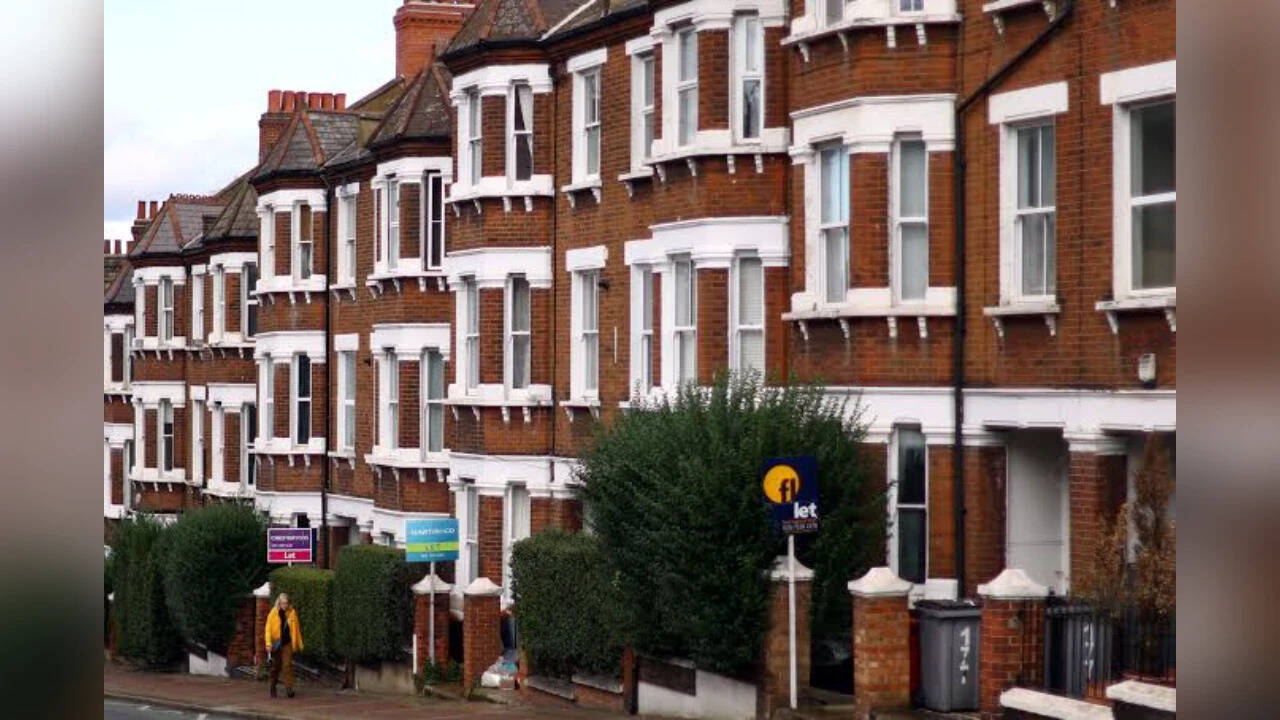
Britain's housing market experienced a slowdown in momentum in July, with prices remaining flat across the country. This stagnation is largely attributed to higher mortgage rates and economic uncertainty, which are significantly impacting buyer demand.
The regional breakdown of the housing market reveals varying trends. Northern Ireland and Scotland recorded the strongest annual price growth, indicating a resilient market in these areas. In contrast, southern regions of Britain experienced price declines, contributing to a widening north-south divide in the housing market.
The rise in mortgage rates is a key factor influencing the market's slowdown. As borrowing costs increase, potential buyers are becoming more cautious, leading to reduced demand. This trend is expected to continue, with the market anticipated to face a weaker second half of 2026 due to the higher borrowing costs.
The housing market's performance is closely tied to the overall state of the economy. Economic uncertainty, coupled with rising mortgage rates, is creating a challenging environment for buyers and sellers alike. As a result, the market is likely to remain subdued in the coming months.
The north-south divide in the housing market is a notable concern. The price declines in southern regions may be attributed to various factors, including changes in buyer preferences and economic conditions. This divergence in regional market trends highlights the complexity of the British housing market.
In conclusion, Britain's housing market is losing momentum, driven by higher mortgage rates and economic uncertainty. The regional variations in price growth and the anticipated weaker market performance in the second half of 2026 underscore the need for potential buyers and sellers to be aware of the current market conditions.
The impact of rising mortgage rates on the housing market is a significant concern. As the market continues to evolve, it is essential to monitor the trends and adjustments in the economy and the housing sector. The slowdown in the housing market may have broader implications for the British economy, emphasizing the need for careful consideration of the factors influencing the market.
The weaker second half of 2026 is expected to be characterized by reduced buyer demand and potentially lower prices. This outlook underscores the importance of understanding the current market dynamics and the factors driving the slowdown. As the housing market navigates this challenging period, it is crucial to remain informed about the developments and trends shaping the industry.
In the context of the British economy, the housing market plays a vital role. The slowdown in the market may have implications for economic growth, highlighting the need for policymakers to be aware of the market trends and their potential impact on the broader economy.
The significance of the slowdown in Britain's housing market extends beyond the industry itself, with potential implications for the overall economy. As the market continues to evolve, it is essential to consider the factors driving the trends and the potential consequences for the British economy.
Frequently asked questions
Why is Britain's housing market slowing down?
The housing market is slowing down due to higher mortgage rates and economic uncertainty, which are impacting buyer demand.
Which regions are experiencing price growth in Britain?
Northern Ireland and Scotland are recording the strongest annual price growth across the country.