Fintech CEO Denied Home Loan Despite 800 CIBIL Score
A $1.2B fintech founder faces home loan rejection. Strong credit score not enough.
'%3E%3Crect%20width%3D'96'%20height%3D'96'%20fill%3D'%230B6E4F'%2F%3E%3Ccircle%20cx%3D'30'%20cy%3D'24'%20r%3D'44'%20fill%3D'%23fff'%20opacity%3D'.12'%2F%3E%3Ccircle%20cx%3D'60'%20cy%3D'74'%20r%3D'40'%20fill%3D'%23000'%20opacity%3D'.10'%2F%3E%3C%2Fg%3E%3Cg%20fill%3D'none'%20stroke%3D'%23fff'%20stroke-width%3D'3.2'%20stroke-linecap%3D'round'%20stroke-linejoin%3D'round'%3E%3Cpolyline%20points%3D'31%2C59%2041%2C49%2049%2C54%2063%2C37'%2F%3E%3Cpolyline%20points%3D'55%2C37%2063%2C37%2063%2C45'%2F%3E%3C%2Fg%3E%3C%2Fsvg%3E)
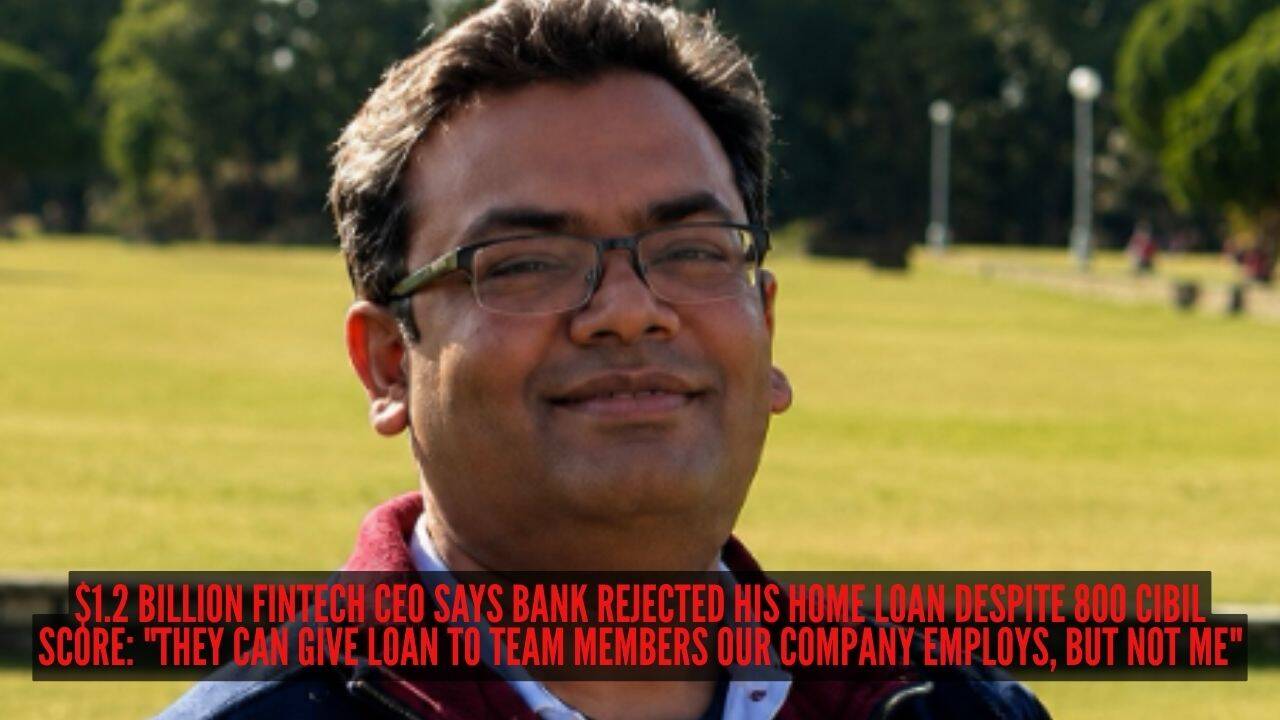
A prominent fintech founder, with a business valued at $1.2 billion, was recently rejected for a home loan by a leading bank, despite having an impressive 800 CIBIL score. This incident has sparked a debate about the traditional lending practices of banks and how they view modern entrepreneurs.
The fintech founder, who has a strong financial profile and a long-standing customer relationship with the bank, was shocked by the rejection. This experience highlights the challenges that entrepreneurs and founders can face when it comes to personal credit, despite their business success.
Banks often have different criteria for assessing the creditworthiness of salaried employees and founders. While salaried employees have a fixed income and a stable financial profile, founders and entrepreneurs may have a more variable income and a higher risk profile. This can make it difficult for them to secure loans, even with a strong credit score.
The incident has underscored the need for banks to reassess their lending practices and to consider the unique financial profiles of modern entrepreneurs. It also highlights the importance of personal credit and the challenges that individuals can face in securing loans, despite their business success.
In recent years, there has been a growing trend of entrepreneurs and founders facing challenges in securing personal loans. This is despite the fact that many of them have successful businesses and a strong financial profile. The incident involving the fintech founder is a stark reminder of the need for banks to adapt to the changing financial landscape and to develop more nuanced lending practices.
The traditional lending practices of banks have been criticized for being overly rigid and not taking into account the unique financial profiles of modern entrepreneurs. The incident involving the fintech founder is a call to action for banks to reassess their lending practices and to develop more flexible and adaptive approaches to credit assessment.
In conclusion, the rejection of the home loan application by the fintech founder, despite having a strong credit score, highlights the challenges that entrepreneurs and founders can face in securing personal loans. It underscores the need for banks to develop more nuanced and adaptive lending practices that take into account the unique financial profiles of modern entrepreneurs.
The incident has sparked a wider debate about the need for banks to reassess their lending practices and to develop more flexible approaches to credit assessment. As the financial landscape continues to evolve, it is essential for banks to adapt and to develop lending practices that are more inclusive and supportive of modern entrepreneurs.
The fintech founder's experience is a reminder that personal credit can remain a challenge, despite business success. It highlights the importance of developing more nuanced and adaptive lending practices that take into account the unique financial profiles of individuals.
The incident has also sparked discussions about the role of credit scores in lending decisions. While credit scores are an important factor in determining creditworthiness, they are not the only factor. Banks need to consider a range of factors, including income, financial profile, and credit history, when making lending decisions.
In the end, the rejection of the home loan application by the fintech founder is a call to action for banks to develop more flexible and adaptive lending practices. It highlights the need for banks to reassess their traditional lending practices and to develop more nuanced approaches to credit assessment that take into account the unique financial profiles of modern entrepreneurs.
Frequently asked questions
Why was the fintech CEO rejected for a home loan?
The bank's reasons for rejecting the home loan application are not specified, but it is believed that the bank's lending practices and criteria for assessing entrepreneurs may have played a role.
What is the significance of the fintech CEO's 800 CIBIL score?
The 800 CIBIL score indicates a strong credit history, but it was not enough to secure a home loan, highlighting the challenges that entrepreneurs can face in securing personal loans.