Turkey Surges Ahead in 5G Fighter Jet Race
Turkey's KAAN program advances, India's AMCA faces delays. Gap in development timeline widens.
'%3E%3Crect%20width%3D'96'%20height%3D'96'%20fill%3D'%234A235A'%2F%3E%3Ccircle%20cx%3D'30'%20cy%3D'24'%20r%3D'44'%20fill%3D'%23fff'%20opacity%3D'.12'%2F%3E%3Ccircle%20cx%3D'60'%20cy%3D'74'%20r%3D'40'%20fill%3D'%23000'%20opacity%3D'.10'%2F%3E%3C%2Fg%3E%3Cg%20fill%3D'none'%20stroke%3D'%23fff'%20stroke-width%3D'3'%3E%3Ccircle%20cx%3D'48'%20cy%3D'48'%20r%3D'16'%2F%3E%3Cellipse%20cx%3D'48'%20cy%3D'48'%20rx%3D'6.5'%20ry%3D'16'%2F%3E%3Cline%20x1%3D'32'%20y1%3D'42'%20x2%3D'64'%20y2%3D'42'%2F%3E%3Cline%20x1%3D'32'%20y1%3D'54'%20x2%3D'64'%20y2%3D'54'%2F%3E%3C%2Fg%3E%3C%2Fsvg%3E)
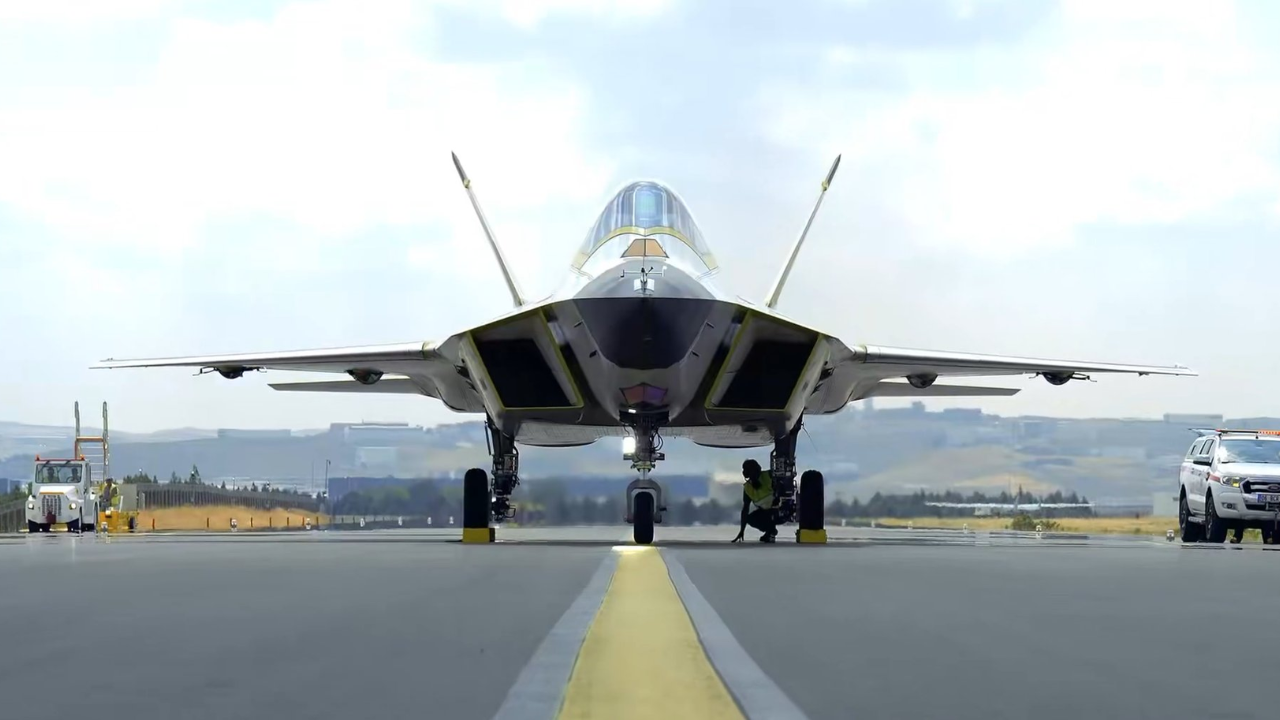
Turkey is making rapid progress in the development of its fifth-generation fighter jet, the KAAN, with prototype testing and planned deliveries already underway. In contrast, India's Advanced Medium Combat Aircraft (AMCA) program is facing significant delays, primarily due to issues with engine selection and the development of stealth materials.
The KAAN program's multi-prototype strategy is a key factor in its accelerated development timeline, allowing for simultaneous testing and refinement of various design and technological aspects. This approach has enabled Turkey to make substantial strides in a relatively short period.
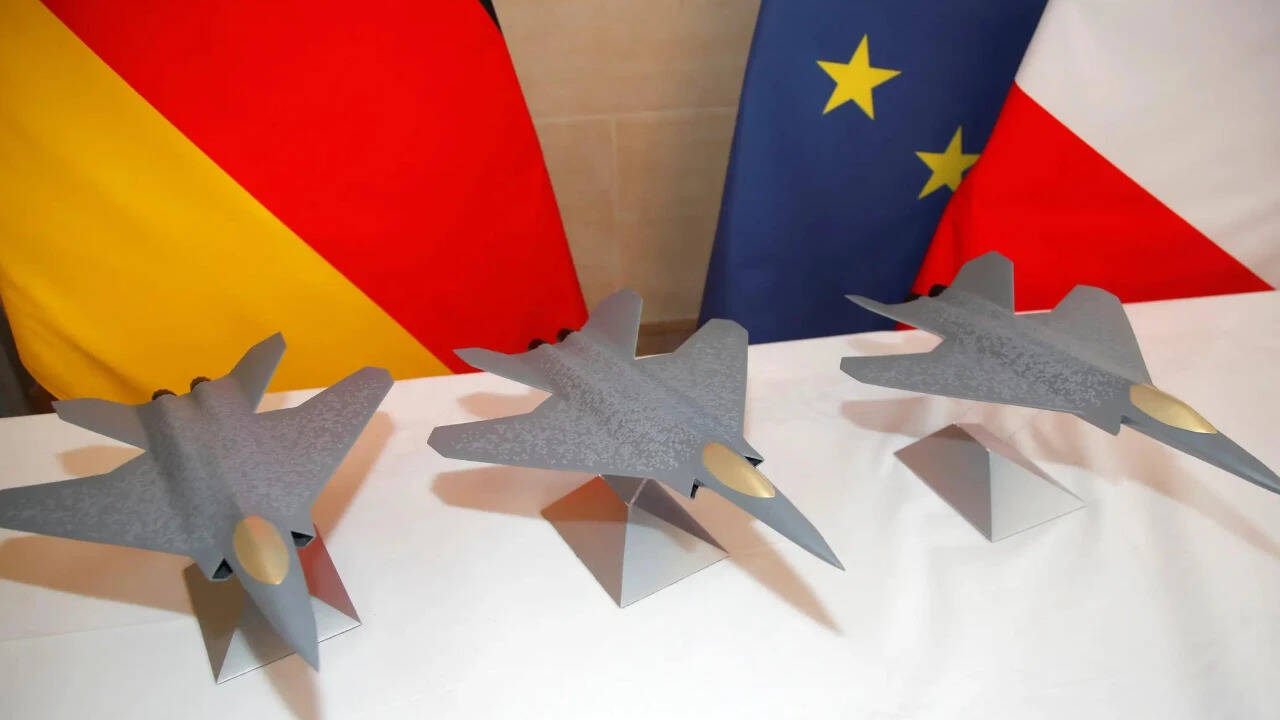
On the other hand, India's AMCA program is struggling to overcome its current hurdles. The selection of a suitable engine has proven to be a challenging task, and the development of stealth materials is also taking longer than anticipated. As a result, the first flight of the AMCA is unlikely to take place before the early 2030s.
This significant gap in the development timeline between the two programs could have implications for India's ability to keep pace with global advancements in fifth-generation fighter jet technology. The delay in the AMCA program may leave India behind in terms of acquiring and deploying advanced fighter capabilities, potentially affecting its national security and defense preparedness.
The development of fifth-generation fighter jets is a complex and technologically demanding task, requiring significant investments of time, resources, and expertise. Countries like the United States, China, and Russia have already made substantial progress in this area, with operational fifth-generation fighters or those in advanced stages of development.
In this context, the progress made by Turkey in its KAAN program is noteworthy, as it highlights the country's growing capabilities in the aerospace and defense sectors. For India, the challenge will be to overcome its current delays and accelerate the development of the AMCA program, ensuring that it can keep pace with global advancements in fifth-generation fighter technology.
The Indian defense establishment has been working to address the issues facing the AMCA program, with efforts underway to resolve the engine selection and stealth material development challenges. However, the delay in the program's timeline has raised concerns about India's ability to acquire advanced fighter capabilities in a timely manner.
As the global landscape of fifth-generation fighter jet development continues to evolve, India will need to prioritize its AMCA program and work towards overcoming its current challenges. This will require significant investments, technological advancements, and strategic partnerships to ensure that India can keep pace with the rapidly advancing field of fifth-generation fighter technology.
In conclusion, the gap in development timeline between Turkey's KAAN program and India's AMCA program is a significant concern for India's defense establishment. The country will need to work towards accelerating the development of its fifth-generation fighter jet capabilities to ensure that it can maintain its national security and defense preparedness in the face of rapidly advancing global technologies.
Frequently asked questions
What is the current status of India's AMCA program?
The AMCA program is facing delays due to issues with engine selection and stealth material development, with the first flight unlikely before the early 2030s.
How does Turkey's KAAN program compare to India's AMCA program?
Turkey's KAAN program is advancing rapidly with prototype testing and planned deliveries, while India's AMCA program is facing significant delays.