Boreal Forests Keep Permafrost 1m Cooler
Boreal forests safeguard vast carbon stores, preventing soil thawing and greenhouse gas release.
'%3E%3Crect%20width%3D'96'%20height%3D'96'%20fill%3D'%23B3261E'%2F%3E%3Ccircle%20cx%3D'30'%20cy%3D'24'%20r%3D'44'%20fill%3D'%23fff'%20opacity%3D'.12'%2F%3E%3Ccircle%20cx%3D'60'%20cy%3D'74'%20r%3D'40'%20fill%3D'%23000'%20opacity%3D'.10'%2F%3E%3C%2Fg%3E%3Cg%20fill%3D'%23fff'%3E%3Crect%20x%3D'29'%20y%3D'49'%20width%3D'8'%20height%3D'19'%20rx%3D'1'%2F%3E%3Crect%20x%3D'39'%20y%3D'40'%20width%3D'9'%20height%3D'28'%20rx%3D'1'%2F%3E%3Crect%20x%3D'50'%20y%3D'45'%20width%3D'8'%20height%3D'23'%20rx%3D'1'%2F%3E%3Crect%20x%3D'60'%20y%3D'53'%20width%3D'7'%20height%3D'15'%20rx%3D'1'%2F%3E%3Crect%20x%3D'41'%20y%3D'34'%20width%3D'5'%20height%3D'6'%2F%3E%3C%2Fg%3E%3C%2Fsvg%3E)
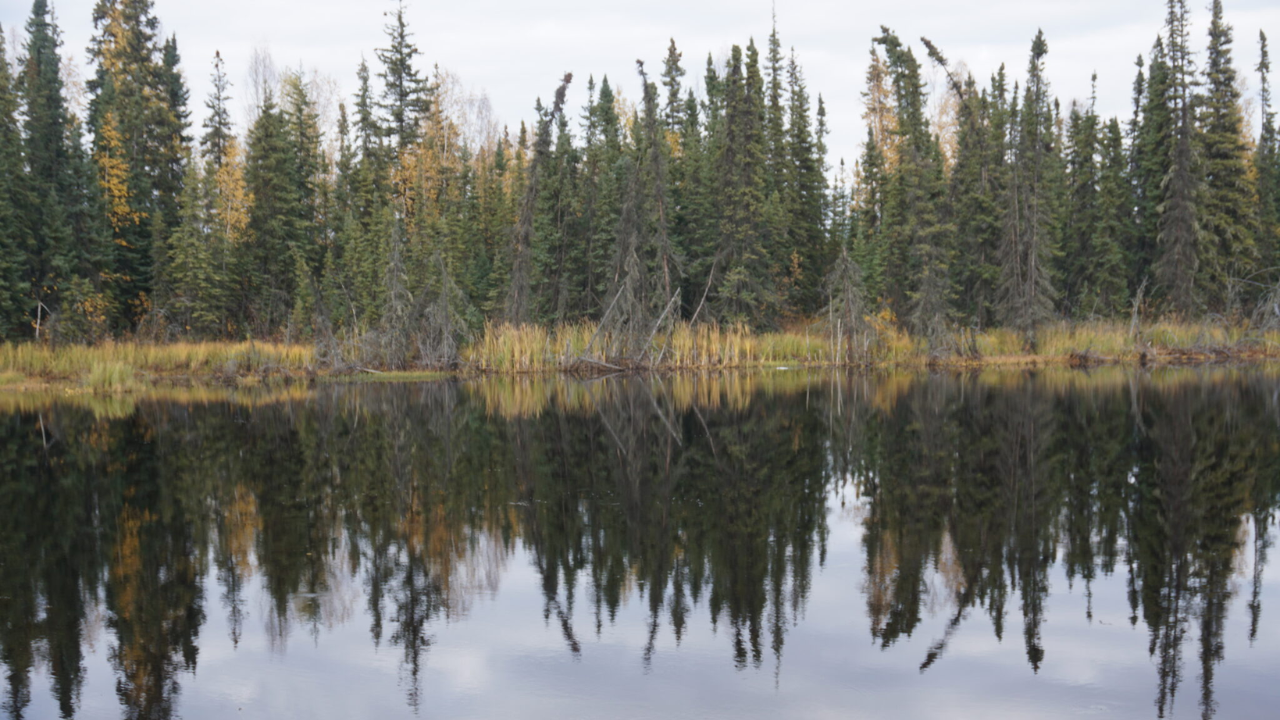
Thick forest canopies in boreal regions play a crucial role in keeping northern permafrost cool, which in turn safeguards vast carbon stores. This natural shade prevents soil thawing and the release of greenhouse gases, highlighting the importance of these forests in global climate stability.
Researchers have discovered that this vital cooling service provided by boreal forests has been largely overlooked in climate models. The study reveals that boreal forests keep permafrost approximately 1 meter cooler, which is essential for preventing the thawing of permafrost and the subsequent release of greenhouse gases.
The boreal forests are estimated to lock away around 59 billion tonnes of carbon, emphasizing the need to protect these forests from deforestation and other human activities. Losing these forests would not only lead to the loss of this crucial protection for underground carbon but also exacerbate climate change.
Boreal forests, also known as taiga, cover vast areas of subarctic land in countries such as Canada, Russia, and Alaska. These forests are characterized by their dense canopies, which provide the necessary shade to keep the permafrost cool. The permafrost, in turn, stores massive amounts of carbon in the form of frozen organic matter.
The importance of boreal forests in regulating the climate cannot be overstated. They provide a range of ecosystem services, including carbon sequestration, soil conservation, and habitat provision for a variety of plant and animal species. However, these forests are facing numerous threats, including deforestation, climate change, and insect infestations.
Protecting boreal forests is therefore extremely important for global climate stability. Efforts to conserve and sustainably manage these forests are essential for maintaining the delicate balance of the global climate. This can be achieved through a combination of conservation measures, such as protected areas, sustainable forestry practices, and climate-smart land use planning.
In conclusion, the role of boreal forests in keeping permafrost cool and locking away carbon is a vital component of global climate stability. It is essential that we take immediate action to protect these forests and prevent the loss of this crucial ecosystem service.
The study's findings have significant implications for climate modeling and policy-making. By incorporating the cooling service of boreal forests into climate models, researchers can better predict the impacts of climate change and develop more effective strategies for mitigating its effects. Furthermore, the study highlights the need for urgent action to protect boreal forests and prevent the loss of their ecosystem services.
Overall, the protection of boreal forests is critical for maintaining global climate stability, and it is essential that we take a proactive approach to conserving and sustainably managing these vital ecosystems.
Frequently asked questions
What is the role of boreal forests in regulating the climate?
Boreal forests play a crucial role in regulating the climate by keeping permafrost cool and locking away carbon, which helps to prevent the release of greenhouse gases.
How much carbon is locked away by boreal forests?
Boreal forests are estimated to lock away around 59 billion tonnes of carbon.