Supreme Court Dismisses PIL Against Curbs On Journalists In Government Schools
SC dismisses PIL, upholds curbs on journalists, YouTubers in government schools. Restrictions imposed by Rajasthan, UP education departments remain.
'%3E%3Crect%20width%3D'96'%20height%3D'96'%20fill%3D'%231A5276'%2F%3E%3Ccircle%20cx%3D'30'%20cy%3D'24'%20r%3D'44'%20fill%3D'%23fff'%20opacity%3D'.12'%2F%3E%3Ccircle%20cx%3D'60'%20cy%3D'74'%20r%3D'40'%20fill%3D'%23000'%20opacity%3D'.10'%2F%3E%3C%2Fg%3E%3Cg%20fill%3D'%23fff'%3E%3Cpath%20d%3D'M31%2041%20L48%2031%20L65%2041%20Z'%2F%3E%3Crect%20x%3D'33'%20y%3D'43'%20width%3D'4'%20height%3D'17'%2F%3E%3Crect%20x%3D'41'%20y%3D'43'%20width%3D'4'%20height%3D'17'%2F%3E%3Crect%20x%3D'51'%20y%3D'43'%20width%3D'4'%20height%3D'17'%2F%3E%3Crect%20x%3D'59'%20y%3D'43'%20width%3D'4'%20height%3D'17'%2F%3E%3Crect%20x%3D'30'%20y%3D'62'%20width%3D'36'%20height%3D'4'%20rx%3D'1'%2F%3E%3C%2Fg%3E%3C%2Fsvg%3E)
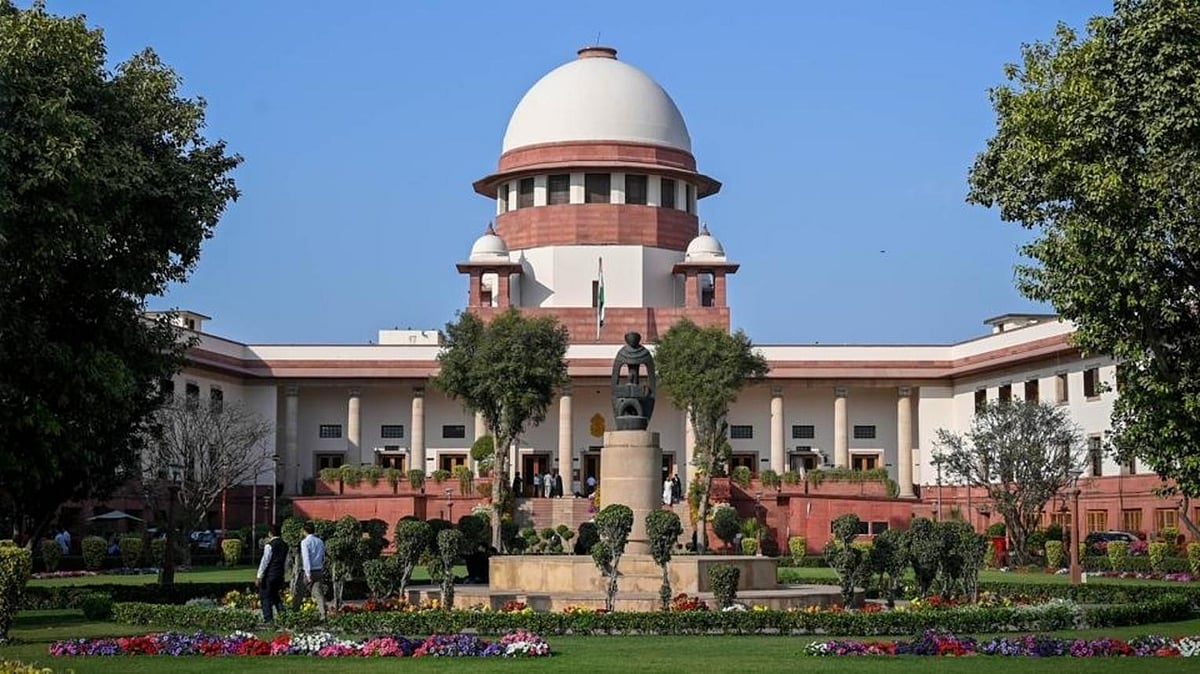
The Supreme Court has dismissed a public interest litigation (PIL) challenging the restrictions imposed by the Rajasthan and Uttar Pradesh education departments on the entry of journalists, YouTubers, and social-media personalities in government schools.
The dismissal of the PIL assumes significance in the wake of a recent assault on activists in Rajasthan during their inspection of a government school. A bench of Justices P S Narasimha and Alok Aradhe dismissed the PIL filed by Priya Mishra, stating that they are not inclined to entertain the writ petition filed under Article 32 of the Constitution of India.
The PIL had challenged curbs placed on photography, videography, interviews, audio recording, and live-streaming from government schools. It had specifically challenged an August 16 circular issued by Rajasthan's director of secondary education, requiring outsiders to obtain prior permission from the principal before entering the premises of a government school.
According to the circular, prior written permission for photography, videography, interviews, audio recording, and livestreaming is also needed. The plea had also challenged the August 19 order issued by the district basic education officer, Ayodhya, directing that outsiders, YouTubers, and persons associated with social media should not enter council schools or take photographs or videos without permission from the competent authority.
Similar orders have been issued in other districts of Uttar Pradesh as well. The restrictions imposed by the Rajasthan and Uttar Pradesh education departments will remain in place, following the dismissal of the PIL.
The Supreme Court's decision highlights the ongoing debate about the balance between the right to information and the need to maintain order and discipline in educational institutions. The court's dismissal of the PIL suggests that it prioritizes the latter, at least in this instance.
The implications of this decision are significant, as it may limit the ability of journalists and social media personalities to report on and scrutinize the conditions and activities in government schools. This, in turn, may affect the public's access to information about the education system and the ability to hold authorities accountable.
In the context of the recent assault on activists in Rajasthan, the Supreme Court's decision may be seen as a setback for those advocating for greater transparency and accountability in government schools. However, it is also important to consider the potential benefits of maintaining order and discipline in educational institutions, and the need to balance these competing interests.
Ultimately, the Supreme Court's decision highlights the complexities and challenges involved in regulating the interactions between journalists, social media personalities, and government schools. It is likely that this issue will continue to be debated and contested in the future, as different stakeholders seek to advance their interests and priorities.
The decision may have far-reaching implications for the education sector, as it may influence the way in which government schools interact with outsiders, including journalists and social media personalities. It may also impact the ability of these individuals to report on and scrutinize the conditions and activities in government schools, which could have significant consequences for the public's access to information and the ability to hold authorities accountable.
In conclusion, the Supreme Court's dismissal of the PIL challenging the restrictions imposed by the Rajasthan and Uttar Pradesh education departments on the entry of journalists, YouTubers, and social-media personalities in government schools is a significant development that highlights the ongoing debate about the balance between the right to information and the need to maintain order and discipline in educational institutions. The decision has important implications for the education sector and the public's access to information, and it is likely that this issue will continue to be debated and contested in the future.
The Supreme Court's decision is a reminder that the relationship between the government, the media, and the public is complex and multifaceted, and that different stakeholders have competing interests and priorities. As the education sector continues to evolve and grow, it is likely that this issue will remain a topic of debate and discussion, and that the Supreme Court's decision will be seen as an important milestone in the ongoing conversation about the role of journalists and social media personalities in government schools.
The decision may also have implications for the way in which government schools interact with outsiders, including journalists and social media personalities. It may influence the development of policies and procedures for regulating these interactions, and it may impact the ability of these individuals to report on and scrutinize the conditions and activities in government schools.
In the end, the Supreme Court's decision is a reminder that the balance between the right to information and the need to maintain order and discipline in educational institutions is a delicate one, and that different stakeholders have competing interests and priorities. As the education sector continues to evolve and grow, it is likely that this issue will remain a topic of debate and discussion, and that the Supreme Court's decision will be seen as an important milestone in the ongoing conversation about the role of journalists and social media personalities in government schools.
The significance of the Supreme Court's decision cannot be overstated, as it has important implications for the education sector and the public's access to information. The decision highlights the ongoing debate about the balance between the right to information and the need to maintain order and discipline in educational institutions, and it is likely that this issue will continue to be debated and contested in the future.
In conclusion, the Supreme Court's dismissal of the PIL challenging the restrictions imposed by the Rajasthan and Uttar Pradesh education departments on the entry of journalists, YouTubers, and social-media personalities in government schools is a significant development that highlights the ongoing debate about the balance between the right to information and the need to maintain order and discipline in educational institutions. The decision has important implications for the education sector and the public's access to information, and it is likely that this issue will continue to be debated and contested in the future.
The decision may have far-reaching implications for the education sector, as it may influence the way in which government schools interact with outsiders, including journalists and social media personalities. It may also impact the ability of these individuals to report on and scrutinize the conditions and activities in government schools, which could have significant consequences for the public's access to information and the ability to hold authorities accountable.
The Supreme Court's decision is a reminder that the relationship between the government, the media, and the public is complex and multifaceted, and that different stakeholders have competing interests and priorities. As the education sector continues to evolve and grow, it is likely that this issue will remain a topic of debate and discussion, and that the Supreme Court's decision will be seen as an important milestone in the ongoing conversation about the role of journalists and social media personalities in government schools.
The decision may also have implications for the way in which government schools interact with outsiders, including journalists and social media personalities. It may influence the development of policies and procedures for regulating these interactions, and it may impact the ability of these individuals to report on and scrutinize the conditions and activities in government schools.
In the end, the Supreme Court's decision is a reminder that the balance between the right to information and the need to maintain order and discipline in educational institutions is a delicate one, and that different stakeholders have competing interests and priorities. As the education sector continues to evolve and grow, it is likely that this issue will remain a topic of debate and discussion, and that the Supreme Court's decision will be seen as an important milestone in the ongoing conversation about the role of journalists and social media personalities in government schools.
What it means for Mumbai or India is that the decision may have implications for the education sector as a whole, and may influence the way in which government schools interact with outsiders, including journalists and social media personalities. It may also impact the ability of these individuals to report on and scrutinize the conditions and activities in government schools, which could have significant consequences for the public's access to information and the ability to hold authorities accountable.
Frequently asked questions
What was the outcome of the PIL challenging curbs on journalists in government schools?
The Supreme Court dismissed the PIL, upholding the restrictions imposed by the Rajasthan and Uttar Pradesh education departments.
What are the implications of the Supreme Court's decision?
The decision may limit the ability of journalists and social media personalities to report on and scrutinize the conditions and activities in government schools, and may impact the public's access to information and the ability to hold authorities accountable.