Bombay HC Challenged on Marathi Rule for Drivers
PIL filed against Maharashtra's language rule, citing constitutional rights violations.
'%3E%3Crect%20width%3D'96'%20height%3D'96'%20fill%3D'%23B3261E'%2F%3E%3Ccircle%20cx%3D'30'%20cy%3D'24'%20r%3D'44'%20fill%3D'%23fff'%20opacity%3D'.12'%2F%3E%3Ccircle%20cx%3D'60'%20cy%3D'74'%20r%3D'40'%20fill%3D'%23000'%20opacity%3D'.10'%2F%3E%3C%2Fg%3E%3Cg%20fill%3D'%23fff'%3E%3Crect%20x%3D'29'%20y%3D'49'%20width%3D'8'%20height%3D'19'%20rx%3D'1'%2F%3E%3Crect%20x%3D'39'%20y%3D'40'%20width%3D'9'%20height%3D'28'%20rx%3D'1'%2F%3E%3Crect%20x%3D'50'%20y%3D'45'%20width%3D'8'%20height%3D'23'%20rx%3D'1'%2F%3E%3Crect%20x%3D'60'%20y%3D'53'%20width%3D'7'%20height%3D'15'%20rx%3D'1'%2F%3E%3Crect%20x%3D'41'%20y%3D'34'%20width%3D'5'%20height%3D'6'%2F%3E%3C%2Fg%3E%3C%2Fsvg%3E)
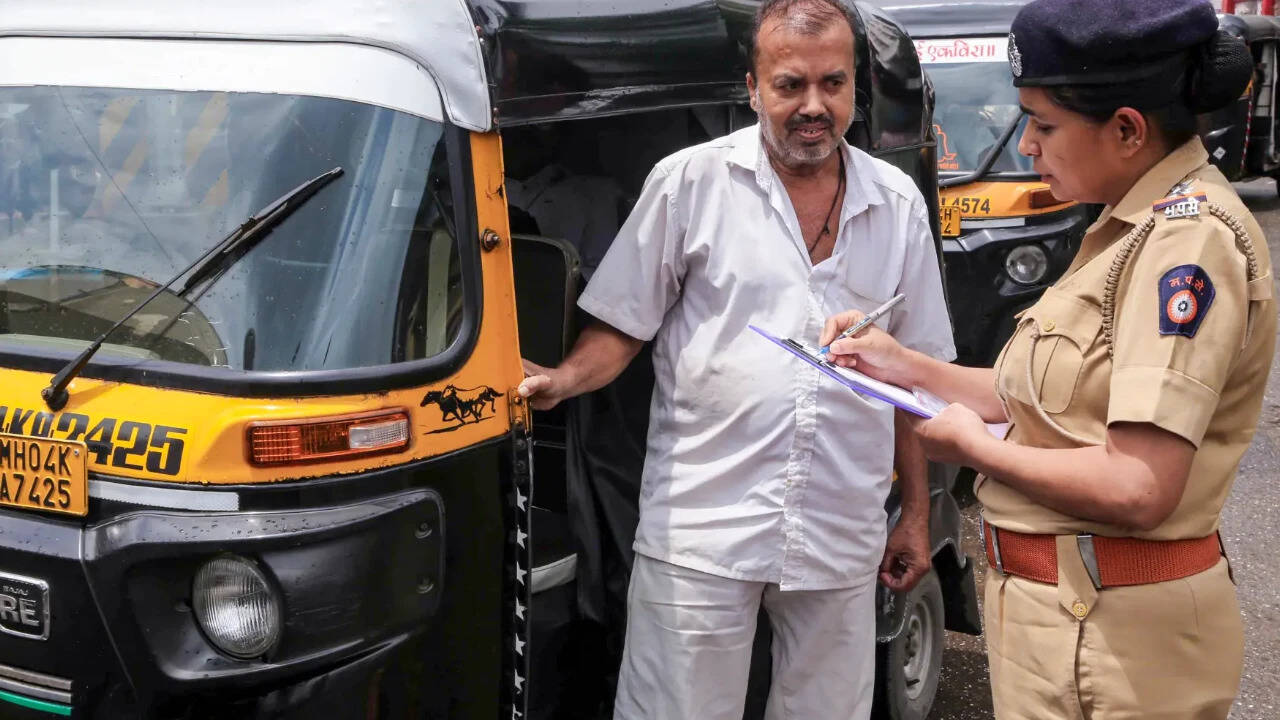
A Public Interest Litigation (PIL) has been filed in the Bombay High Court, challenging the Maharashtra government's decision to make Marathi language proficiency mandatory for cab and auto-rickshaw drivers. The petition argues that this notification violates the fundamental constitutional rights of drivers, particularly those who are not fluent in Marathi. It also claims that the rule is beyond the scope of the Motor Vehicles Act, which governs the regulation of vehicles and drivers in the country.
The PIL highlights the potential hardship that this rule could cause for many vulnerable drivers, who may not have the means or opportunity to learn Marathi. The petitioners are seeking an immediate stay on the implementation of the notification, citing the potential disruption it could cause to the livelihoods of thousands of drivers.
The Maharashtra government had introduced the rule as part of its efforts to promote the use of the Marathi language in the state. However, the petitioners argue that this rule is not only unconstitutional but also impractical, as it could lead to a shortage of drivers and cause inconvenience to commuters.
The Motor Vehicles Act is a central legislation that governs the regulation of vehicles and drivers in the country. The Act sets out the requirements for obtaining a driving license, including the need for a person to be proficient in reading and writing a language. However, the Act does not specify that the language must be the local language of the state.
The PIL has raised important questions about the balance between promoting the use of a local language and protecting the constitutional rights of citizens. The court's decision on this matter is likely to have significant implications for the state government's language policies and the livelihoods of thousands of drivers.
The Bombay High Court is expected to hear the PIL soon, and its decision will be closely watched by drivers, commuters, and language activists. The court's ruling will determine whether the Maharashtra government's Marathi language rule for drivers is constitutional and whether it can be implemented without causing undue hardship to vulnerable drivers.
In the context of Maharashtra's language policies, this PIL is significant because it challenges the government's efforts to promote the use of Marathi in the state. The government has introduced several initiatives to promote the language, including making it mandatory for government officials to use Marathi in official communications. However, this PIL argues that the government's efforts to promote Marathi should not come at the cost of violating the constitutional rights of citizens.
The outcome of this case will have significant implications for the state government's language policies and the livelihoods of thousands of drivers. If the court rules in favor of the petitioners, it could lead to a re-evaluation of the government's language policies and a more nuanced approach to promoting the use of Marathi in the state.
In conclusion, the PIL challenging Maharashtra's Marathi language rule for drivers has raised important questions about the balance between promoting the use of a local language and protecting the constitutional rights of citizens. The Bombay High Court's decision on this matter will be closely watched, and its implications will be significant for the state government's language policies and the livelihoods of thousands of drivers.
Frequently asked questions
What is the PIL about in the Bombay HC?
The PIL challenges Maharashtra's Marathi language rule for cab and auto-rickshaw drivers, citing constitutional rights violations.
What is the potential impact of the Marathi rule on drivers?
The rule could cause hardship for many vulnerable drivers who may not have the means or opportunity to learn Marathi, potentially disrupting their livelihoods.