Tripura HC: Divorced Woman Eligible for Father's Family Pension
Divorced woman can get family pension, Tripura HC rules. Court orders pension benefits and arrears.
'%3E%3Crect%20width%3D'96'%20height%3D'96'%20fill%3D'%23B3261E'%2F%3E%3Ccircle%20cx%3D'30'%20cy%3D'24'%20r%3D'44'%20fill%3D'%23fff'%20opacity%3D'.12'%2F%3E%3Ccircle%20cx%3D'60'%20cy%3D'74'%20r%3D'40'%20fill%3D'%23000'%20opacity%3D'.10'%2F%3E%3C%2Fg%3E%3Cg%20fill%3D'%23fff'%3E%3Crect%20x%3D'29'%20y%3D'49'%20width%3D'8'%20height%3D'19'%20rx%3D'1'%2F%3E%3Crect%20x%3D'39'%20y%3D'40'%20width%3D'9'%20height%3D'28'%20rx%3D'1'%2F%3E%3Crect%20x%3D'50'%20y%3D'45'%20width%3D'8'%20height%3D'23'%20rx%3D'1'%2F%3E%3Crect%20x%3D'60'%20y%3D'53'%20width%3D'7'%20height%3D'15'%20rx%3D'1'%2F%3E%3Crect%20x%3D'41'%20y%3D'34'%20width%3D'5'%20height%3D'6'%2F%3E%3C%2Fg%3E%3C%2Fsvg%3E)
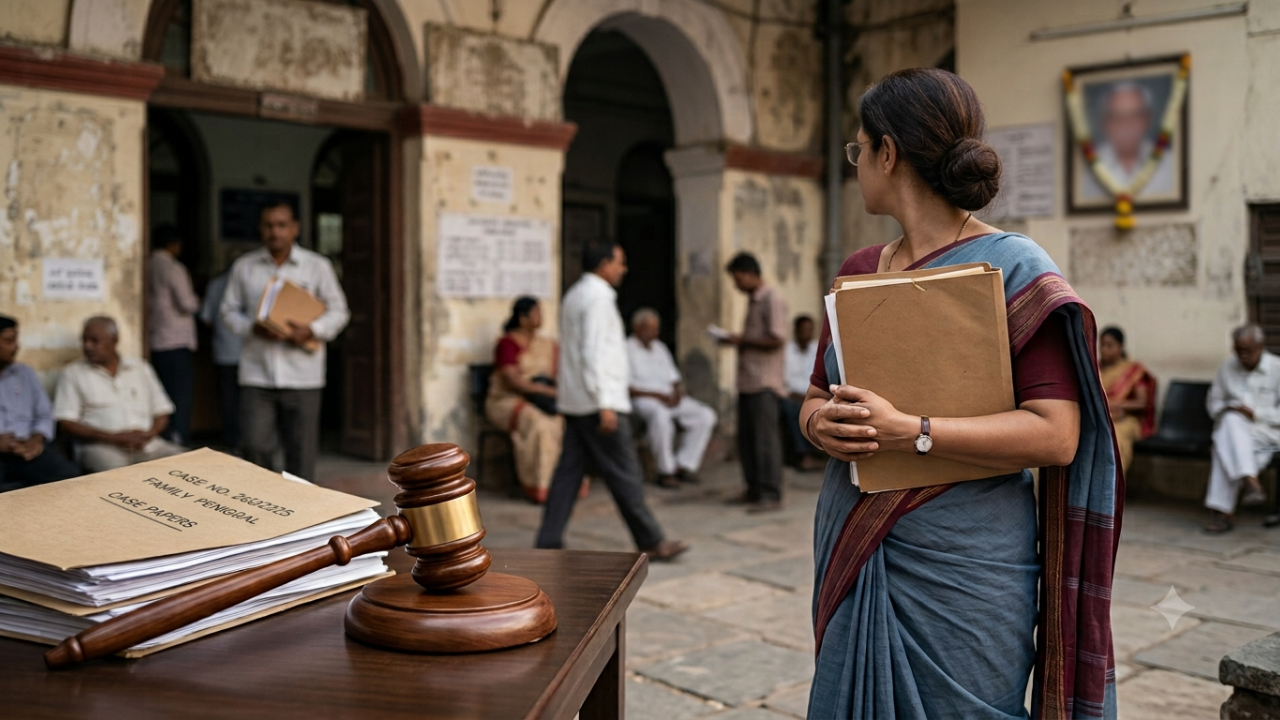
The Tripura High Court has ruled that a woman who was divorced after her father's death is eligible to receive his family pension.
The court's decision came in response to a petition filed by a divorced daughter who was denied family pension benefits by the Agartala Municipal Corporation. The corporation had rejected her claim, citing that she was no longer part of the family due to her divorce.
However, the high court found that the corporation's rejection was incorrect and ordered them to grant the woman her family pension benefits from the date of her divorce. The court's ruling was based on the interpretation of pension rules, which do not require that the divorce occur at the time of the pensioner's death.
The court also directed the corporation to pay the woman her arrears and interest within three months. This decision is expected to have implications for similar cases in the future, where divorced daughters may be eligible for family pension benefits.
The Tripura High Court's ruling highlights the importance of interpreting pension rules in a fair and equitable manner. The court's decision is a significant victory for the divorced daughter, who will now be able to receive the family pension benefits that she is entitled to.
The case also underscores the need for clarity and consistency in the application of pension rules. The Agartala Municipal Corporation's initial rejection of the woman's claim was based on an overly narrow interpretation of the rules, which the high court ultimately found to be incorrect.
The ruling is likely to be welcomed by women's rights groups and advocates for pensioners' rights, who have long argued that divorced daughters should be eligible for family pension benefits. The decision is also expected to have implications for other cases involving similar issues, where the interpretation of pension rules is in dispute.
In terms of its broader implications, the Tripura High Court's ruling is a significant step forward in recognizing the rights of divorced daughters to receive family pension benefits. The decision is expected to provide a measure of financial security and support for women who have been divorced and are no longer part of their original family unit.
Overall, the Tripura High Court's ruling is an important victory for the rights of divorced daughters and pensioners, and is expected to have significant implications for similar cases in the future.
The court's decision serves as a reminder of the importance of fairness and equity in the application of pension rules, and highlights the need for clarity and consistency in the interpretation of these rules. The ruling is a significant step forward in recognizing the rights of divorced daughters and is expected to provide a measure of financial security and support for women who have been divorced.
In conclusion, the Tripura High Court's ruling is a landmark decision that recognizes the rights of divorced daughters to receive family pension benefits. The decision is expected to have significant implications for similar cases in the future and is a major victory for women's rights groups and advocates for pensioners' rights.
The ruling is a testament to the importance of the judiciary in protecting the rights of citizens and ensuring that the rules and regulations are applied in a fair and equitable manner. The decision is expected to provide a measure of financial security and support for divorced daughters and is a significant step forward in recognizing their rights.
What it means for the people of Tripura and India as a whole is that the judiciary is committed to protecting the rights of citizens and ensuring that the rules and regulations are applied in a fair and equitable manner. The decision is a significant step forward in recognizing the rights of divorced daughters and is expected to have significant implications for similar cases in the future.
The ruling is a major victory for women's rights groups and advocates for pensioners' rights, and is expected to provide a measure of financial security and support for divorced daughters. The decision is a testament to the importance of the judiciary in protecting the rights of citizens and ensuring that the rules and regulations are applied in a fair and equitable manner.
In the end, the Tripura High Court's ruling is a landmark decision that recognizes the rights of divorced daughters to receive family pension benefits. The decision is expected to have significant implications for similar cases in the future and is a major victory for women's rights groups and advocates for pensioners' rights.
Frequently asked questions
Can a divorced woman receive her father's family pension?
Yes, according to the Tripura High Court's ruling, a divorced woman can receive her father's family pension.
What is the basis for the Tripura High Court's decision?
The court's decision is based on the interpretation of pension rules, which do not require that the divorce occur at the time of the pensioner's death.