Maharashtra School Bus Operators Oppose New Safety Rules
School bus operators resist new safety norms, parents concerned about bus age limit.
'%3E%3Crect%20width%3D'96'%20height%3D'96'%20fill%3D'%23B3261E'%2F%3E%3Ccircle%20cx%3D'30'%20cy%3D'24'%20r%3D'44'%20fill%3D'%23fff'%20opacity%3D'.12'%2F%3E%3Ccircle%20cx%3D'60'%20cy%3D'74'%20r%3D'40'%20fill%3D'%23000'%20opacity%3D'.10'%2F%3E%3C%2Fg%3E%3Cg%20fill%3D'%23fff'%3E%3Crect%20x%3D'29'%20y%3D'49'%20width%3D'8'%20height%3D'19'%20rx%3D'1'%2F%3E%3Crect%20x%3D'39'%20y%3D'40'%20width%3D'9'%20height%3D'28'%20rx%3D'1'%2F%3E%3Crect%20x%3D'50'%20y%3D'45'%20width%3D'8'%20height%3D'23'%20rx%3D'1'%2F%3E%3Crect%20x%3D'60'%20y%3D'53'%20width%3D'7'%20height%3D'15'%20rx%3D'1'%2F%3E%3Crect%20x%3D'41'%20y%3D'34'%20width%3D'5'%20height%3D'6'%2F%3E%3C%2Fg%3E%3C%2Fsvg%3E)
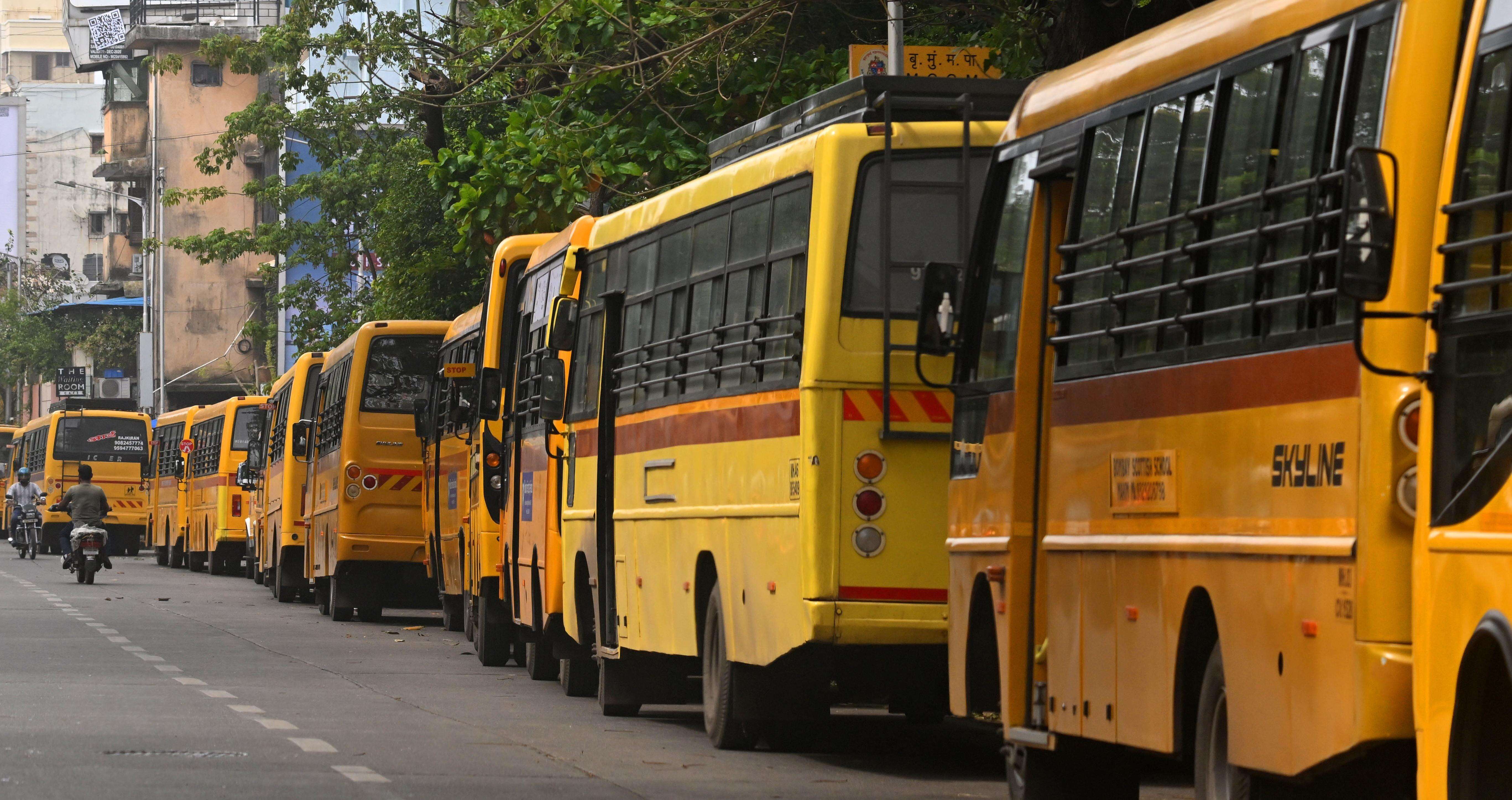
A recent notification by the Maharashtra government has sparked controversy among school bus operators, who are opposing the mandatory installation of seat belts and panic buttons in school buses. The new policy, aimed at enhancing student safety, has been met with resistance from operators citing increased costs.
The policy, which was notified recently, makes it compulsory for all school buses to be equipped with seat belts and panic buttons. The move is intended to prevent accidents and ensure prompt response in case of emergencies. However, school bus operators are arguing that the additional costs of installing these safety features would be a significant burden on them.
Parents, on the other hand, have expressed concerns about another aspect of the policy - the extension of the bus life limit from 15 years to 20 years. They fear that older buses may not be as safe as newer ones, and that the extension could compromise student safety. The parents' concerns are not unfounded, as older buses may have outdated safety features and may be more prone to accidents.
The Maharashtra government's decision to extend the bus life limit is seen as a move to reduce the financial burden on school bus operators. However, parents are worried that this decision may come at the cost of student safety. The government has argued that the extension is necessary to ensure that school bus operators are not forced to replace their buses too frequently, which could lead to increased costs and higher fares for parents.
The controversy surrounding the new policy highlights the challenges of balancing student safety with the financial constraints of school bus operators. While the installation of seat belts and panic buttons is a crucial safety measure, the extension of the bus life limit has raised concerns among parents. The Maharashtra government will need to address these concerns and find a solution that prioritizes student safety while also being mindful of the financial implications for school bus operators.
The new policy is part of a broader effort by the Maharashtra government to improve student safety in schools. The government has been working to implement various safety measures, including the installation of CCTV cameras in schools and the training of school staff in emergency response procedures. The controversy surrounding the school bus policy highlights the need for continued efforts to prioritize student safety and to find solutions that balance competing interests.
In recent years, there have been several incidents of school bus accidents in Maharashtra, which have highlighted the need for improved safety measures. The new policy is a step in the right direction, but it is clear that more needs to be done to ensure that students are safe while traveling to and from school. The Maharashtra government will need to work with school bus operators, parents, and other stakeholders to find solutions that prioritize student safety and well-being.
The issue of school bus safety is not unique to Maharashtra, and it is a concern that is shared by parents and governments across the country. The controversy surrounding the new policy in Maharashtra highlights the need for a national conversation about school bus safety and the need for standardized safety protocols across the country. By prioritizing student safety and working together to find solutions, we can ensure that our children are safe and secure while traveling to and from school.
In conclusion, the controversy surrounding the new school bus policy in Maharashtra highlights the challenges of balancing student safety with the financial constraints of school bus operators. While the installation of seat belts and panic buttons is a crucial safety measure, the extension of the bus life limit has raised concerns among parents. The Maharashtra government will need to address these concerns and find a solution that prioritizes student safety while also being mindful of the financial implications for school bus operators.