India's Bullet Train Trials To Start By 2027
India to begin bullet train trials, high-speed rail project progresses.
'%3E%3Crect%20width%3D'96'%20height%3D'96'%20fill%3D'%23B3261E'%2F%3E%3Ccircle%20cx%3D'30'%20cy%3D'24'%20r%3D'44'%20fill%3D'%23fff'%20opacity%3D'.12'%2F%3E%3Ccircle%20cx%3D'60'%20cy%3D'74'%20r%3D'40'%20fill%3D'%23000'%20opacity%3D'.10'%2F%3E%3C%2Fg%3E%3Cg%20fill%3D'%23fff'%3E%3Crect%20x%3D'29'%20y%3D'49'%20width%3D'8'%20height%3D'19'%20rx%3D'1'%2F%3E%3Crect%20x%3D'39'%20y%3D'40'%20width%3D'9'%20height%3D'28'%20rx%3D'1'%2F%3E%3Crect%20x%3D'50'%20y%3D'45'%20width%3D'8'%20height%3D'23'%20rx%3D'1'%2F%3E%3Crect%20x%3D'60'%20y%3D'53'%20width%3D'7'%20height%3D'15'%20rx%3D'1'%2F%3E%3Crect%20x%3D'41'%20y%3D'34'%20width%3D'5'%20height%3D'6'%2F%3E%3C%2Fg%3E%3C%2Fsvg%3E)
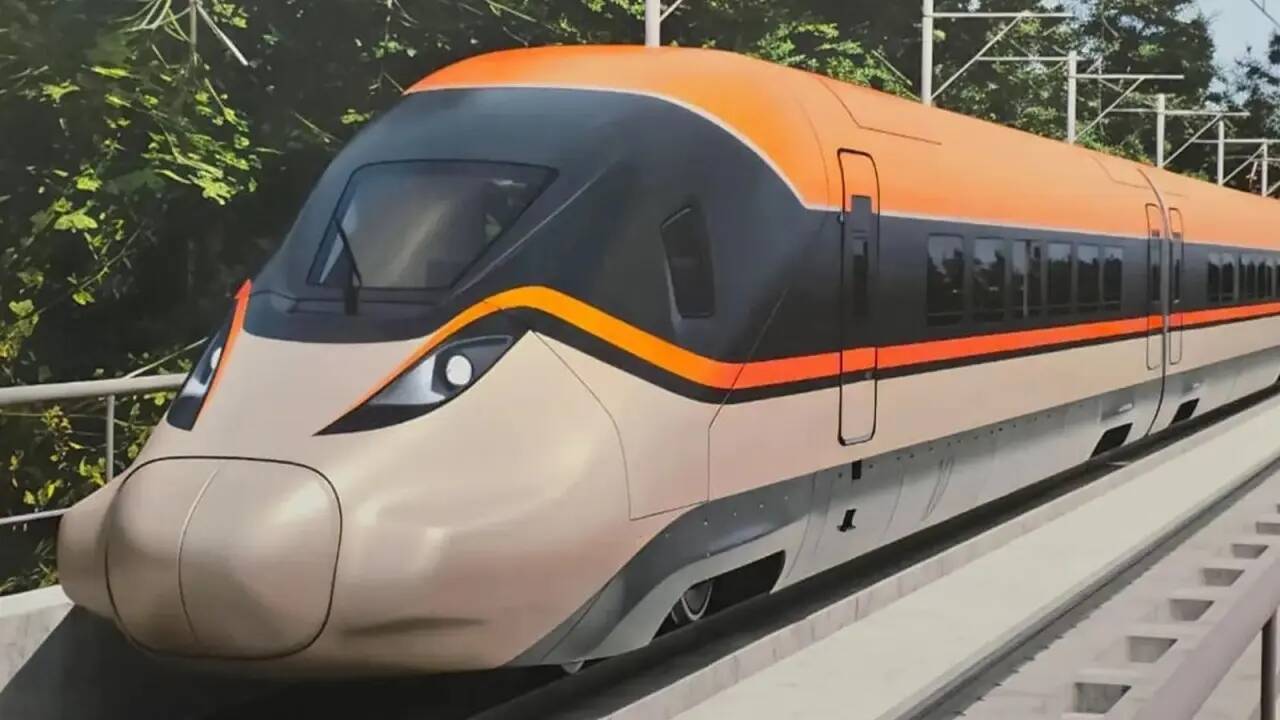
India is set to begin trials of its domestically developed bullet trains by the middle of 2027. The country's first high-speed rail project is making progress, with civil construction on the 97-km Surat-Vapi high-speed rail stretch scheduled to be completed this year.
The Surat-Vapi stretch is a crucial part of the larger Mumbai-Ahmedabad high-speed rail project. This project aims to reduce travel time between the two cities to just over two hours, making it a significant improvement over the current travel time of around six to seven hours.
The Mumbai-Ahmedabad high-speed rail project is being implemented by the National High-Speed Rail Corporation Limited (NHSRCL). The project involves the construction of a 508-km high-speed rail corridor, with twelve stations in between.
The introduction of bullet trains in India is expected to revolutionize the country's rail network. It will not only reduce travel time but also provide a comfortable and convenient mode of transportation for passengers.
The project has been in the works for several years, with the foundation stone laid in 2017. Since then, significant progress has been made, with the completion of the civil construction work on the Surat-Vapi stretch being a major milestone.
The trials of the domestically developed bullet trains are a significant step forward for the project. The trains are being developed by Indian manufacturers, with the help of foreign technology. The trials will test the safety and efficiency of the trains, as well as the infrastructure of the high-speed rail corridor.
The Mumbai-Ahmedabad high-speed rail project is a major infrastructure project in India, with a total cost of around Rs 1.08 lakh crore. The project is expected to be completed by 2028, with the commercial operations set to begin soon after.
The introduction of high-speed rail in India is expected to have a significant impact on the country's economy and transportation sector. It will not only provide a fast and convenient mode of transportation but also create new job opportunities and stimulate economic growth.
In conclusion, the beginning of trials of India's domestically developed bullet trains is a significant step forward for the country's first high-speed rail project. The project is making progress, and the introduction of high-speed rail is expected to revolutionize the country's rail network and have a significant impact on the economy and transportation sector.
The success of this project will pave the way for the introduction of high-speed rail in other parts of the country, making it a significant milestone in the development of India's transportation infrastructure.