AI Finds Hidden Movement Under San Andreas Fault
AI detects silent fault movements under San Andreas Fault, potentially triggering quakes. Scientists study hidden slow fault movements.

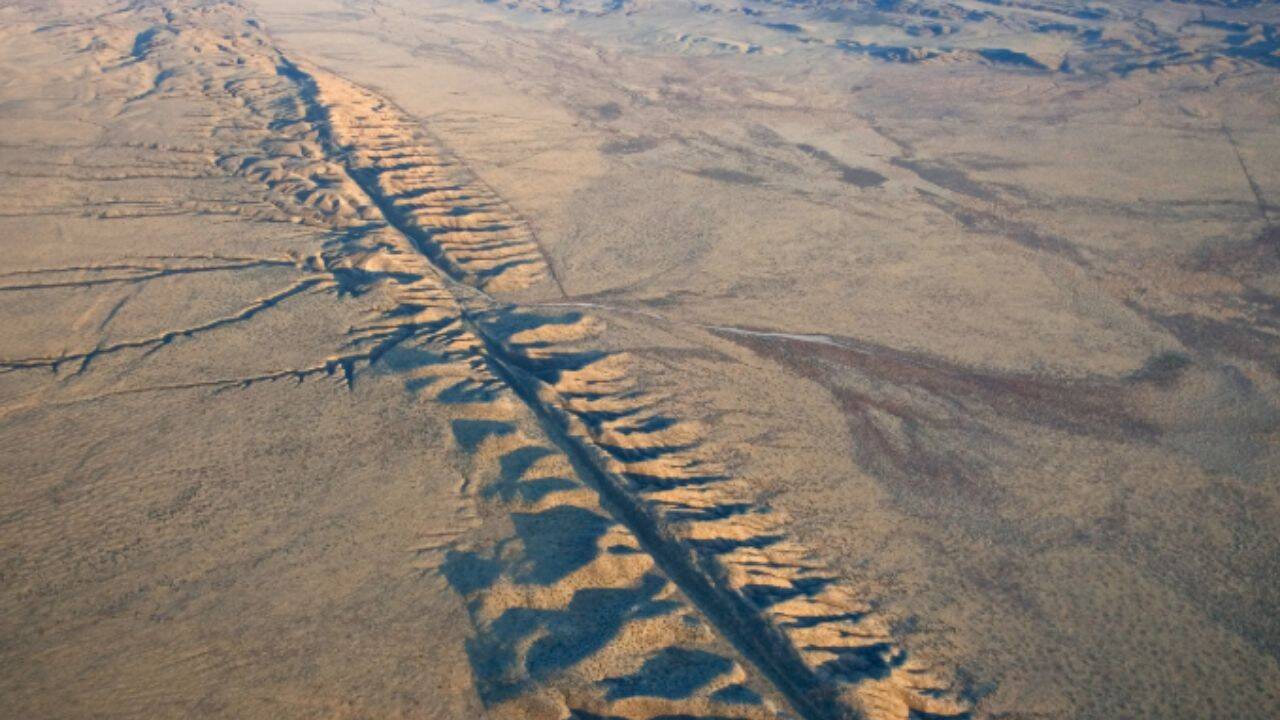
A significant breakthrough has been achieved by scientists using artificial intelligence to detect hidden slow fault movements under California's San Andreas Fault. These silent events, which occur over hours or days, have been found to release stress and influence future seismic activity.
The researchers used AI to identify these slow slip events, which were previously undetectable by traditional methods. The study revealed that low-frequency earthquake activity increased after these silent fault movements occurred. This suggests that the hidden movements may play a crucial role in triggering future earthquakes.
The San Andreas Fault is a major transform fault that runs for over 1,200 kilometers through California, and it is responsible for many significant earthquakes in the region. The fault is a plate boundary between the Pacific Plate and the North American Plate, and it is capable of producing large and destructive earthquakes.
The use of AI in detecting hidden fault movements is a significant advancement in the field of seismology. Traditional methods of detecting earthquakes and fault movements rely on seismic data, which can be limited in its ability to detect slow and silent events. The AI algorithm used in this study was able to analyze large amounts of data and identify patterns that were not apparent through traditional methods.
The study's findings have significant implications for our understanding of seismic activity and the potential for earthquakes to occur. By identifying hidden fault movements, scientists may be able to better predict when and where earthquakes are likely to occur. This could potentially save lives and reduce the impact of earthquakes on communities.
The San Andreas Fault is not the only fault that is capable of producing significant earthquakes. There are many other faults around the world that are similar in size and potential impact. The use of AI in detecting hidden fault movements could potentially be applied to these faults, providing scientists with a new tool for understanding and predicting seismic activity.
In recent years, there have been significant advances in the use of AI in seismology. AI algorithms have been used to analyze seismic data, identify patterns, and make predictions about future earthquakes. The use of AI in this study is just one example of how this technology is being used to improve our understanding of seismic activity.
The study's findings are also significant because they suggest that silent fault movements may be more important than previously thought. These movements were previously considered to be relatively insignificant, but the study's findings suggest that they may play a crucial role in triggering future earthquakes.
In conclusion, the use of AI to detect hidden slow fault movements under the San Andreas Fault is a significant breakthrough in the field of seismology. The study's findings have significant implications for our understanding of seismic activity and the potential for earthquakes to occur. By continuing to develop and apply AI algorithms to seismic data, scientists may be able to better predict when and where earthquakes are likely to occur, potentially saving lives and reducing the impact of earthquakes on communities.
The potential for AI to improve our understanding of seismic activity is vast, and this study is just one example of how this technology is being used to advance our knowledge of earthquakes and fault movements. As the use of AI in seismology continues to evolve, we can expect to see significant advances in our ability to predict and prepare for earthquakes.