Dadar Markets Generate 25 MT Waste Daily
Dadar flower and vegetable markets produce massive waste, BMC plans localized processing
'%3E%3Crect%20width%3D'96'%20height%3D'96'%20fill%3D'%23B3261E'%2F%3E%3Ccircle%20cx%3D'30'%20cy%3D'24'%20r%3D'44'%20fill%3D'%23fff'%20opacity%3D'.12'%2F%3E%3Ccircle%20cx%3D'60'%20cy%3D'74'%20r%3D'40'%20fill%3D'%23000'%20opacity%3D'.10'%2F%3E%3C%2Fg%3E%3Cg%20fill%3D'%23fff'%3E%3Crect%20x%3D'29'%20y%3D'49'%20width%3D'8'%20height%3D'19'%20rx%3D'1'%2F%3E%3Crect%20x%3D'39'%20y%3D'40'%20width%3D'9'%20height%3D'28'%20rx%3D'1'%2F%3E%3Crect%20x%3D'50'%20y%3D'45'%20width%3D'8'%20height%3D'23'%20rx%3D'1'%2F%3E%3Crect%20x%3D'60'%20y%3D'53'%20width%3D'7'%20height%3D'15'%20rx%3D'1'%2F%3E%3Crect%20x%3D'41'%20y%3D'34'%20width%3D'5'%20height%3D'6'%2F%3E%3C%2Fg%3E%3C%2Fsvg%3E)
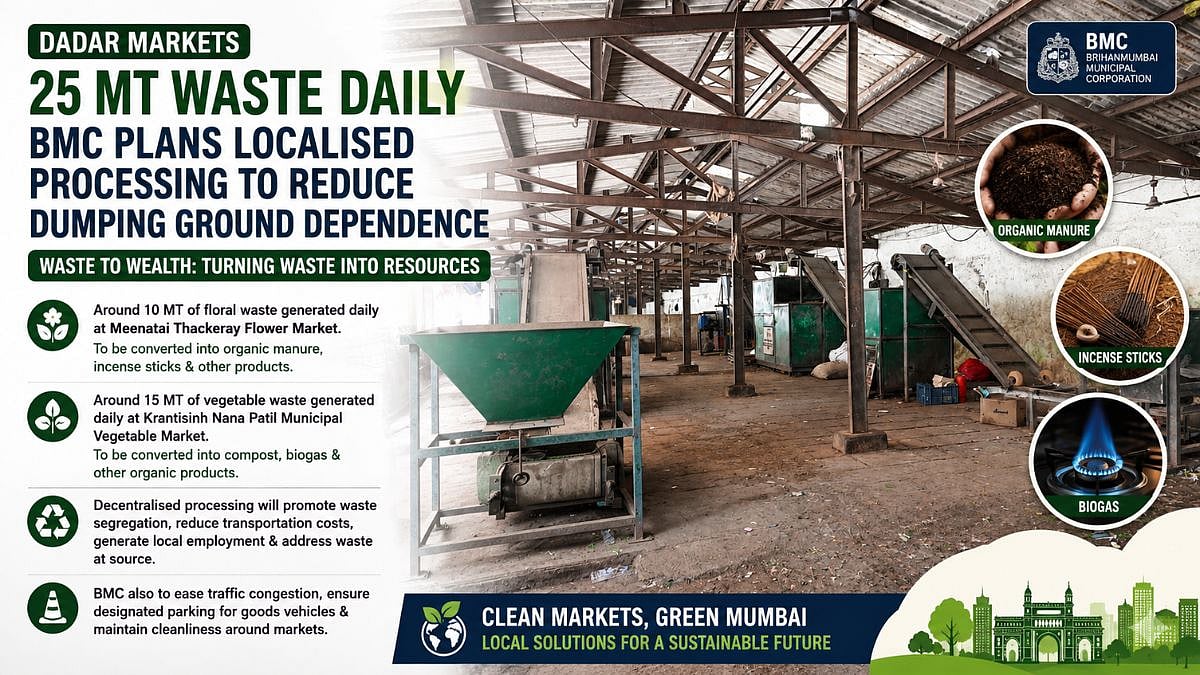
Mumbai's Dadar flower and vegetable markets generate nearly 25 metric tonnes of waste daily. To tackle this issue, the Brihanmumbai Municipal Corporation (BMC) plans to introduce localized waste-processing facilities.
The move aims to reduce dependence on dumping grounds, cut waste transportation, and ease pressure on existing dumping sites. It will also convert waste into a valuable resource.
Additional Municipal Commissioner Prajakta Verma Lavangare recently inspected both markets and directed officials to explore localized solutions for processing waste and converting it into useful products.
Around 10 MT of floral waste is generated daily at Dadar's Meenatai Thackeray Flower Market. Lavangare called for a decentralized processing project to convert the waste into organic manure, incense sticks, and other value-added products.
At the Krantisinh Nana Patil Municipal Vegetable Market, around 15 MT of vegetable waste is generated daily. Lavangare directed officials to explore decentralized processing to convert the waste into compost, biogas, and other organic products.
The initiative will promote waste segregation, reduce transportation costs, generate local employment, and address waste at source. Lavangare also directed officials to ease traffic congestion around the market and ensure orderly parking and smooth traffic movement.
Traders' associations were urged to cooperate with the civic administration to maintain orderly parking and smooth traffic movement. The BMC also plans to implement stronger daily cleanliness measures and traffic management around the market.
The introduction of localized waste-processing facilities is a significant step towards reducing waste dumping and promoting sustainable waste management in Mumbai.
This move is expected to have a positive impact on the environment and the community, and it will also help to reduce the burden on the city's dumping grounds.
The BMC's initiative is a part of its efforts to improve waste management in the city and promote a cleaner and healthier environment for its residents.
In recent years, Mumbai has been struggling with waste management issues, and the BMC has been working to implement various solutions to address this problem.
The introduction of localized waste-processing facilities is a significant step towards achieving this goal, and it is expected to have a positive impact on the city's environment and community.
The success of this initiative will depend on the cooperation of traders, residents, and the civic administration. It is essential to ensure that the waste-processing facilities are operated efficiently and effectively to achieve the desired results.
The BMC's plan to introduce localized waste-processing facilities in Dadar markets is a welcome move, and it is expected to have a positive impact on the city's waste management.
As the city continues to grow and develop, it is essential to implement sustainable waste management practices to ensure a cleaner and healthier environment for its residents.
Frequently asked questions
How much waste is generated daily at Dadar flower market?
Around 10 MT of floral waste is generated daily at Dadar's Meenatai Thackeray Flower Market.
What is the BMC's plan to address waste management in Dadar markets?
The BMC plans to introduce localized waste-processing facilities to reduce dependence on dumping grounds and convert waste into a valuable resource.