Centre Must Respond to Kunal Kamra's Plea by July 29
Comedian Kunal Kamra challenges Sahyog portal, Centre to respond soon.
'%3E%3Crect%20width%3D'96'%20height%3D'96'%20fill%3D'%231A5276'%2F%3E%3Ccircle%20cx%3D'30'%20cy%3D'24'%20r%3D'44'%20fill%3D'%23fff'%20opacity%3D'.12'%2F%3E%3Ccircle%20cx%3D'60'%20cy%3D'74'%20r%3D'40'%20fill%3D'%23000'%20opacity%3D'.10'%2F%3E%3C%2Fg%3E%3Cg%20fill%3D'%23fff'%3E%3Cpath%20d%3D'M31%2041%20L48%2031%20L65%2041%20Z'%2F%3E%3Crect%20x%3D'33'%20y%3D'43'%20width%3D'4'%20height%3D'17'%2F%3E%3Crect%20x%3D'41'%20y%3D'43'%20width%3D'4'%20height%3D'17'%2F%3E%3Crect%20x%3D'51'%20y%3D'43'%20width%3D'4'%20height%3D'17'%2F%3E%3Crect%20x%3D'59'%20y%3D'43'%20width%3D'4'%20height%3D'17'%2F%3E%3Crect%20x%3D'30'%20y%3D'62'%20width%3D'36'%20height%3D'4'%20rx%3D'1'%2F%3E%3C%2Fg%3E%3C%2Fsvg%3E)
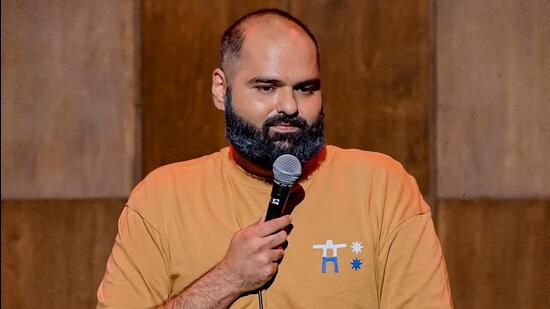
The Delhi High Court has directed the Centre to respond to comedian Kunal Kamra's challenge to the Sahyog portal by July 29.
The court's directive came after Kamra's counsel, senior advocate Navroz Seervai, pointed out that the petition had been pending since February. Despite repeated directions from the court, the Centre had not yet filed its affidavit in response to Kamra's plea.
Additional Solicitor General Anil Singh, appearing for the Union government, assured the court that the affidavit would be filed by the specified deadline. The court has given the Centre time until July 29 to submit its response.
Kunal Kamra, a well-known comedian and social commentator, had approached the court challenging the Sahyog portal. The details of his challenge and the grounds on which he is opposing the portal are not entirely clear from the current proceedings.
The Sahyog portal is an initiative of the Union government, and its purpose and scope are subject to interpretation. As the case progresses, more information about the portal and the reasons behind Kamra's challenge may come to light.
The Delhi High Court's decision to direct the Centre to respond to Kamra's plea by July 29 indicates that the court is keen to move the case forward. The Centre's response will likely shed more light on its stance regarding the Sahyog portal and Kamra's challenge to it.
The case has been pending since February, and the court's directive is seen as a significant development. The Centre's affidavit, once filed, will provide insight into its position on the matter and may pave the way for further proceedings in the case.
As the deadline for the Centre's response approaches, all eyes are on the developments in the case. The outcome of Kamra's challenge to the Sahyog portal may have implications for the Union government's initiatives and the rights of individuals to challenge such initiatives.
In the broader context, the case highlights the importance of judicial oversight and the need for the government to respond to challenges to its initiatives in a timely manner. The Delhi High Court's directive serves as a reminder that the government must be accountable for its actions and respond to legitimate challenges to its policies and initiatives.
The significance of this case lies in its potential to set a precedent for future challenges to government initiatives. As the case progresses, it may provide insight into the balance between individual rights and government initiatives, and the role of the judiciary in ensuring that the government is held accountable for its actions.
In conclusion, the Delhi High Court's directive to the Centre to respond to Kunal Kamra's challenge to the Sahyog portal by July 29 is a significant development in the case. The outcome of the case may have implications for the Union government's initiatives and the rights of individuals to challenge such initiatives. As the case progresses, it will be important to watch for further developments and the potential impact on the balance between individual rights and government initiatives.